
- Credit Rating Upgrade: Bladex's long-term issuer credit rating raised from 'BBB' to 'BBB+' by S&P Global Ratings.
- Tier 1 Hybrid Notes Upgrade: Senior unsecured notes and Tier 1 hybrid notes also upgraded, with the latter moving from 'BB-' to 'BB'.
- Regional Reach: Bladex's portfolio spans 23 Latin American and Caribbean nations, providing diversification.
Experts would likely conclude that Bladex’s rating upgrade reflects its robust financial management, regional diversification, and resilience in a volatile economic environment, serving as a positive indicator for Latin American trade stability.
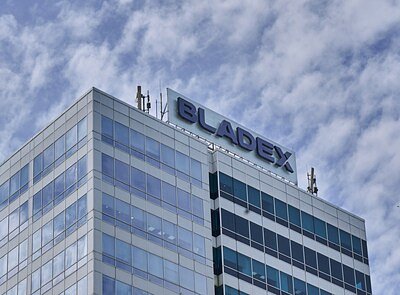
Bladex's Rating Upgrade: A Blueprint for Stability in a Turbulent Region
PANAMA CITY, Panama – June 22, 2026 – On paper, it was another dense announcement in a sea of financial news: S&P Global Ratings has upgraded the Banco Latinoamericano de Comercio Exterior, S.A., better known as Bladex, to a 'BBB+' long-term credit rating. For the Panama-based trade finance bank, it’s a clear vote of confidence, a validation of strategy celebrated in a press release. But in a region often defined by economic volatility and political crosswinds, this upgrade is more than a corporate milestone. It’s a case study in resilience and a potential bellwether for the health of Latin American trade itself.
The real story isn't the new rating, but the quiet, disciplined architecture that built it. How does an institution not only survive but thrive amidst the persistent uncertainty of its operating environment? And what does its success signal about the gap between the world’s perception of Latin America and the reality of its economic backbone?
Beyond the 'BBB+': Unpacking a Blueprint for Resilience
The upgrade from S&P is comprehensive. It lifts Bladex’s long-term issuer credit rating and its senior unsecured notes to 'BBB+' from 'BBB', with a stable outlook. Its Tier 1 hybrid notes, a riskier form of capital, also saw a bump to 'BB' from 'BB-'. In practical terms, this is a powerful endorsement. A higher credit rating acts as a key, unlocking access to cheaper and more diverse sources of global capital. For a bank whose entire business model revolves around borrowing funds to finance cross-border trade, this is a significant competitive advantage.
“Moving further into the 'BBB' investment-grade category is a game-changer,” explained a fixed-income analyst specializing in Latin America who spoke on the condition of anonymity. “It opens the door to a whole new class of institutional investors, like pension funds and insurers, who have strict mandates against lower-rated debt. It means more stable funding at a lower cost, which Bladex can then pass on to its clients, fueling more trade.”
S&P’s rationale points to a fortress-like financial profile: “solid asset quality, a diversified portfolio, consistent earnings generation, strong capitalization, and adequate funding and liquidity.” This isn't boilerplate praise. It’s the result of a rigorous assessment of the bank's ability to withstand shocks. The agency specifically highlighted Bladex's “prudent risk management practices” and its capacity to “actively adjust credit exposures” as conditions change. In other words, Bladex has proven it knows how to navigate storms by being a better, more cautious sailor.
The Discipline of Diversification
Bladex’s strength lies in a principle that is simple in theory but notoriously difficult to execute: radical diversification. Unlike a national commercial bank, which is intrinsically tied to the fortunes and politics of a single country, Bladex’s fate is not tethered to any one economy. Its portfolio is a mosaic of clients, sectors, and geographies stretching across the continent.
This structure is by design. Established in 1979 by the central banks of 23 Latin American and Caribbean nations, Bladex was conceived as a regional utility, a piece of financial infrastructure owned by a collective. This multilateral DNA grants it a unique “uplift,” allowing its credit rating to often stand above the sovereign ratings of many countries in which it operates. It is in Latin America, but not entirely of any single part of it.
This unique position places its 'BBB+' rating in a remarkable context. It’s a rating that is competitive with or exceeds that of many larger commercial banks in the region and stands as a testament to its unique business model. While other development banks like CAF and CABEI hold higher ratings, Bladex’s focus on the high-velocity, lower-margin world of trade finance makes its robust standing particularly noteworthy. The bank has demonstrated an ability to manage the specific risks of financing the movement of goods—from Brazilian soy to Colombian coffee—without succumbing to the localized crises that can plague single-country lenders. The result is a track record of low credit losses that is the envy of many of its peers.
A Barometer for Regional Trade?
While Bladex’s internal discipline is the engine of its success, the upgrade also tells a broader, more optimistic story about Latin America. For a bank dedicated to foreign trade to be this financially sound, the underlying trade itself must possess a fundamental resilience. The ships must be sailing, the goods must be moving, and the payments must be flowing, despite headlines that often focus on instability.
Viewed through this lens, the 'BBB+' rating is an indirect indicator of the enduring strength of economic integration in the region. It suggests that the commercial sinews connecting Latin America’s economies to each other and to the world are stronger than often perceived. Bladex’s ability to consistently generate earnings and maintain asset quality is a reflection of the thousands of businesses across the continent that are successfully navigating global markets.
This achievement is the culmination of a deliberate, long-term strategy. As Chief Executive Officer Jorge Salas noted in the company’s statement, the upgrade “recognizes the discipline with which we have executed our strategy, maintaining prudent risk management, a robust capital base, and a business model focused on quality and resilience.” His words underscore a culture that prioritizes stability over speculative growth—a rare and valuable commodity in modern finance.
For over four decades, Bladex has played a quiet but essential role in the economic life of a continent. Its health matters because it directly impacts the ability of a business in Peru to import machinery from Mexico, or a corporation in Argentina to secure financing for its exports to Asia. In a world of fractured supply chains and rising protectionism, a stable, well-capitalized trade finance bank is not just a financial asset; it’s a strategic one. Bladex’s latest vote of confidence from S&P suggests that despite the perennial challenges, the foundations of Latin American commerce remain remarkably solid.