
- Southeast Asian food and beverage sector projected to reach $530 billion by 2026
- Binggrae's third consecutive appearance at THAIFEX – Anuga Asia
- Introduction of export-exclusive Taro and Chestnut variants of Banana Flavored Milk for Thailand
Experts would likely conclude that Binggrae's strategic focus on localization, Halal certification, and supply chain innovation positions it strongly to capitalize on Southeast Asia's high-growth F&B market, though success will depend on navigating intense competition from global and local players.
Binggrae's Big Bet: K-Food Giant Targets Southeast Asia's Palate
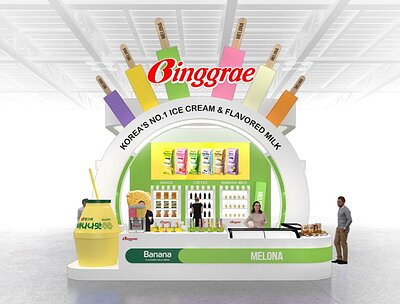
SEOUL, South Korea – May 21, 2026 – As Asia's largest food and beverage trade exhibition, THAIFEX – Anuga Asia, prepares to open its doors in Bangkok, one South Korean giant is plotting a significant strategic expansion. Binggrae, a household name in Korea since 1967 and the creator of iconic products like the ubiquitous Banana Flavored Milk and the beloved Melona ice bar, is making its third consecutive appearance at the event. This is far more than a routine trade show visit; it represents a calculated and aggressive push into the heart of the burgeoning Southeast Asian market.
For years, Binggrae has been a dominant force domestically, but its international ambitions are now sharply focused on the dynamic and diverse palates of Southeast Asia. The company's promotional booth will serve as the frontline for a multi-pronged strategy aimed at transforming its regional presence from a niche exporter into a major player.
A Strategic Play in a High-Growth Arena
Binggrae's intensified focus on Southeast Asia is a direct response to the region's immense market potential. The Southeast Asian food and beverage sector is on a steep upward trajectory, projected to swell to a staggering $530 billion by 2026. This growth is fueled by a powerful combination of rising disposable incomes, rapid urbanization, and a growing middle class with an appetite for convenient, value-added food products.
By establishing a significant presence at THAIFEX, Binggrae is positioning itself at the epicenter of this growth. The exhibition is a critical nexus for global distributors, retailers, and buyers, offering an unparalleled opportunity to forge partnerships that can unlock broader distribution channels. While the company has been exporting its ice cream products to Thailand since 2007, its current footprint is largely confined to premium supermarket chains like Gourmet Market and Tops Market. The goal now is to achieve mass-market penetration, moving its products from specialty shelves to everyday shopping carts across the region.
This year marks the company's third straight year of participation, a clear signal of a long-term commitment. This is not a speculative venture but a sustained campaign to build brand awareness and logistical networks, laying the groundwork for a much larger and more integrated regional operation.
The Power of Localization: Taro, Chestnut, and Halal
Perhaps the most compelling aspect of Binggrae's strategy is its deep commitment to localization, moving beyond a one-size-fits-all export model. The company is demonstrating a nuanced understanding that Southeast Asia is not a monolithic market. To win over consumers, it is adapting its core products to meet specific local tastes and cultural requirements.
In a bold move, Binggrae will introduce new export-exclusive variants of its famous Banana Flavored Milk, specifically tailored for the Thai market: Taro and Chestnut. This move taps directly into the well-documented preference of Thai consumers for familiar, local flavors in everything from snacks to beverages. It's a strategy that acknowledges cultural heritage while introducing it within the framework of a popular international product.
Furthermore, the company is strategically expanding its portfolio of Halal-certified products. This is a critical and non-negotiable step for any brand serious about capturing market share in Muslim-majority nations like Indonesia and Malaysia. In these markets, Halal certification is not merely a regulatory hurdle but a fundamental driver of consumer trust and purchasing decisions. By proactively seeking and promoting this certification, Binggrae is signaling its respect for local values and its readiness to compete in two of the region's largest consumer markets.
Riding the K-Food Wave While Diversifying
Binggrae's expansion is buoyed by the powerful currents of the Hallyu, or Korean Wave. The global popularity of K-Pop and K-Dramas has created a powerful halo effect, generating immense curiosity and demand for Korean food products. Consumers who watch their favorite stars enjoy certain foods on screen are eager to try them, and iconic products like Banana Flavored Milk are perfectly positioned to capitalize on this cultural phenomenon.
However, the company is wisely not relying on cultural tailwinds alone. It is actively innovating and diversifying its product portfolio to build a more resilient and broad-based business. A key focus at THAIFEX will be the newly launched Pistachio flavor of its Melona ice bar, an effort to refresh a classic brand and appeal to evolving tastes.
Crucially, Binggrae is also innovating its supply chain. The introduction of new Banana Flavored Milk products designed for ambient distribution—meaning they do not require refrigeration—is a game-changer. This adaptation drastically lowers logistical barriers, allowing the products to be sold in a much wider array of retail environments, from small convenience stores to rural shops, thereby expanding market reach exponentially. This focus on product and logistical innovation is essential for long-term, sustainable growth in emerging markets.
Navigating a Competitive Landscape
Binggrae is entering a fiercely competitive arena. The Southeast Asian dairy and ice cream markets are dominated by global behemoths like Unilever and Nestlé, as well as deeply entrenched local players such as Dutch Mill in Thailand. These companies have extensive distribution networks, massive marketing budgets, and decades of experience in the region.
To counter this, Binggrae is leveraging its unique identity as a premium Korean brand while simultaneously building the grassroots distribution needed to compete at scale. The company's online marketing initiatives and its global YouTube channel, "O My Guide," are designed to build a direct relationship with a younger, digitally-native consumer base that is highly influenced by online trends.
The strategy is clear: use the allure of K-Food to open the door, then use product quality, localized innovation, and expanded distribution to win long-term loyalty. As a company representative stated, the goal is to accelerate entry into the market and expand the brand's global business.
As THAIFEX 2026 commences, all eyes will be on booth 2-W01. It is here that Binggrae will test its finely tuned strategy, seeking to prove that a thoughtful blend of cultural authenticity, savvy localization, and strategic innovation can allow a Korean icon to conquer the diverse and lucrative markets of Southeast Asia.