
- 15 dedicated slips for sea trials and customer training at the new Dania Beach facility.
- 300-slip expansion planned for the Nautical Ventures marina to support electric vessel service.
- 16th U.S. patent filed for new electronic reverse-thrust architecture.
Experts would likely conclude that Vision Marine's integrated retail and service strategy represents a bold but calculated approach to accelerating electric boat adoption, though its success hinges on flawless execution in a competitive market.
Beyond the Showroom: Vision Marine's Bet on Experiential Retail
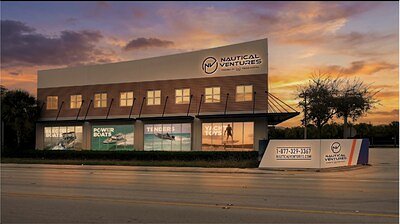
DANIA BEACH, FL – June 03, 2026 – In the high-stakes world of marine technology, press releases announcing new retail locations are routine. But the opening of Vision Marine Technologies' new Nautical Ventures center in Dania Beach is less about square footage and more about strategic execution. By creating an on-water experience hub in the heart of North America's largest boating market, the Quebec-based company is making a calculated bet that the path to electrifying the marine industry runs not through slick marketing, but through the water itself.
The new facility at 50 South Bryan Road replaces a traditional showroom with a comprehensive marine center, complete with expanded display areas, waterfront access, and approximately 15 dedicated slips. This isn't just a relocation; it's a fundamental shift in the retail model, designed to tackle the primary hurdle for any disruptive technology: customer adoption. For electric boating, this means moving beyond specs and promises to deliver tangible, hands-on experience.
From Showroom to Proving Ground
The core of the Dania Beach strategy lies in its ability to seamlessly transition a potential customer from browsing to boating. The traditional model of selling boats from a landlocked showroom floor, often miles from the nearest launch ramp, has always been a point of friction. For electric propulsion—a technology still facing skepticism regarding performance, range, and the overall user experience—that friction can become a barrier.
Vision Marine is attempting to dismantle that barrier. The dedicated slips will be used for sea trials, technology demonstrations, customer training, and even rentals. This “try before you buy” approach is a direct answer to the questions that plague potential EV boat owners. How does the torque feel? What does a silent cruise actually sound like? Is the range sufficient for a typical day on the water? These questions are answered not with a brochure, but with a hand on the throttle.
"Water access is a critical advantage," said Jesse Cors, Watersports Division Manager at Nautical Ventures, in the company's announcement. "Customers can experience products where they are intended to be used...the ability to move from the showroom to a real-world on-water experience helps shorten the path between browsing and ownership." This isn't just sales rhetoric; it's a recognition of a core principle of industrial adoption. To displace a century-old incumbent like the internal combustion engine, the alternative must not only be viable but demonstrably superior in the user's own context.
The facility will showcase the company's proprietary E-Motion™ electric propulsion system alongside a full suite of traditional boats, yacht tenders, and watersports products. This dual offering is another shrewd move, allowing the company to leverage the established cash flow and customer base of its Nautical Ventures subsidiary while simultaneously creating a low-pressure environment to introduce them to electric alternatives.
The Integrated Marine Platform
Viewed in isolation, the Dania Beach center is an impressive retail concept. But its true significance emerges when placed within the context of Vision Marine's broader corporate strategy. This is not just a storefront; it's a critical node in an integrated platform the company has been methodically assembling through strategic acquisitions and infrastructure development.
The 2022 acquisition of Nautical Ventures, a well-established Florida marine retailer with over 15 years of operating history, was the foundational move. It gave Vision Marine, a technology developer, immediate and direct access to the end consumer. This vertical integration is a playbook more common in the tech world than in the fragmented marine industry. It allows the company to control the customer experience, gather direct market feedback, and ensure its technology is supported by a competent sales and service network.
This new center is the physical manifestation of that strategy. It connects the company's E-Motion™ technology with retail, financing, and after-sales support. Furthermore, it complements Vision Marine's other key asset in the area: the 115-slip Nautical Ventures marina on Anglers Avenue, just minutes away. The company has already announced plans to expand this marina to nearly 300 slips and transform it into a regional hub for E-Motion™ installations, service, and diagnostics. This creates a powerful synergy: the Bryan Road facility generates leads and closes sales, while the Anglers Avenue center provides the crucial, long-term service infrastructure needed to support a growing fleet of electric vessels. This addresses the critical execution challenge of post-sale support, a frequent oversight in new technology rollouts.
"Nautical Ventures gives Vision Marine direct access to consumers in South Florida," stated CEO Alexandre Mongeon. He described the new location as the "consumer-facing infrastructure we believe is important to support broader awareness of electric boating and the long-term commercialization of our E-Motion™ technology." This focus on commercialization signals a company moving from R&D to revenue, leveraging its retail arm to de-risk its technology venture.
The Execution Challenge
While the strategy is sound, execution remains the ultimate test. The electric marine market is becoming increasingly competitive, with established players like Torqeedo and a host of aggressive startups all vying for market share. Vision Marine's integrated model is its key differentiator, but it also presents complex operational challenges.
Successfully merging a technology-focused parent company with a traditional retail and service business requires a delicate balance of culture and priorities. Furthermore, scaling this model beyond the friendly confines of South Florida will require significant capital and logistical expertise. The company's stock (NASDAQ: VMAR) has been volatile, and while analysts project sales growth, its financial health has been rated as weak, underscoring the high-stakes nature of its investment-heavy strategy.
However, the company is making tangible progress on the technology front. It recently announced the integration of new high-voltage battery packs from Octillion, which promise 7.5% more energy capacity, directly addressing the critical issue of range. It also continues to innovate, recently filing its 16th U.S. patent for a new electronic reverse-thrust architecture that could simplify design and improve maneuverability. These technical advancements, combined with a robust go-to-market strategy, provide a credible path forward.
The new Dania Beach On-Water Experience Center is therefore more than just a grand opening. It is a real-world test of a comprehensive hypothesis: that by controlling the entire customer journey—from initial curiosity and on-water demonstration to sales, service, and marina support—a company can accelerate the adoption of a disruptive technology. For leaders across industries watching the electrification transition, Vision Marine's Florida experiment offers a grounded and informed look at what it takes to move from pilot to production.