
- $65M–$95M: Estimated cost of Hisense's FIFA World Cup sponsorship.
- 6 billion: Estimated global viewers benefiting from Hisense's VAR technology.
- 16 stadiums: Host venues featuring Hisense's sensory-inclusive rooms for accessibility.
Experts would likely conclude that Hisense's strategic partnership with FIFA leverages cutting-edge RGB MiniLED technology to enhance VAR accuracy, drive global brand positioning, and foster social inclusivity—reshaping both the World Cup experience and consumer perception of display innovation.
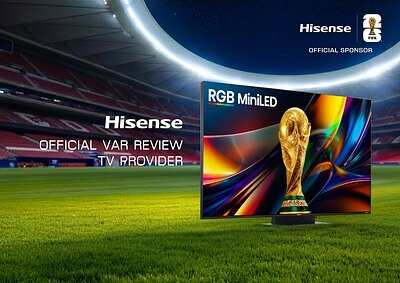
Beyond the Screen: How Hisense's Tech is Reshaping the World Cup
DALLAS, TX – June 18, 2026 – In a quiet, climate-controlled room within the massive International Broadcast Centre (IBC) in Dallas, the fate of a FIFA World Cup™ match can turn on a single frame. Here, amidst a constellation of glowing screens, officials scrutinize every angle of a contentious play. The technology they rely on for this monumental task is not just any display; it's the Hisense RGB MiniLED TV. While the press release announces Hisense as the tournament's Official Video Assistant Referee (VAR) Review TV Provider, the story runs much deeper. This partnership is not merely a product placement; it's a calculated move at the intersection of technological precision, high-stakes global marketing, and the evolving social fabric of sport itself.
The Pixel-Perfect Decision
Since its formal introduction at the 2018 World Cup, VAR has been both a savior and a source of controversy, promising to correct "clear and obvious errors" while sometimes introducing frustrating delays and debates over subjective calls. The system's effectiveness is fundamentally limited by the tools given to the officials. A blurry image or inaccurate color can be the difference between a correct call and a global firestorm. This is where Hisense's involvement becomes critical.
Powered by independently controlled red, green, and blue light sources, the company’s RGB MiniLED technology moves beyond the standard practice of using color filters over a white or blue backlight. The result is a display capable of producing an exceptionally wide and accurate color gamut, deeper blacks, and searing brightness. For a VAR official, this translates into tangible advantages: the subtle green of a cleat on the white chalk of the penalty box, the exact shade of a jersey in a tangle of players, or the faint deformation of a ball making contact with a hand. These are the details that decide championships, and the technology is designed to render them with uncompromising clarity. FIFA President Gianni Infantino's recent visit to the IBC to personally experience the review process underscores the governing body's confidence in this technological leap.
"Supporting FIFA's VAR operations with our RGB MiniLED technology represents a defining moment for Hisense," said Jason Ou, President of Hisense MEA & India. The partnership is a powerful B2B endorsement, positioning the brand's technology as the gold standard for accuracy when the stakes are highest. As Nick Brown, FIFA Director Commercial Partnerships, noted, it's "a step forward towards delivering exceptional picture quality and accuracy," validating how technology can actively support the game.
A Strategic Goal: The Business Behind the Broadcast
Hisense's involvement is far more than a technical contribution; it's the centerpiece of a sophisticated and costly global strategy. As a Tier 2 "FIFA World Cup Sponsor," the company has made a significant financial commitment, with industry analysts estimating such partnerships to be in the $65 million to $95 million range for a tournament cycle. This marks the brand's fourth consecutive World Cup sponsorship, signaling a long-term vision to leverage the world's most-watched sporting event to achieve its corporate ambition: "Never Settle for No.2 Globally."
This investment appears to be paying off. Hisense has solidified its position as the world's No. 2 TV brand by shipment volume and is a dominant force in the rapidly growing large-screen market. The FIFA partnership is a key driver in its battle for the premium segment against giants like Samsung and TCL. By embedding its technology into the core officiating process of the World Cup, Hisense generates a powerful narrative of trust and performance that resonates from the VAR room to the consumer's living room. The implicit message is clear: if the technology is precise enough for FIFA's most critical decisions, it’s more than capable of delivering a superior home viewing experience.
"From the VAR center to living rooms across the globe, Hisense is committed to ensuring every fan experiences the game with unmatched clarity," Ou affirmed, explicitly linking the professional application to the consumer benefit. This strategy aims to elevate the brand beyond a value proposition, recasting it as a premium innovator at the forefront of display technology.
Redefining the Fan Experience, On and Off the Pitch
The impact of this innovation extends far beyond the officiating booth. The same technological advancements that provide VAR officials with crystal-clear replays are transforming the experience for the estimated 6 billion viewers tuning in worldwide. The push for higher resolution, superior contrast, and lifelike color is turning living rooms into virtual stadiums, fulfilling the brand's promise of a "front-row seat" from home. This evolution is part of a broader trend where technology—from AR overlays and multi-angle streams to real-time data analytics—is creating a more interactive and immersive broadcast.
However, perhaps the most profound impact of Hisense's strategy lies in its commitment to social responsibility. For the 2026 World Cup, the company has partnered with KultureCity to make this the first-ever sensory-inclusive tournament. Sensory rooms equipped with Hisense technology will be available in all 16 host stadiums, providing a safe and comfortable environment for fans with autism, PTSD, and other sensory processing challenges. This initiative moves the partnership beyond commercial sponsorship into the realm of meaningful social impact.
It’s a move that branding experts consider the "holy grail" of modern marketing—an authentic, mission-driven action that builds deep brand loyalty and goodwill. By championing inclusivity, Hisense demonstrates a nuanced understanding of its role in the global community, proving that its impact can be measured not just in pixels and profit, but in accessibility and human experience. This fusion of cutting-edge technology, aggressive marketing, and genuine social impact illustrates how a single partnership can reshape not only how a game is played and watched, but who is able to participate in the spectacle.