
- $21,541: Amount raised in last year's similar campaign, with an ambitious goal to surpass it.
- 7 million Americans: Currently living with Alzheimer's disease (2026 data).
- $375 million: Total invested by the Alzheimer's Association in over 1,100 research projects.
Experts would likely conclude that this partnership exemplifies a scalable model for funding high-impact Alzheimer's research through consumer-driven philanthropy, bridging the gap between commerce and cutting-edge neuroscience.
Beyond the Meal Kit: How Consumer Action Fuels High-Tech Alzheimer's Research
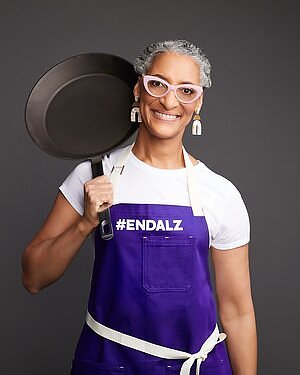
CHARLOTTE, NC – June 17, 2026 – This June, a seemingly simple purchase of a Smoky Harissa Salmon meal kit at The Fresh Market carries more weight than just its ingredients. It represents a direct link between consumer action, corporate philanthropy, and the high-tech frontiers of neuroscience. A new partnership between the specialty grocer, celebrity chef Carla Hall, and the Alzheimer's Association illuminates a powerful trend: the mobilization of mainstream commerce to fund the deeply complex, technology-driven battle against neurodegenerative diseases.
While the campaign, running during Alzheimer's and Brain Awareness Month, has a familiar structure, its true impact lies beyond the immediate fundraising total. It serves as a crucial conduit, channeling public goodwill and consumer dollars into a research ecosystem that is on the cusp of revolutionary breakthroughs in diagnostics, treatment, and care, fundamentally changing how we approach Alzheimer's disease.
A Recipe for Hope: Blending Commerce with Compassion
At its heart, the initiative is a masterclass in cause marketing. For the entire month of June, The Fresh Market will donate 10% of the purchase price from “Carla Hall's with Love Market Meal Kits & Sides” to the Alzheimer's Association. Shoppers at the 170+ locations can also round up their total at the register, a simple gesture that collectively funnels significant resources to the cause. The goal is ambitious: to surpass the $21,541 raised in a similar campaign last year.
"We are thrilled to partner once again with Carla Hall and the Alzheimer's Association," said Emily Turner, chief marketing officer at The Fresh Market. "It is our hope to surpass last year's remarkable Sweet Heritage Butter Tart fundraising total of more than $21,000."
The campaign's emotional resonance is amplified by the personal story of its celebrity champion, Chef Carla Hall. Her advocacy is rooted in the painful experience of watching her grandmother, Freddie Mai Price Glover, battle the disease. "My Granny's Sunday suppers were at the heart of our family," Hall shared. "When she began forgetting parts of recipes she had known by heart for decades, our family realized something was wrong. We later learned she had Alzheimer's disease." This transformation of memory and identity is a story that resonates with millions. According to the Alzheimer's Association's 2026 Facts and Figures report, more than 7 million Americans are now living with the disease, with nearly 13 million friends and family members providing unpaid care.
From Grocery Aisle to Genome: Funding the Tech Frontier
What happens to the 10% from a Brown Butter Mushroom Chicken meal kit or the 87 cents from a round-up? They don't just disappear into a general fund. They become vital fuel for a technological revolution in Alzheimer's research. The Alzheimer's Association is one of the largest non-profit funders of this research globally, having invested over $375 million in more than 1,100 projects. These are not abstract grants; they are targeted investments in cutting-edge science.
For instance, funds raised through partnerships like this support the ecosystem that produced recent breakthroughs like lecanemab (Leqembi). This new class of disease-modifying drug, which targets the amyloid plaques long considered a hallmark of Alzheimer's, represents a monumental shift from merely managing symptoms to slowing the underlying pathology. The development and trial of such complex biologics require hundreds of millions of dollars, an investment made possible, in part, by a steady stream of public and private funding.
Perhaps even more aligned with the tech frontier is the rapid advancement in diagnostics. For decades, a definitive Alzheimer's diagnosis required expensive PET scans or invasive spinal taps. Now, the research community—backed by organizations like the Alzheimer's Association—has ushered in the era of blood-based biomarkers. The FDA's recent approval of tests like the Lumipulse G pTau217/β-Amyloid 1-42 Plasma Ratiotest signals a new paradigm: a future where a simple blood draw can help identify the disease in its earliest stages, democratizing access to diagnosis and treatment. The dollars raised at checkout counters directly contribute to the validation, refinement, and rollout of these game-changing technologies.
The ROI of Philanthropy: Scaling Impact Through Partnership
This model of integrated philanthropy is also a case study in industrial impact. For the Alzheimer's Association, corporate partnerships are not just additive; they are a strategic force multiplier. In a recent fiscal year, corporate contributions accounted for $26 million, a 23% increase that generated millions of media impressions, amplifying awareness far beyond what the non-profit could achieve alone. These collaborations create a virtuous cycle: The Fresh Market leverages its retail footprint and customer loyalty to raise funds, enhancing its brand reputation as a socially responsible company, while the Alzheimer's Association gains not only financial resources but also invaluable access to a mainstream audience.
This structure offers a clear return on investment for all stakeholders. The consumer feels empowered, turning a routine transaction into a meaningful act. The corporation builds brand equity and engages its customer base on a deeper level. And the non-profit receives the critical, unrestricted funding needed to pursue a long-term, high-risk, high-reward research agenda. It is a sophisticated engine for social change, converting the distributed power of the market into focused scientific progress.
Bridging the Gaps in a World with Alzheimer's
The road ahead remains challenging. The same reports that celebrate scientific progress also highlight stark realities: a projected cost of care reaching nearly $1 trillion by 2050 and a critical shortage of direct care workers. Yet, here too, technology is being positioned as a crucial part of the solution. The funds raised today may not only support the next generation of drugs but also the development of AI-powered platforms to support caregivers, telehealth systems to close diagnostic gaps in rural areas, and digital tools to monitor cognitive health.
Ultimately, the partnership between The Fresh Market and Carla Hall does more than sell meal kits; it sells hope, backed by a tangible strategy. It demonstrates that the fight against a disease as formidable as Alzheimer's is not confined to sterile laboratories and academic journals. It is a battle being waged on multiple fronts, including the grocery aisle, where every purchase can be a small but significant investment in a future free from the devastating impact of this disease.