
- 70+ students enrolled in the pioneering Applied Generative AI elective
- 25-35% annual growth in India's AI talent demand, outpacing current supply
- Enterprise-grade curriculum covering Microsoft Azure AI, AWS Bedrock, and Google Gemini
Experts would likely conclude that this initiative represents a scalable model for bridging the AI skills gap by integrating industry needs directly into higher education.
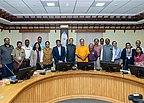
Beyond the Lecture Hall: Crafting the Next Generation of AI Architects
COIMBATORE, India – June 04, 2026 – In the global race for technological supremacy, the most valuable resource isn’t silicon or data, but talent. As artificial intelligence, particularly Generative AI, reshapes every industry, a profound gap has emerged between the skills companies desperately need and the theoretical knowledge traditionally taught in universities. This week, a pioneering initiative in southern India offered more than just a press release; it provided a tangible blueprint for how to bridge that chasm.
Software engineering firm Orion Innovation and Amrita Vishwa Vidyapeetham, one of India's top universities, have launched a co-branded Applied Generative AI elective. This isn’t just another course. It’s a foundational shift, embedding real-world industry needs directly into the academic journey. It represents a model of institutional innovation so potent that it deserves a closer look, not just for its impact on the 70-plus students already enrolled, but for what it signals about the future of education and workforce development itself.
A New Blueprint for Talent Creation
The collaboration between Orion and Amrita is formalized through a Memorandum of Understanding (MoU), but its true significance lies beyond the paperwork. This is a strategic symbiosis designed to solve a mutual problem. For corporations like Orion, the hunt for job-ready AI talent is a constant, expensive battle. For universities like Amrita, ensuring graduates are prepared for a rapidly evolving digital economy is a core tenet of their mission.
"As AI continues to transform industries, it is critical that students graduate with both strong technical foundations and practical exposure to real-world applications," said Arun Paul, Head of Human Resources at Orion Innovation. His framing of the initiative as helping to "co-create talent at the source" is key. This isn't about poaching graduates; it's about investing in the ecosystem that produces them. By providing students with direct access to the frameworks and problem-solving approaches used in the field, the company is building its future workforce while simultaneously elevating the educational standard.
This sentiment is mirrored on the academic side. "This collaboration... provides students with meaningful exposure to emerging AI technologies and practical applications, helping prepare them for the rapidly evolving digital economy," noted Br. Vishwanathamrita Chaitanya, Director of Corporate and Industry Relations at Amrita. For Amrita, which has a long history of forging industry partnerships with companies like Wipro and QNu Labs, this is a natural evolution. The university understands that in the AI era, relevance is a moving target, and staying ahead requires deep, continuous engagement with the industries its students will eventually lead.
Inside the Enterprise-Grade Classroom
What truly sets this program apart is the depth and practicality of its curriculum. The syllabus reads less like a traditional academic course and more like an onboarding plan for an elite AI development team. Students aren't just learning the theory behind Large Language Models (LLMs); they are diving into prompt engineering, Retrieval-Augmented Generation (RAG) architecture, and the development of agentic frameworks—the very building blocks of sophisticated, modern AI systems.
Crucially, the program provides hands-on exposure to the specific technology stacks that power enterprise AI. Students will work with Microsoft Azure AI Foundry, AWS Bedrock, and Google Gemini and Vertex AI. They will utilize open-source powerhouses like Hugging Face and LangChain. This direct experience is invaluable. It’s the difference between reading about how a car engine works and actually building one. By the time these students graduate, they will speak the language of enterprise cloud platforms, a skill that immediately distinguishes them in a crowded job market.
The curriculum also courageously tackles some of the most complex issues in the field, including Responsible AI, LLM security, and model fine-tuning. By integrating principles of fairness, bias mitigation, and explainability from the outset, the program is cultivating not just coders, but conscientious architects of future technology. This holistic approach, combined with the promise of internship opportunities at Orion for top performers, creates a seamless and powerful pathway from the classroom to a career.
Powering India's AI Ambition
This initiative is not happening in a vacuum. It is a microcosm of a larger national strategy. India, with its vast demographic dividend and thriving tech sector, is poised to become a global AI powerhouse. Government initiatives like the IndiaAI Mission are pouring resources into building computational capacity and fostering a nationwide AI ecosystem. However, as reports from Deloitte and NASSCOM highlight, the primary bottleneck to realizing this ambition is a persistent skills gap. While India’s AI talent pool is growing, it is not keeping pace with the market’s exponential 25-35% annual growth.
The Orion-Amrita program directly addresses this challenge. It is a targeted, high-impact intervention that produces precisely the kind of talent the market is starving for. Graduates of this program will be equipped to fill high-demand roles like AI Engineer, ML Engineer specializing in LLMs, and AI Architect. Their practical experience with RAG and agentic systems makes them particularly valuable as companies move from simple AI experimentation to deploying complex, value-generating solutions.
The global context makes this even more critical. Analysts at Gartner predict that while AI will create millions of new jobs, it will also fundamentally transform millions of existing ones. The key to navigating this transition is upskilling and reskilling. Proactive, industry-aligned educational programs like this one are the most effective tools we have to ensure the workforce can adapt and thrive.
This partnership, rooted in a shared vision and a deep, pre-existing relationship—Orion had previously sponsored employees for Master's programs at Amrita—serves as a powerful model. It demonstrates that the most effective way to prepare for an AI-driven future is to build it collaboratively, starting in the classroom.