
- 89% of boat owners cite being outdoors as a primary benefit of boating.
- Nearly two-thirds of boat owners report that boating strengthens family bonds.
- Life jackets mandatory for children under 13 on moving vessels (USCG).
Experts agree that family boating fosters emotional well-being, child development, and stronger family connections through shared outdoor experiences and unplugged quality time.
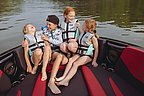
Beyond the Dock: How Boating Forges Stronger Families & Confident Kids
ORLANDO, Fla. – June 11, 2026 – In an era dominated by digital distractions, a growing body of evidence suggests that the key to stronger family bonds may lie not in more screen time, but in more time on the water. Family boating adventures, long cherished as a summer pastime, are now being recognized for their profound impact on emotional well-being, child development, and family cohesion. A national study conducted for the National Marine Manufacturers Association (NMMA) revealed that boating families report greater life satisfaction and significantly stronger family connections compared to their non-boating counterparts. Capitalizing on this trend, the Water Sports Foundation (WSF) has released expert-backed guidance to help families maximize both the fun and safety of their aquatic outings.
The Unplugged Advantage: Why Time on the Water Matters
The research, conducted by Impulse Research Corp., paints a compelling picture: nearly two-thirds of boat owners surveyed stated that boating was instrumental in bringing their families closer together, while an overwhelming 89% cited being outdoors as a primary benefit. This data quantifies a sentiment many families feel intuitively — that shared experiences in nature foster a unique and powerful connection.
"As families increasingly seek ways to disconnect from screens and reconnect with one another, boating continues to emerge as one of the most rewarding recreational activities for parents and children alike," said Jim Emmons, executive director of the Water Sports Foundation. "From fishing and tubing to simply cruising local waterways, boating offers families a rare opportunity for uninterrupted quality time together."
This perspective is strongly supported by child development experts and pediatric associations. The American Academy of Pediatrics, for instance, consistently promotes outdoor play as essential for healthy development, noting its role in mitigating stress and improving cognitive function. Time spent in nature has been shown to reduce cortisol levels, lower blood pressure, and enhance mood. For children, this translates into better focus, increased creativity, and stronger emotional regulation. For the family unit, the boat becomes a sanctuary from the constant notifications and fragmented attention of modern life, allowing parents and children to be more emotionally present and build secure attachments through shared adventure and teamwork.
The Captain's Playbook: Engaging Kids on Board
Harnessing these benefits, however, requires thoughtful planning to keep the experience positive and engaging for everyone on board. Experts emphasize that a successful family outing is less about the destination and more about the journey. Captain Cathy Williams, a Hall of Fame water sports athlete and owner of The Confident Captain coaching school, has witnessed firsthand how small details can make or break a day on the water.
"With a little planning, parents can make more fun for kids on the water," she advised. "First and foremost, always create a calm environment on the boat. Patience is particularly important; avoid yelling at all costs." Williams stresses the importance of a pre-departure "crew meeting" to set expectations. "Explain the plan for the day, identify seating protocols when the boat is underway, and clearly communicate safety rules."
Giving children a sense of purpose is another key strategy. Williams suggests assigning simple, age-appropriate jobs, like stowing gear or assisting an adult with a task. These opportunities make children feel like valued members of the crew, building confidence and earning their trust for future outings.
Lifelong boater and father of two, Charlie Levine, agrees that immersion is crucial. He recommends letting kids sit at the helm when the motor is off, giving them hands-on instruction with fishing rods, and making the experience tactile. However, he also offers a critical reminder about basic comforts. "No kid that's sunburned, hungry or thirsty will enjoy boating or want to keep fishing," he said. Ensuring children are protected with SPF 30+ sunscreen, are regularly hydrating, and have plenty of their favorite snacks is fundamental to a happy experience.
Safety First: The Non-Negotiable Rules of Family Boating
While fun is the goal, safety is the foundation upon which all memorable family boating trips are built. The Water Sports Foundation and the U.S. Coast Guard (USCG) have outlined several non-negotiable rules for protecting children on the water.
The most important rule is the consistent and correct use of life jackets. Federal law requires that all children under the age of 13 wear a properly fitted, USCG-approved life jacket while on the deck of a moving vessel, unless they are below deck or in an enclosed cabin. It's crucial for parents to know that state laws can be even stricter. The life jacket must be appropriate for the child’s weight and the planned activity, and for infants, it must include features like head support and a crotch strap to prevent them from slipping out.
Constant, vigilant adult supervision is another pillar of boating safety. Experts recommend designating a specific adult as the official "observer" or "water watcher" whose sole responsibility is to monitor children, whether they are on the boat or in the water. This prevents dangerous lapses in attention.
Propeller safety cannot be overstated. Before anyone enters the water, the captain must completely shut off the engine—not simply put it in neutral. Propeller strikes are a significant risk and can cause devastating injuries. Educating all passengers about this danger and enforcing a strict engine-off policy is a critical responsibility.
Finally, the choice of location matters. Families should seek out calmer, protected waterways away from heavy boat traffic. These areas provide a safer environment for swimming, playing, and learning, allowing children to build their confidence without the stress of a congested environment.
"As we celebrate summertime with our families, I hope parents realize they don't need elaborate vacations or expensive travel plans to create meaningful experiences together," Emmons concluded. "Sometimes, the best memories are made on the boat, just beyond the dock."