
- $78 billion: Global office furniture market value in 2025
- 79% reduction: HON's greenhouse gas emissions since 2018
- 60% of facilities: HNI's zero-waste-to-landfill manufacturing sites
Experts would likely conclude that HON's new flagship showroom represents a strategic response to the evolving demands of hybrid work and learning environments, combining sustainability, adaptability, and integrated design solutions.
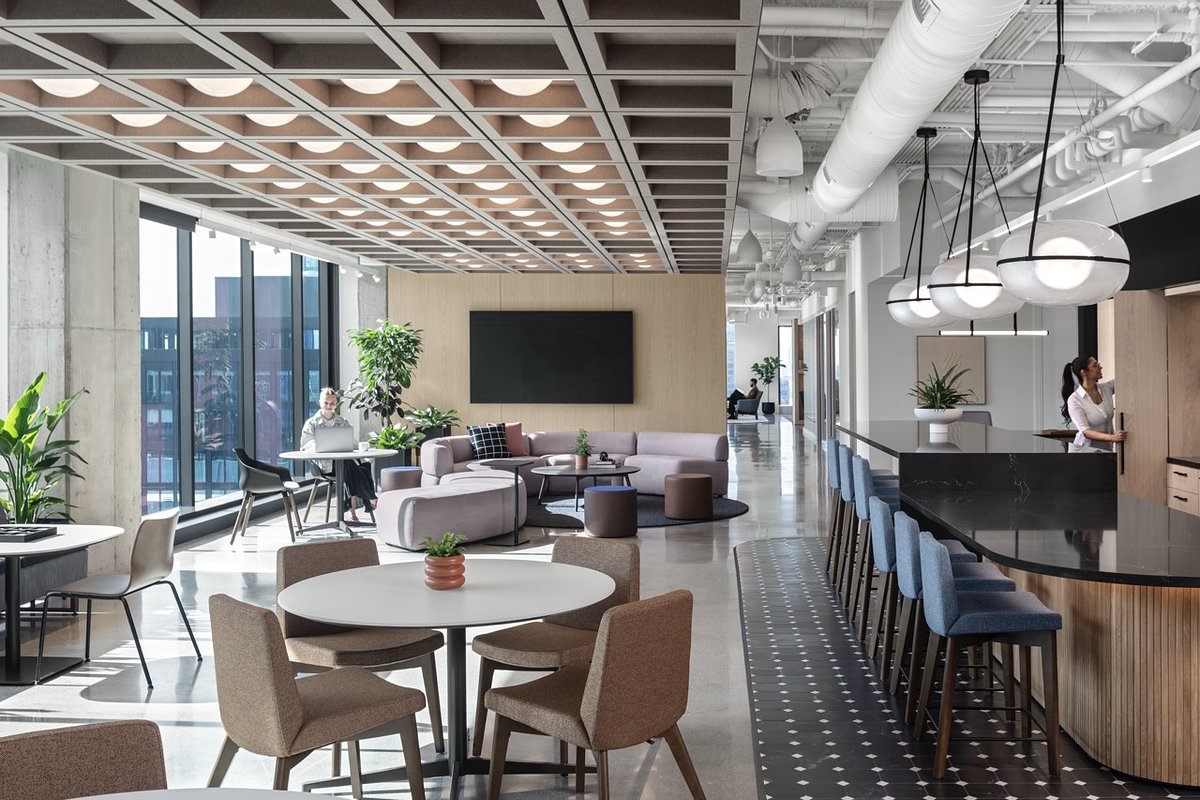
Beyond the Desk: HON Furnishes the New Networks of Work and Learning
CHICAGO, IL – June 04, 2026 – This week, as the design world converges on Chicago, The HON Company is unveiling more than just a new showroom. Its 12,000-square-foot flagship, opening at 320 N. Sangamon St. during the influential Fulton Market Design Days, represents a tangible blueprint for the future of our most critical spaces. In an era defined by hybrid work and dynamic learning, the physical infrastructure that supports these models has become paramount. This new destination is a declaration that the humble chair, desk, and partition are no longer just furniture; they are the foundational nodes of the invisible networks that dictate how we connect, collaborate, and innovate.
While competitors focus on singular aspects of the office or classroom, HON is making a strategic play to unify them. The flagship is the first of its kind for the brand, integrating its extensive workplace and K-12 education portfolios into a single, cohesive environment. This move astutely reflects a market in flux, where the lines between commercial and educational design are blurring, and the demand for adaptable, multi-use spaces is surging. The global office furniture market, valued at over $78 billion in 2025, and the rapidly growing K-12 furniture market are both driven by this demand for flexibility, well-being, and technological integration. HON’s new space is a direct response, conceived not as a static product gallery, but as a living laboratory for the future of interaction.
A Unified Vision for a Fragmented World
The flagship’s layout is a masterclass in strategic storytelling, organized into four distinct zones that guide visitors through the new landscape of work and learning. It’s an immersive experience designed to demonstrate how a single, cohesive design language can bridge disparate environments, a challenge many organizations face today.
“HON has led this market for decades by helping dealers and designers solve more of their clients’ challenges with one portfolio,” said Jason Heredia, Vice President of Marketing at The HON Company. “The Chicago Flagship brings our workplace and education solutions together in one immersive environment, making it easier to explore applications, compare solutions, and see how HON supports projects across the full floorplate.”
The journey begins in The Commons, a hospitality-driven zone anchored by a kitchen and lounge, designed to foster the informal connections that build trust and spark ideas. It’s a physical argument for the office as a social hub. From there, The Sandbox provides a flexible environment for experimentation and collaboration, featuring a hands-on makerspace for exploring materials and previewing upcoming products like the modular Mosaic™ lounge system. The Hub offers a side-by-side comparison of traditional and progressive office layouts, showcasing everything from private offices with the enhanced 10500 Series™ to equitable meeting spaces optimized for hybrid teams. Finally, The Education Lab brings the company’s “Color in Motion” philosophy to life, demonstrating how flexible furniture like the new Scribble™ K-12 seating, with its unique sensory-engagement texture, can support diverse learning styles and active classrooms.
Building on a Sustainable Backbone
Beneath the surface of sleek design and user-centric functionality lies a deeper, more critical infrastructure: sustainability. HON, as part of parent company HNI Corporation, is leveraging its manufacturing prowess to build a formidable case for responsible production. The flagship itself becomes a testament to this, showcasing products that are not only aesthetically pleasing but are also born from a system engineered for minimal environmental impact.
The numbers are compelling. The company has achieved a staggering 79% reduction in Scope 1 and 2 greenhouse gas emissions since 2018, far surpassing its Science Based Targets initiative (SBTi)-validated goal. This isn’t a distant promise but a verified achievement. Furthermore, 60% of HNI’s manufacturing facilities have achieved zero-waste-to-landfill status, a feat accomplished through innovative processes like transforming wood scraps into new components, which alone diverts nearly 10,000 tons of waste annually.
For the architects and designers specifying these products, the story continues with tangible certifications. The flagship features products with BIFMA LEVEL® and SCS Indoor Advantage Gold certifications, assuring low chemical emissions and promoting healthier indoor air quality—a critical factor for projects pursuing LEED and WELL building standards. This commitment extends to the very materials used, from partnerships with SEAQUAL® INITIATIVE to turn marine plastic into durable fabrics to a pledge to eliminate all Styrofoam packaging by the end of 2025. This is the invisible network of responsible sourcing and circular design made visible.
Chicago's Ascendant Design Node
The decision to launch this ambitious project in Chicago’s Fulton Market during Design Days is a masterstroke of strategic positioning. The neighborhood, once the city's meatpacking district, has transformed into a vibrant global design hub, and Fulton Market Design Days (FMDD) has emerged as a dynamic, experiential alternative to the more traditional NeoCon trade show at the Merchandise Mart. By planting its flag here, HON is not just opening a showroom; it is embedding itself within the city’s creative and commercial heart.
The location at 320 N. Sangamon, a building with its own LEED Gold and FitWel certifications, further aligns the brand with the principles of wellness and sustainability that are increasingly driving urban development. The flagship is designed to be a “working hub,” a place for collaboration between the company, its national dealer network, and the architecture and design community that now flocks to the area. It’s a physical anchor in a key node of the global design network, reflecting a shift in the industry toward more localized, community-integrated engagement.
This move comes as parent company HNI Corporation makes aggressive plays to secure its dominance in a consolidating market, including the recent acquisitions of Kimball International and Steelcase. In this context, the Chicago flagship is more than a marketing initiative; it is a powerful tool for demonstrating the comprehensive, integrated power of its portfolio. It shows that in the complex ecosystem of modern work and learning, the most effective networks are those where every component, from the corporate strategy to the very texture of a chair, works in concert toward a common goal.