
- 25% increased depth in the new cylindrical airbag design for better impact absorption.
- Designed to protect a wide range of driver physiques, including elderly and diverse body types.
- Aims to comply with stricter global safety regulations anticipated in the near future.
Experts would likely conclude that this innovation represents a significant step toward more inclusive and effective vehicle safety, addressing long-standing disparities in crash protection for diverse driver demographics.
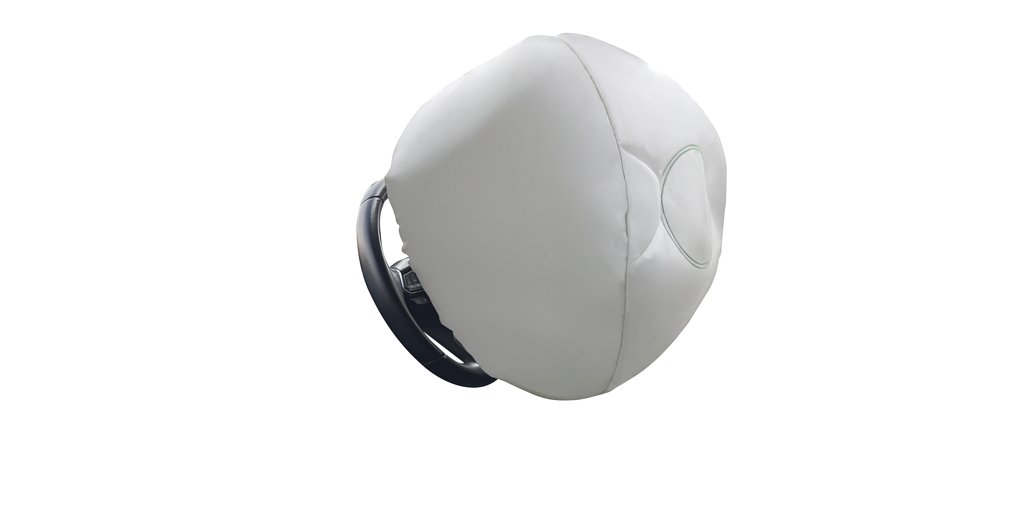
Beyond the Crash Test Dummy: A New Airbag Reimagines Driver Safety
KIYOSU, JAPAN – June 12, 2026 – In the relentless pursuit of automotive innovation, the most significant breakthroughs are not always the ones we see. While new electric powertrains and expansive touchscreens capture headlines, a fundamental shift in occupant protection is quietly taking shape behind the steering wheel. Toyoda Gosei, a key technology partner for Toyota Motor, has announced a newly designed driver-side airbag set to debut in the all-new 2026 Lexus ES. This is not just an incremental update; it’s a re-architecting of a foundational safety device, engineered to address a long-standing and critical blind spot in vehicle safety: the simple fact that drivers are not all built the same.
For decades, the standard for safety has been benchmarked against crash test dummies representing an “average” physique. But in the real world, drivers are taller, shorter, heavier, lighter, and older. Toyoda Gosei's latest innovation, a move away from the traditional spherical airbag to a new cylindrical design, is a direct and sophisticated response to this reality. It marks a crucial step toward a future of inclusive safety, where a vehicle’s protective systems are designed to shield everyone, not just a statistical median.
The Geometry of Protection
At the heart of this advancement is a change in form that yields a dramatic improvement in function. By redesigning the airbag from a sphere to a cylinder, Toyoda Gosei’s engineers have increased its depth by over 25%. This seemingly simple geometric tweak has profound implications during the chaotic milliseconds of a frontal collision.
The increased depth allows the airbag to catch and restrain the driver at an earlier moment, absorbing impact energy more effectively and over a slightly longer duration. The company states the design offers a “gentle” protection, a term that belies the complex physics at play. For a larger or heavier driver, this earlier engagement and improved energy absorption can mean the difference between a serious chest injury and walking away. For an elderly driver, whose bones may be more susceptible to fracture, the softer, more distributed force can be life-saving.
Traditional airbags, while incredibly effective, were optimized for a specific set of parameters. The new cylindrical structure creates a larger, more accommodating cushion that can better manage the momentum of diverse body types. It’s an elegant engineering solution to a complex biomechanical problem, moving the industry away from a one-size-fits-all approach to a more adaptable and intelligent system of restraint.
Designing for Diversity: A New Era of Inclusive Safety
The development of this airbag addresses a conversation that safety experts and advocacy groups have been having for years. The historical reliance on crash test dummies modeled after an average-sized male has, in some cases, resulted in safety systems that are less effective for other demographics, including women and the elderly. Real-world crash data has consistently shown that different body types interact with a car's interior and safety systems in unique ways, leading to different injury patterns.
This new airbag represents a tangible commitment to rectifying that disparity. By specifically designing for “a wide range of drivers—those with small and large physiques, elderly people, and others,” Toyoda Gosei and Lexus are acknowledging that true safety leadership requires designing for the full spectrum of humanity. It’s a move that aligns with a broader push across technology and engineering to build more equitable and inclusive products. This isn't just about passing a test; it's about saving more lives and reducing the severity of injuries across the entire population.
Ahead of the Curve: Navigating Stricter Global Mandates
This innovation is also a strategically timed response to a shifting regulatory landscape. The press release notes the technology is aimed at complying with “stricter safety regulations in all parts of the world.” While the specific statutes are not named, the direction of travel for leading safety bodies like the U.S. National Highway Traffic Safety Administration (NHTSA) and Europe’s Euro NCAP is clear. Future safety ratings and mandates are increasingly focused on more challenging crash scenarios and, critically, on evaluating protection for a wider variety of occupant sizes and seating positions.
By introducing this technology now, Toyota and its supplier are not merely reacting to new rules; they are anticipating them. The 2024 and 2025 Lexus ES models already boast five-star safety ratings and IIHS Top Safety Pick awards, but this new airbag for the 2026 model is a forward-looking play. It positions the Lexus ES to exceed the next generation of safety standards, reinforcing the brand's reputation for prioritizing occupant well-being. This proactive stance is a hallmark of industry leaders, demonstrating an ability to innovate ahead of regulatory pressure and set new benchmarks for competitors to follow.
The Supplier's Strategic Edge
The debut of this airbag in the flagship 2026 Lexus ES—a model also undergoing a significant evolution with new all-electric powertrain options—highlights the critical role of the automotive supply chain. For a premium brand like Lexus, where safety is a non-negotiable pillar of its value proposition, having access to cutting-edge components from trusted partners like Toyoda Gosei is a powerful competitive advantage.
This relationship demonstrates how deep innovation within a supplier can directly translate into a stronger market position for an automaker. The airbag is a testament to Toyoda Gosei's stated mission of moving toward “zero traffic fatalities,” but it is also a strategic asset for Toyota. The technology will almost certainly cascade from the premium Lexus brand into the broader Toyota lineup over time, enhancing the safety credentials of millions of vehicles globally.
As the automotive world continues its transformation, it is a potent reminder that the most impactful changes are often born from a deep understanding of core principles. The new airbag in the Lexus ES is more than just a component; it is a symbol of a more thoughtful, human-centric approach to engineering, proving that the next leap forward in safety is not just about adding more sensors, but about fundamentally rethinking how we protect the person behind the wheel.