
- 800V System Voltage: The shift to 800V architectures enables faster charging by halving current, reducing heat loss and cable thickness.
- 4000V Isolation: MPD's new converters provide 4000V of isolation, a critical safety requirement for high-power EV charging systems.
- 300,000+ Hours MTBF: The converters boast a Mean Time Between Failures of over 300,000 hours, ensuring operational longevity and reduced maintenance costs.
Experts would likely conclude that MPD's high-voltage isolated DC/DC converters are a strategic advancement in EV charging infrastructure, addressing critical safety and efficiency challenges while positioning the company competitively in a rapidly evolving market.
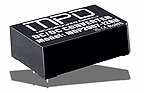
Beyond the Charger: MPD's High-Voltage Play on EV Infrastructure's Core
SOUTH EASTON, MA – June 09, 2026 – The electric vehicle revolution is well underway, but its momentum hinges on a critical, and often frustrating, bottleneck: charging infrastructure. While automakers tout ever-increasing range and performance, the real-world experience for many drivers is defined by the availability, speed, and reliability of public chargers. The industry's answer is a fundamental architectural shift toward faster charging, driven by higher voltages. This move, however, creates a cascade of engineering challenges far from the showroom floor, deep inside the electronics that power the grid.
In this complex and highly competitive landscape, Massachusetts-based MicroPower Direct (MPD) has made a significant strategic move. The company, a long-time supplier of power components, has launched two new high-voltage isolated DC/DC converters, the MDP2007RU and MDP4015RU. While these components may not capture headlines like a new EV model, they represent a critical piece of the puzzle for building the next generation of fast, reliable, and safe charging stations. This is not about the hype of electrification; it's about the essential, unglamorous work of making it function.
The Technical Backbone of Faster Charging
The push for faster charging is inextricably linked to the adoption of 800-volt battery architectures, a trend popularized by vehicles like the Porsche Taycan and now common in models from Hyundai, Kia, and Lucid. By doubling the system voltage from the previous 400V standard, manufacturers can deliver the same amount of power with half the current. This simple principle of physics (P=V*I) has profound implications: lower current reduces resistive heat loss, allowing for thinner, lighter cables and, most importantly, dramatically faster charging times.
However, operating at 800V, or even higher, places immense strain on the power electronics within the DC fast chargers. These systems require components that can not only handle these high voltages but also safely isolate them from lower-voltage control circuits and the power grid itself. This is precisely the challenge MPD's new products are designed to address.
The 40W MDP4015RU, with its exceptionally wide input range of 250 to 1500 VDC, is particularly noteworthy. This versatility allows engineers to design chargers that can accommodate the entire spectrum of modern EV architectures, from legacy 400V systems to emerging platforms that may push beyond 800V. Its ability to handle transients up to 1700 VDC provides a robust safety margin in an electrically noisy environment.
Furthermore, both new converters provide 4000 VDC of isolation. In high-power systems where users are physically connecting cables to their vehicles, this level of galvanic isolation is not a feature—it's a non-negotiable safety requirement. "As the industry moves toward faster-switching silicon carbide (SiC) components to improve efficiency, the need for high-quality isolation becomes even more acute," noted one power electronics design consultant. "It’s not just about the voltage rating, but about withstanding the high-frequency electrical stress these new devices create over the long term." MPD's components are built for this new reality, ensuring the integrity of the safety barrier between the high-voltage bus and sensitive control electronics.
For design engineers, practical implementation is paramount. The 20W MDP2007RU addresses a common pain point by meeting the stringent CISPR/EN 55032 Class B standard for electromagnetic interference without requiring an external filter network. This seemingly minor detail has significant quantifiable benefits, reducing the bill of materials, simplifying the PCB layout, and shortening the design cycle—precious advantages in a fast-moving market.
A Strategic Charge into a Crowded Market
The launch of these high-voltage converters marks a calculated expansion for MicroPower Direct. The company is leveraging its established presence in the auxiliary power segments of EV chargers—powering control boards, communication interfaces, and sensors—to move into the high-value, high-voltage heart of the system.
This strategic pivot is articulated by CEO Amy Anahory. "As charger voltages continue to rise and fast-charging architectures become more demanding, engineers need isolated power solutions that operate reliably across wider DC bus ranges — without adding sourcing complexity to an already complicated design," she stated. "We've been serving EV charger OEMs for years across their control and auxiliary power needs. The MDP2007RU and MDP4015RU expand that picture, giving engineers access to isolated power solutions across a much broader range of charger architectures."
This move places the company in a competitive field alongside established power electronics giants like Vicor, TDK-Lambda, and Murata. However, MPD appears to be competing not just on raw performance specs, but on system-level simplification and strategic positioning. By offering a comprehensive portfolio that covers nearly every power conversion stage within a charger, the company presents a compelling value proposition to OEMs looking to streamline their supply chains.
Adding another layer to its strategy are MPD's corporate certifications as a Women's Business Enterprise National Council (WBENC) and Woman Owned Small Business (WOSB) entity. In an industry fueled by massive public and private investment, many large corporations and government bodies have supplier diversity mandates. These certifications can provide a significant competitive edge, opening doors to contracts for building out national charging networks. Combined with its U.S.-based logistics and engineering support, MPD is positioning itself as a resilient and strategically advantageous partner for North American manufacturers.
The Unsung Heroes of Infrastructure Resilience
The ultimate success of the EV transition will be measured not by the number of chargers on a map, but by their uptime and performance. A broken or underperforming charger is more than an inconvenience; it erodes public confidence and slows adoption. Therefore, the reliability of every component within that charger is of paramount importance.
MPD's new converters boast a Mean Time Between Failures (MTBF) of over 300,000 hours, a metric that translates directly to increased operational longevity and reduced maintenance costs for network operators. Features like reverse polarity protection, under-voltage lockout, and automatic-recovery short-circuit protection are not just datasheet bullet points; they are essential safeguards that ensure the component, and by extension the charger, can withstand real-world faults and continue to operate.
Looking ahead, the role of these components will only become more critical as EV charging infrastructure integrates with renewable energy sources and grid-scale energy storage systems (ESS). These complex systems require sophisticated power conversion to manage fluctuating DC bus voltages and bidirectional power flow. The wide input range and robust design of converters like the MDP4015RU make them well-suited for these future applications, providing the foundational hardware for a more intelligent and resilient energy grid.
The path to mass EV adoption is paved with countless technological advancements, many of which go unnoticed by the public. While the focus often remains on battery chemistry and vehicle design, the success of the entire ecosystem depends just as much on the meticulous engineering of components like high-voltage converters. They are the unsung heroes ensuring that the promise of a quick, safe, and reliable charge can be delivered, every single time a driver plugs in.