
- 62 million metric tons: Global e-waste generated in 2022, projected to reach 82 million by 2030.
- $91 billion: Estimated value of raw materials in 2022 e-waste, but only $19 billion recovered.
- 25 state-level regulations: U.S. lacks federal e-waste law, complicating national recycling efforts.
Experts agree that the e-waste crisis demands urgent action, combining policy standardization, technological innovation, and scalable recycling solutions to recover valuable materials and mitigate environmental risks.
Beyond the Bin: The Billion-Dollar Business of Taming Our E-Waste Mountain
NEW YORK, NY – June 10, 2026 – Last week in Nashville, industry leaders gathered for a critical conversation, not about the next tech breakthrough, but about the digital debris it leaves behind. At the Battery & Universal Waste Recycling Conference, executives like Angie Ransom, Vice President of Retail for ERI, took the stage to discuss a problem of staggering scale. While the press release noted her participation, the real story is in the numbers behind the conference—a global tidal wave of electronic waste that is both a mounting crisis and a multi-billion-dollar opportunity.
As a society, we generated a colossal 62 million metric tons of e-waste in 2022 alone, a figure projected to swell to 82 million by 2030. The United States contributes mightily to this pile, with the average household now owning nearly 30 electronic products. When these devices reach the end of their life, the result is a crisis hiding in plain sight. The challenge, as highlighted by the Nashville panel, is how to keep pace with these changing material flows and turn a liability into a resource.
The High Stakes of a Digital-First World
For years, the story of e-waste has been framed primarily as an environmental issue, and for good reason. Discarded electronics are a toxic cocktail of lead, mercury, and cadmium that can leach into soil and groundwater. Yet, less than a quarter of this waste is formally collected and recycled, meaning the vast majority ends up in landfills or informal processing sites, posing severe health and environmental risks. In the U.S. alone, we toss approximately 3 billion batteries annually, many of which contain hazardous materials.
But crunching the numbers reveals another, equally compelling narrative: one of massive economic loss. The raw materials contained within that 62 million tons of global e-waste—gold, silver, copper, and rare earth elements—were valued at an estimated $91 billion. Yet, environmentally sound recycling processes recovered only $19 billion of that value. The rest was simply thrown away. This isn't just a waste problem; it's a colossal market failure. We are burying valuable resources that are critical for building the next generation of green technology, from electric vehicles to wind turbines.
Navigating a Patchwork of Policy and Promise
The regulatory landscape tasked with managing this issue is a complex tapestry. The U.S. lacks a single federal e-waste law, leaving a patchwork of 25 state-level regulations. This creates significant operational hurdles for companies aiming to provide a national solution. While some states like California have pioneered effective programs, the lack of a unified approach complicates collection and processing logistics.
Still, there are signs of progress. As one industry expert noted, “In a society where stored power and green energy play an increasingly vital role, it’s imperative to recycle batteries and other UW to harness their raw material value.” This sentiment is being echoed at the federal level, where the EPA is developing best practices for battery collection and labeling. This push is creating momentum in the market. The U.S. electronic waste recycling market is dominated by the recovery of metals, which hold a 55% revenue share, reflecting the drive to secure domestic supply chains. The promise of recovering these materials is fueling a new wave of investment and innovation.
The New Blueprint: Security, Scale, and Sustainability
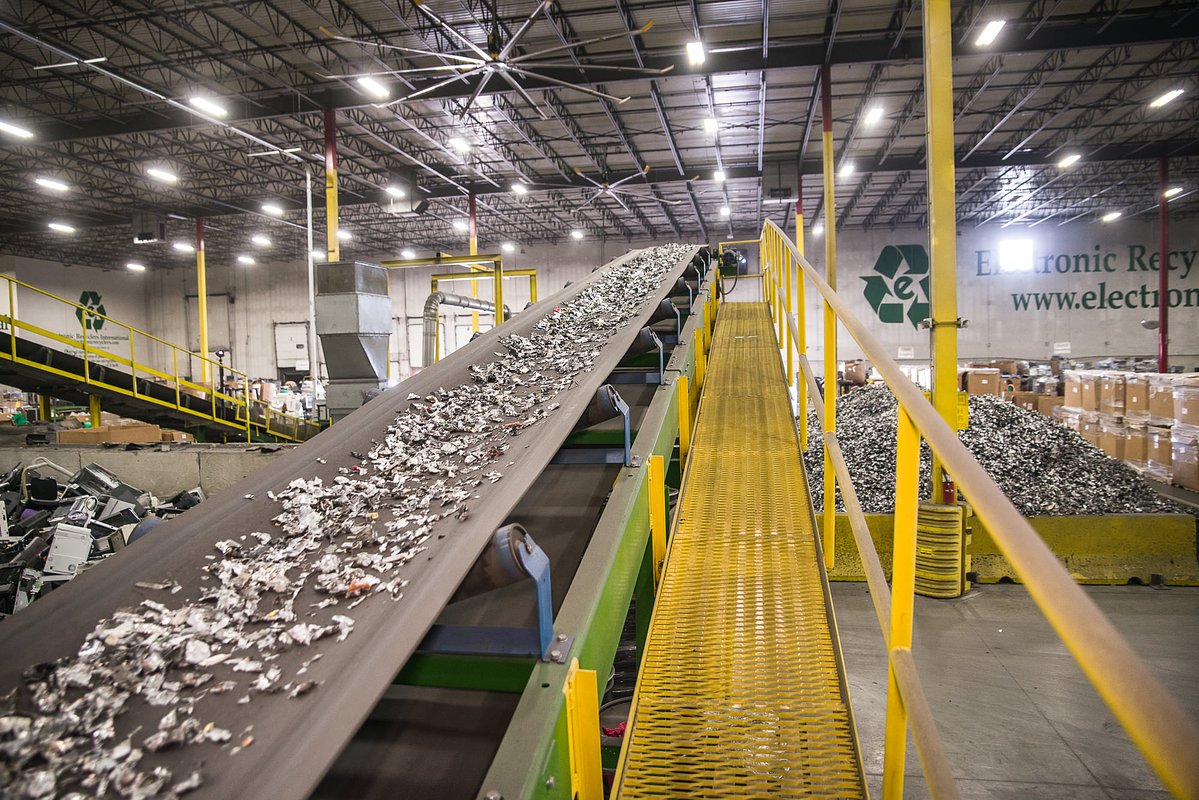
In this complex environment, companies like ERI are writing the blueprint for the future of recycling. The company's claim as the nation's largest electronics recycler, with the capacity to process over a billion pounds annually across nine U.S. locations, speaks to the scale required to make a dent in the problem. But the real story is in the evolution of their business model, which goes far beyond simple disposal.
When Ransom, whose company handles IT asset disposition (ITAD) and data destruction, speaks on a panel, the subtext is security. In today's world, a discarded company laptop isn't just waste; it's a potential data breach. This is why ERI’s high-level certifications, like ISO 27001 for information security and SOC 2 Type II for data protection, are so critical. They transform a recycling service into a risk management solution, assuring corporate clients that their data, people, and privacy are protected. This focus on security and compliance is a direct response to a powerful market need, turning what was once an afterthought into a core business imperative.
“I’m honored to have been invited to participate in this important discussion alongside my industry colleagues,” Ransom stated, underscoring the collaborative nature of the challenge. Her presence, alongside peers from Cyclic Materials and Sunnking Sustainable Solutions, shows an industry grappling with its own evolution.
Innovation on the Front Lines
The path forward, as Ransom and her fellow panelists discussed, hinges on two key pillars: innovation and collaboration. The sheer complexity of modern electronics—from tiny earbuds to massive EV batteries—demands new technologies for disassembly and material recovery. Researchers are already developing solutions like reversible conductive glues to make devices easier to repair and disassemble, while new hydrometallurgical processes are achieving over 90% lithium recovery from batteries in pilot studies.
This is no longer the scrap heap of the past. It is a high-tech, high-stakes industry at the intersection of environmental science, data security, and materials engineering. As the conference organizer, James Keefe of the Recycling Today Media Group, noted, such events are designed to “examine the issues surrounding battery and critical materials recovery and recycling.” The insights shared by leaders like Angie Ransom demonstrate that the most successful players will be those who can master the logistics of scale, the trust of security, and the ingenuity of innovation.