
- FDA 510(k) clearance for AI-powered OIRD detection in Masimo’s Radius VSM® wearable monitor.
- Predictive analytics identifies respiratory compromise hours before crisis.
- Wearable design enables continuous, untethered monitoring.
Experts would likely conclude that this AI-driven technology represents a significant advancement in patient safety by enabling earlier detection of opioid-induced respiratory depression, though its real-world efficacy will depend on seamless integration and avoiding alert fatigue.
Beyond the Beep: AI Clearance Signals a New Era for Patient Safety
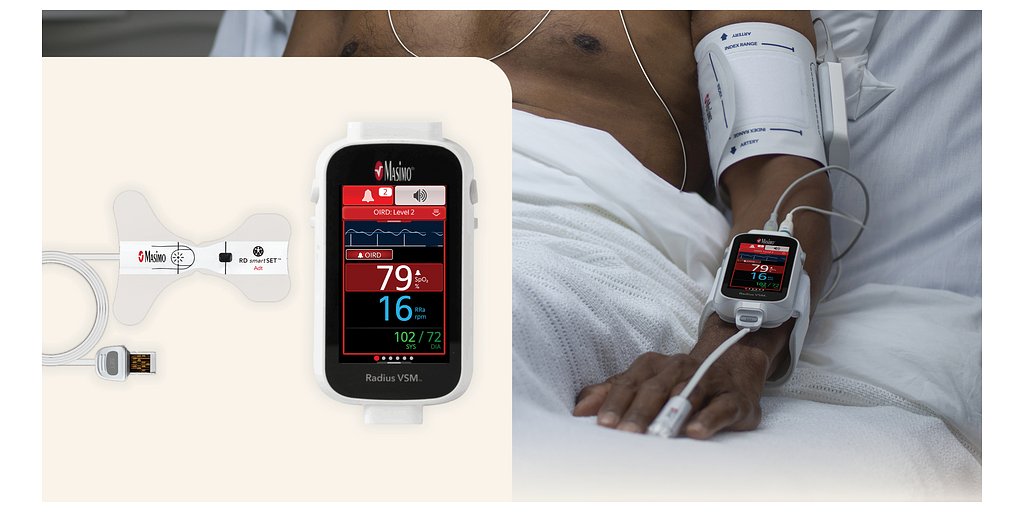
IRVINE, CA – June 22, 2026 – For decades, the sound of patient monitoring has been a simple, reactive beep—an alarm that sounds only after a patient's vital signs have already crossed a dangerous threshold. Today, that paradigm is being fundamentally challenged. Masimo, a stalwart in patient monitoring technology, has received FDA 510(k) clearance for an AI-powered feature designed to detect Opioid-Induced Respiratory Depression (OIRD) on its Radius VSM® wearable monitor. This isn't just another alarm; it's a predictive analytics engine that promises to identify the subtle signs of respiratory compromise hours before a crisis occurs, marking a significant leap from reactive alerts to proactive clinical intelligence.
OIRD is one of the most feared complications of post-surgical and chronic pain management. Opioids, while effective for pain, can dangerously suppress the body's drive to breathe, leading to a silent, often unwitnessed, decline that can result in brain damage or death. The challenge for hospitals has been monitoring at-risk patients, particularly on general care floors where nurse-to-patient ratios are high and continuous observation is impractical. Masimo’s clearance represents a major step toward closing this dangerous gap, deploying AI as a vigilant sentry at the patient’s bedside.
From Measurement to Insight: The Technology Behind Proactive Monitoring
The innovation lies within Masimo’s new smartSET™ pulse oximetry platform. While traditional pulse oximeters measure oxygen saturation and pulse rate, the smartSET system, integrated into the tetherless, wearable Radius VSM monitor, does far more. It continuously gathers a stream of physiological data and feeds it into an AI algorithm trained to recognize complex patterns indicative of developing OIRD. Instead of just reacting to a single low oxygen reading, the system analyzes trends, variability, and the interplay between multiple vital signs over time.
This shift from single-data-point thresholds to holistic pattern recognition is the core of the breakthrough. The Radius VSM, worn by the patient, allows for uninterrupted data collection as they move around, a critical advantage over bed-tethered monitors. The AI provides clinicians with visual alarms that escalate as a patient’s risk profile increases, allowing for earlier, more subtle interventions—like stimulating the patient to breathe or adjusting their opioid dose—long before a full-blown emergency necessitates a rapid response team.
“Opioid-Induced Respiratory Depression remains a critical patient-safety concern,” said Dr. Basil Matta, Chief Medical Officer at Masimo, in the company's announcement. “With OIRD detection, Masimo is bringing advanced pattern recognition to continuous, wearable monitoring to help clinicians identify earlier changes in a patient’s respiratory status that may not be apparent through traditional approaches. This capability reflects our ongoing focus on working closely with clinicians to address complex patient-safety challenges with meaningful innovation.”
By translating a constant stream of data into what the company calls “meaningful insight,” the technology aims to transform continuous monitoring from a passive safety net into an active tool for clinical decision-making.
Navigating the Hospital Floor: Adoption and the Human Factor
While the technology promises a new layer of safety, its integration into the complex hospital ecosystem is not without challenges. The first hurdle is economic. Advanced monitoring systems represent a significant capital investment, and hospital administrators must weigh the cost against demonstrable ROI in the form of reduced adverse events and shorter hospital stays. The innovation comes as Masimo, a long-standing public leader in pulse oximetry, navigates a complex corporate landscape, reflecting the high-stakes nature of the medical technology sector.
Beyond cost, the most significant barrier may be human. The introduction of any new monitoring system requires seamless integration with existing Electronic Medical Records (EMRs) and extensive staff training. However, the most pressing concern for clinicians is the specter of 'alert fatigue.'
“The best algorithm is useless if the alerts are ignored,” said a chief nursing officer at a major academic medical center, who spoke on the condition of anonymity to discuss internal technology assessments. “We have seen systems that generate so many low-level, non-actionable alarms that they just become background noise for our busy staff. The key will be whether Masimo’s AI is specific enough to flag only the patients who are truly deteriorating. That is the acid test for any predictive monitoring tool.”
Successfully implementing this technology will require a carefully orchestrated balance: providing timely, critical warnings without overwhelming the very clinicians it is designed to support. The system's ability to escalate alarms based on risk level is a step in the right direction, but real-world efficacy will depend on fine-tuning these thresholds to match clinical realities.
The New Frontier of AI in Patient Care
Masimo's clearance is a bellwether for a much larger trend: the infusion of artificial intelligence into every facet of patient monitoring. The industry is rapidly moving beyond descriptive analytics (what happened) to predictive analytics (what is likely to happen). Competitors like Medtronic, Philips, and GE Healthcare are all investing heavily in algorithms that can forecast sepsis, cardiac arrest, or other forms of patient deterioration. Masimo’s FDA clearance for a specific, high-risk condition like OIRD gives it a powerful foothold in this emerging market.
This new frontier also brings profound ethical and practical questions. As AI models become more influential in clinical decisions, transparency becomes paramount. Clinicians need to have a fundamental trust in the algorithms, which can be difficult when dealing with proprietary 'black box' systems. Furthermore, the continuous collection of granular patient data raises significant privacy and security concerns, demanding robust adherence to HIPAA and other data protection regulations.
The ultimate goal is not to replace clinical judgment but to augment it. AI’s strength lies in its ability to tirelessly detect subtle patterns in vast datasets that are invisible to the human eye. By flagging a patient at risk, the technology can direct a nurse’s attention where it’s needed most, allowing them to apply their critical thinking and experience to confirm the finding and determine the appropriate course of action. The true measure of success for this technology will be its ability to seamlessly integrate into the clinical workflow, empowering caregivers at the bedside to transform patient care.