
- Dual-Mode Design: The BistroSwitch Play Kitchen converts between a home kitchen and a bistro prep station, extending play engagement.
- Premium Positioning: Priced at $159, it combines FSC-certified wood, sustainable materials, and upscale aesthetics.
- Developmental Benefits: Supports fine motor skills, executive functioning, and social-emotional growth through role-shifting play.
Experts would likely conclude that the BistroSwitch Play Kitchen represents a significant innovation in children's toys, merging developmental science, sustainability, and modern design to address key parental concerns about play longevity and educational value.
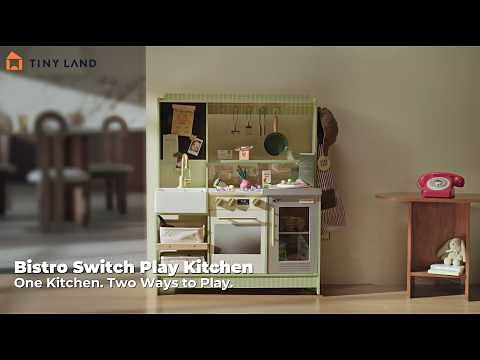
Beyond Pretend Cooking: The Rise of the Transformative Play Kitchen
UPLAND, CA – June 19, 2026 – In a move that signals a deeper understanding of modern family dynamics, children's toy brand Tiny Land today unveiled the BistroSwitch Play Kitchen. On the surface, it's an elegant, wooden play kitchen. But with a simple, clever adjustment, it converts from a cozy home cooking space into a bustling bistro prep station. This isn't just a new feature; it’s a direct answer to the perennial parental lament of expensive toys that lose their novelty in mere weeks.
This launch feels less like a product release and more like a statement on the future of play. It arrives as families increasingly seek refuge from the digital deluge, searching for tangible, screen-free alternatives that do more than just occupy time. Tiny Land is betting that the solution lies not in more lights or sounds, but in more depth, versatility, and imagination. By deconstructing the design, we can see a calculated strategy to create tangible value for both child and parent.
A New Recipe for Play Engagement
For decades, the play kitchen has been a staple of childhood, a static stage for mimicking adult routines. But its fixed design often leads to a predictable drop-off in engagement. Tiny Land's press release boldly calls the BistroSwitch the "world's first dual-mode play kitchen," a claim that hinges on its unique transformation mechanism.
While market research reveals other multi-functional or two-sided kitchens, their designs are typically static. A child plays on the kitchen side or the restaurant side. The innovation here is the conversion itself. A central stovetop panel slides away to reveal a professional-style bistro prep station, complete with a four-container food bar. This fluid shift between two distinct role-play environments is what sets it apart. It’s a tangible difference that empowers the child to change the entire narrative of their play session on a whim.
This design directly addresses the core problem of short toy lifespans. Instead of a single play scenario, the BistroSwitch offers a complete system. One moment, a child is preparing a family meal on the three-zone stovetop; the next, they are a bustling chef taking orders from a magnetic chalkboard and managing their own café. This duality encourages longer, more immersive play sessions and supports collaborative scenarios where children can take on different roles—chef, customer, server—simultaneously.
The Developmental Dividend of Unplugged Play
The BistroSwitch is deeply rooted in the principles of developmental science, a fact the company underscores by collaborating with pediatric therapists. "This kitchen creates an engaging play experience that blends functional skill-building, sensory exploration, and imaginative play while encouraging children to learn through everyday routines," explained Cristianna Cardinale, an Occupational Therapist and adviser to Tiny Land. Cardinale notes that such play supports everything from fine motor skills and hand-eye coordination to executive functioning and sequencing.
Beyond the physical, the toy is designed to be a catalyst for social and emotional growth. Dr. Anastasia Bach, a Pediatric Physical Therapist who also collaborated on the project, emphasizes the importance of role-shifting. "Instead of repeating the same cooking activity, children naturally shift between real-world roles within a continuous play system," she stated. "This kind of role-shifting social play supports communication, flexible thinking, problem-solving, and independence in a natural and engaging way."
This focus on child-led, battery-free play aligns perfectly with the educational philosophies of Montessori and Waldorf, which champion the use of natural, tactile materials to support sensory development. The choice of Forest Stewardship Council-certified wood over plastic is not merely an environmental statement; it's an educational one. The weight, texture, and scent of wood provide a richer sensory experience that plastic cannot replicate, grounding the child's imaginative world in a sense of reality and quality.
Designed for the Modern Home
For years, parents have resigned themselves to playrooms filled with brightly colored plastic that clashes with their home's aesthetic. The BistroSwitch is part of a growing movement to dismantle that paradigm. With its minimalist silhouette, muted sage green and white palette, and sophisticated brass-tone hardware, it's designed to complement upscale interiors, not conquer them. This is not a toy to be hidden away; it's a piece of furniture that facilitates play.
This trend of furniture-grade children's products reflects a shift in consumer priorities. Parents are increasingly willing to invest in items that are not only durable and educational but also aesthetically pleasing. The $159 starting price positions the BistroSwitch as a premium, yet accessible, product for families who value design and longevity. The inclusion of thoughtful details like a 40-page order notepad, a complete chef role-play kit, and foldable cotton-linen storage bins further elevates the experience from a simple toy to a comprehensive play system.
The commitment to sustainability, evidenced by the use of FSC-certified wood and independent safety testing, reinforces this premium positioning. It tells a story of a brand that respects not only the child's development but also the family's home and the planet's future.
Setting a New Table in a Crowded Market
The children's toy market is a fiercely competitive landscape dominated by established giants. For a company like Tiny Land, success requires not just a good product, but a sharp strategy. The BistroSwitch is a masterclass in market awareness, tapping into several powerful consumer currents simultaneously.
It caters to the demand for screen-free alternatives, the growing preference for sustainable and eco-friendly products, the desire for toys with clear educational benefits, and the trend toward aesthetically integrated play items. By addressing these four key areas in a single, innovative product, Tiny Land has carved out a compelling niche.
The BistroSwitch doesn't just compete on features; it competes on philosophy. It offers a vision of childhood play that is imaginative, self-directed, and deeply connected to the real world. In doing so, it provides a powerful value proposition for a generation of parents seeking to raise creative, independent, and socially aware children. This thoughtful fusion of design, development, and market savvy suggests that the most impactful innovations are often those that simply allow a child’s imagination more room to grow.