
- $7.7 trillion: Projected global bioeconomy market value by 2030
- 7.8 million hectares: Forest conserved through Idesam's efforts
- $40,000: Maximum cash prize for winning teams in the Amazon Bioinnovation Challenge
Experts agree that integrating sustainable business models with traditional knowledge offers a promising, multi-faceted approach to Amazon conservation, though long-term success will depend on scalable implementation and community engagement.
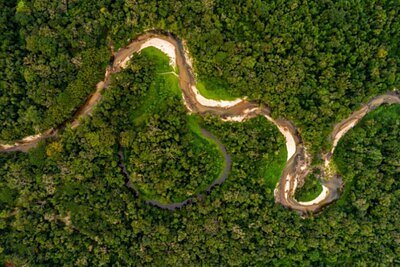
Beyond Preservation: Can Business Save the Amazon Rainforest?
MANAUS, Brazil – May 14, 2026 – In a bold move to redefine conservation, the Institute for Conservation and Sustainable Development of the Amazon (Idesam) has launched a global initiative that wagers the rainforest's future not just on protection, but on production. The Amazon Bioinnovation Challenge, announced today, seeks to transform the region's unparalleled biodiversity into a new generation of impact-driven businesses, proposing that the most effective way to keep the forest standing is to make it more valuable alive than dead.
Backed by the formidable financial power of the Bezos Earth Fund and the academic rigor of partners like Penn State University, the challenge is one of the largest bioeconomy innovation programs ever launched in the region. It invites international research and development specialists to collaborate with local innovators and communities, aiming to unlock sustainable economic potential from the forest's natural assets. The deadline for applications is June 30, 2026.
This initiative represents a significant paradigm shift, moving beyond traditional conservation models that often pit economic development against environmental protection. Instead, it champions a future where a thriving, forest-based economy becomes the Amazon's most resilient defense against deforestation.
A New Economic Paradigm for the Amazon
The core idea behind the challenge is the bioeconomy—a model that uses renewable biological resources to create value-added products. With the global bioeconomy market projected to reach an astounding $7.7 trillion by 2030, proponents argue that the Amazon, the world's most biodiverse region, is uniquely positioned to become a global hub for sustainable innovation.
Idesam's challenge focuses on six key areas ripe for development, aiming to move beyond the simple extraction of raw materials. These include creating advanced biomaterials from native rubber, finding new uses for the byproducts of the globally popular açaí berry, and advancing innovations with prized Amazonian oils like andiroba, copaíba, and buriti. These oils are already sought after in the cosmetics and pharmaceutical industries for their rich natural compounds, but the potential for further value creation is immense.
"The challenge is about turning science into real-world solutions that keep the forest standing while creating sustainable economic opportunities," said Paulo Simonetti, Leader in Open Innovation and ESG at Idesam. This vision directly confronts the economic drivers of deforestation—such as cattle ranching and soy cultivation—by offering a more profitable and sustainable alternative. Successful examples like the existing markets for Brazil nuts and cocoa have already shown that even small-scale agroforestry systems can generate more income per hectare than activities that require clear-cutting.
From Conservation to Creation: A Proven Model
For Idesam, this challenge is not a speculative venture but the culmination of two decades of on-the-ground work. Established in 2004, the non-profit has built a formidable track record of fostering sustainable solutions that benefit both the environment and local populations. The organization reports that its efforts have directly benefited over 6,000 families, contributed to the conservation of 7.8 million hectares of tropical forest, and restored over 1,200 hectares through community-led agroforestry systems.
Idesam's Carbon Neutral Program, for instance, works with riverside communities to plant agroforestry systems that both sequester carbon and generate income, demonstrating a tangible link between conservation and improved livelihoods. Having been repeatedly named one of the best NGOs in Brazil, Idesam brings a deep well of experience and trust to this ambitious new project. The Bioinnovation Challenge is designed to scale this proven model, injecting global expertise and significant capital to accelerate the development of a resilient, forest-based economy.
Fusing Global Science with Ancestral Knowledge
A cornerstone of the initiative is its unique collaborative framework. This is not a case of external experts imposing solutions. Instead, the challenge is designed to fuse cutting-edge international science with the invaluable traditional knowledge held by the Amazon's indigenous and local communities. This approach is heavily informed by a precursor project led by Penn State University and funded by the Bezos Earth Fund, which worked directly with Amazonian communities to identify the most promising bioeconomy opportunities.
That research, co-led by experts in agricultural engineering and plant biotechnology, emphasized that for innovation to be truly sustainable, it must be built upon the collective governance and leadership of the communities themselves. The focus areas of the challenge were co-created with these local partners, ensuring that the resulting products and businesses are culturally appropriate and directly address community needs.
This fusion of knowledge systems is critical. While international specialists bring advanced techniques in chemistry, materials science, and market analysis, local communities possess generations of wisdom about the properties of native plants, sustainable harvesting practices, and the intricate ecology of the forest. By bringing these two worlds together, the challenge aims to foster breakthroughs that are not only commercially viable but also ethically sound and ecologically regenerative.
The Mechanics of Innovation: From Lab to Market
To turn this vision into reality, Idesam has structured a comprehensive support system for participants. The institute will initially select 25 R&D specialists and 25 local innovators, who will form collaborative teams. From this initial cohort, ten teams will be chosen to advance to a fully-funded, 15-day immersive residency in the Amazon, with activities based in Manaus and surrounding forest communities.
Participants will receive significant financial and technical support to de-risk the innovation process. R&D specialists are eligible for monthly grants of up to $1,300 for six months. Each team will also receive approximately $20,000 for testing and validation, along with access to laboratory facilities and expert mentorship. This support is designed to bridge the critical gap between a promising idea and a market-ready product.
At the conclusion of the program, three winning teams will be awarded cash prizes ranging from $20,000 to $40,000 to seed their new ventures. Perhaps more importantly, they will receive ongoing business development support, including legal guidance and crucial access to market and investment networks. This long-term commitment aims to ensure that the most promising solutions do not falter after the initial challenge, but grow into self-sustaining businesses that provide lasting benefits. As applications open, the global community watches to see if this blend of capital, science, and tradition can cultivate a future where the world's greatest rainforest can thrive both ecologically and economically.