
- 84 artworks by contemporary Saudi and Chinese artists featured in the 'When the wind turns east' exhibition
- 35 years of diplomatic relations between Saudi Arabia and China commemorated during the Cultural Year 2025
- 3% target contribution of the cultural economy to Saudi Arabia's GDP by 2030 under Vision 2030
Experts would likely conclude that the 'Common Ground' Festival exemplifies Saudi Arabia's strategic use of cultural diplomacy to strengthen ties with China, aligning with Vision 2030's goals of economic diversification and global cultural influence.
Beyond Oil: Saudi Arabia's Cultural Bridge to China
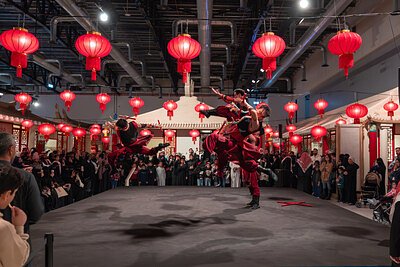
RIYADH, Saudi Arabia – January 21, 2026 – As the last of the vibrant lanterns dimmed in Riyadh's Mohammed bin Salman Nonprofit City (Misk City), the third edition of the 'Common Ground' Festival drew to a close. From December 24 to January 6, the city hosted a remarkable celebration of Chinese culture, marking a pivotal moment in the Saudi-Chinese Cultural Year 2025. More than just a festival, the event served as a powerful testament to Saudi Arabia's strategic pivot towards cultural diplomacy, leveraging shared heritage to build a future that extends far beyond economic partnerships.
Hosted by the Saudi Ministry of Culture, the festival welcomed the People's Republic of China as its guest of honor, transforming Al-Malfa Hall into a microcosm of cross-cultural discovery. The initiative aimed to reinforce civilizational dialogue and deepen the bonds between two nations with ancient histories, demonstrating how art, food, and tradition can forge connections that transcend geography.
A Tapestry of Shared Heritage
Visitors to the festival were immersed in a multi-sensory journey that masterfully blended Saudi and Chinese traditions. The centerpiece art exhibition, titled "When the wind turns east," featured 84 artworks by contemporary Saudi and Chinese artists, creating a visual dialogue on shared themes and divergent perspectives. The pieces explored concepts of nature, heritage, and identity, offering a modern interpretation of the ancient Silk Road's exchange of ideas.
Further into the venue, the bustling 'Chinese Street' zone came alive with live performances and cultural activations. Here, the profound, often surprising, parallels between the two cultures were made tangible. Displays highlighted shared aesthetics in rock inscriptions, the historical importance of trade routes, and the deep-rooted values of hospitality that define both societies. Visitors could observe traditional hair adornment practices, noting the striking similarity between the jasmine flowers used in Saudi Arabia's Jazan region and the floral hair decorations prevalent in Chinese culture.
Interactive experiences pushed the boundaries of a typical cultural festival. A dedicated virtual reality (VR) pavilion transported guests to Beijing, offering an interactive tour of the city's historic landmarks with a virtual guide. Another space celebrated the elegant art of calligraphy, showcasing the seamless fusion of flowing Arabic script and intricate Chinese characters. The philosophical depth of the traditional Chinese tea ceremony was also on full display, where masters of the art explained the meticulous preparation process while offering samples of rare teas.
Culinary arts provided another powerful bridge. An outdoor area featured live cooking demonstrations where Saudi and Chinese chefs worked side-by-side, their techniques and ingredients telling a story of distinct yet complementary flavors. The aroma of traditional Saudi dishes mingled with the sizzle of Chinese woks, allowing visitors to watch, learn, and taste the fruits of this delicious collaboration. The entire space was illuminated by elements connecting Chinese forms with Saudi architectural motifs, such as the fanous lantern, visually reinforcing the festival's core theme of finding commonality.
A Diplomatic Dance of Dragons and Falcons
The 'Common Ground' Festival was not an isolated event but a cornerstone of the ambitious Saudi-Chinese Cultural Year 2025, a year-long program designed to commemorate 35 years of diplomatic relations. This broader initiative underscores a significant geopolitical alignment, where cultural exchange acts as a catalyst for strengthening economic and political ties. It represents a sophisticated soft power strategy, weaving a narrative of partnership and mutual respect that complements the strategic synergy between Saudi Arabia's Vision 2030 and China's Belt and Road Initiative (BRI).
As Saudi Arabia works to diversify its economy away from oil, China has emerged as a crucial partner. The cultural year, with its dozens of planned events in both countries, is designed to foster the people-to-people connections that underpin durable economic relationships. Events like the major solo exhibition of Saudi artist Ahmed Mater in Shanghai and the "Art of the Kingdom" showcase in Beijing are introducing Saudi contemporary culture to a Chinese audience, challenging old perceptions and building new avenues for collaboration.
This cultural outreach is also directly linked to Saudi Arabia's burgeoning tourism sector. By creating a rich tapestry of cultural events and highlighting shared values, the Kingdom aims to become a more attractive destination for Chinese tourists, a key demographic in global travel. Initiatives to support this, such as training Mandarin-speaking tour guides and curating specific experiences, are already underway, with the cultural year serving as a major promotional platform.
Vision 2030's Cultural Renaissance
The festival's success is a tangible manifestation of Saudi Arabia's domestic transformation under Vision 2030. The Saudi Ministry of Culture, which oversees 11 sector-specific commissions, is driving a national cultural renaissance. The goal is not only to preserve the Kingdom's vast heritage but also to cultivate a vibrant cultural economy that contributes to the national GDP, with a target of 3% by 2030.
The choice of Misk City as the venue was symbolic. This new development is purpose-built to be a hub for youth, technology, and the creative industries, representing the very infrastructure of the future Saudi Arabia is building. By hosting international events like 'Common Ground,' the Kingdom showcases its capacity and commitment to becoming a global center for arts and culture.
This is not a new endeavor but an evolving strategy. The festival builds on the foundation of its previous editions, which hosted the Republic of Yemen and the Republic of Iraq. This pattern demonstrates a consistent commitment to exploring cultural connections, both regionally and globally, and to providing a platform for Saudi artists to collaborate with their international counterparts. Through these sustained efforts, the Ministry of Culture is enriching the daily lives of citizens and residents while simultaneously projecting a new, dynamic image of Saudi Arabia to the world. As the Saudi-Chinese Cultural Year 2025 continues, it is clear that these artistic and heritage-focused initiatives are integral to the nation's ambitious blueprint for the future. The festival was a celebration of two ancient civilizations finding common ground, but it was also the inauguration of a shared path forward.