
- 5.7 billion hours: Family caregivers in Canada perform unpaid work annually, valued at $97 billion.
- $128 billion: Projected value of unpaid caregiver work by 2035.
- 59%: Canadians over 50 who have experienced loneliness.
Experts would likely conclude that Hello Pearl addresses critical gaps in elder care by focusing on coordination, connection, and autonomy, offering a promising alternative to traditional safety-focused solutions.
Beyond Fall Detectors: A New App Reimagines Aging with Dignity in Canada
OAKVILLE, Canada – June 17, 2026 – A new Canadian digital platform, Hello Pearl, launched today with a blunt bet: that the hardest part of helping a parent age at home isn't medical, but logistical. It's the relentless coordination of small tasks, the social isolation at both ends of the phone, and the immense, often invisible, burden carried by a single family member. Provera Care Inc., the Oakville-based company behind the app, is challenging the elder care tech industry's focus on safety alarms and pill dispensers, arguing that the real crisis is one of coordination and connection.
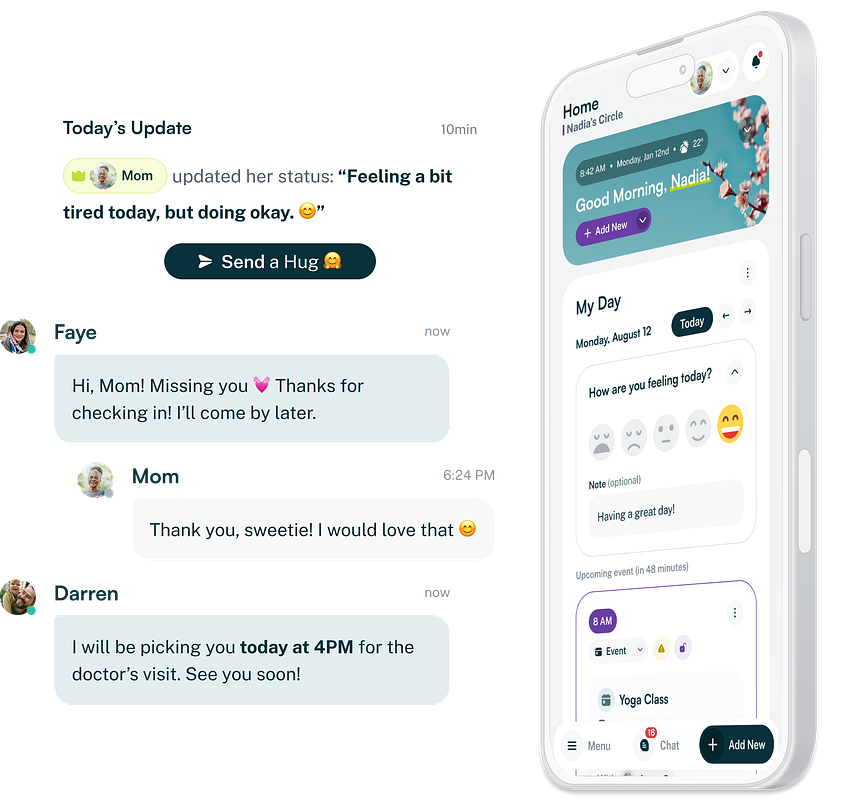
The platform provides a shared space for an older adult and their chosen circle of family, friends, and trusted providers to manage the daily realities of life—from grocery runs to prescription refills. The goal is to replace chaotic group texts and stressful phone tag with a streamlined system that distributes effort and, more importantly, keeps the older adult at the center of their own life, not as a problem to be managed.
"The hardest part of helping a parent age at home was never medical," said Angie Kramer, founder and CEO of Provera Care Inc., in today's announcement. "It's the steady drip of small things, and the one person, usually a daughter, quietly carrying it alone."
The Unseen Economy of Care
Hello Pearl enters a landscape defined by staggering numbers. Family caregivers in Canada perform 5.7 billion hours of unpaid work annually, a contribution to the healthcare system valued at an estimated $97 billion. With the country's population aging rapidly, that figure is projected to swell to $128 billion by 2035. This isn't a niche issue; it's a mainstream reality. One in four Canadians over the age of thirty is now a caregiver, with women in their forties and fifties shouldering the heaviest load, often while juggling careers and their own families.
The toll is not just financial. Reports have consistently highlighted the immense personal cost, with nearly three-quarters of caregivers reporting high levels of stress, fatigue, and burnout. This silent crisis unfolds alongside another: what the National Institute on Ageing has termed an "epidemic" of social isolation. Recent surveys found that up to 59 percent of Canadians over 50 have experienced loneliness. The industry's typical response—more hardware, more monitoring—often overlooks the fundamental human need for connection and participation that gets lost when every phone call home becomes a logistical check-in.
Shifting from Management to Empowerment
The core innovation of Hello Pearl is its philosophical shift. It rejects the vocabulary of dependency, recognizing that for many older adults, the word 'care' can sound like an ending. The platform is designed around the idea of a "Core Member"—the older adult—who decides who joins their support circle and what information is shared. This structure is a direct response to the feeling of being 'managed' that can erode a person's sense of autonomy.
"Older adults aren't problems to be managed. They are capable, they have their pride, and some of them built the internet," Kramer stated. The platform is designed to be flexible, molding "to the support circle you actually have and need, whatever that looks like," whether that’s a traditional family, a network of friends, or a mix of neighbors and professional helpers.
In practice, it works as a shared digital hub. If a lightbulb needs changing or a prescription needs refilling, a request is posted. The daughter who usually handles it might be busy, so she can notify her brother. If he’s unavailable, the request can be passed down a pre-vetted list of trusted individuals. Privacy is paramount; a hired cleaner or driver only sees the specific tasks they have been invited to view. By making the needs visible and the tasks divisible, the platform aims to prevent the quiet accumulation of responsibility on one person's shoulders. More profoundly, it allows the older adult to see their network in action, transforming them from a passive recipient of help into an active director of their own support system.
A Strategic Play in a Growing Market
Hello Pearl's launch is a calculated move in Canada’s burgeoning elder care economy. With Statistics Canada projecting the number of citizens over 85 will more than double by 2051, and with over 90% of seniors wishing to age in place, the demand for non-institutional solutions is exploding. While the market has apps for medication tracking or remote medical monitoring, Hello Pearl’s holistic approach to task management and social connection is a key differentiator.
Its go-to-market strategy is equally strategic. The company has launched with a distribution partnership with Just Like Family Home Care, one of Canada's major home care franchise networks. This provides immediate access to an established ecosystem of clients and professional caregivers who already understand the value of coordinated support. Carla Langhorst, CEO of Just Like Family, called the partnership a "natural fit with our blended care approach," one that helps create a "more connected and coordinated support network."
Provera Care's ambitions extend beyond simple coordination. A 'Pearl Marketplace' connecting users to vetted handymen, cleaners, and delivery services is planned for later this year, signaling a move towards creating a comprehensive service ecosystem. Furthermore, with U.S. expansion planned for 2027, the company is positioning itself for significant scale. This strategy frames Hello Pearl not just as a social good, but as a robust platform built for a future where technology is integral to the fabric of community-based support.
By focusing on the logistics that underpin daily life, the platform aims to free up families to simply connect. Once the small things are handled, calls home can be about sharing a story or a laugh, not just a litany of chores. In this vision, independence isn't about doing everything yourself; it's about being surrounded by the right people, so you can keep living the life you choose.