
- 20+ cognitive and emotional states identified by HABS's Neuro-AI technology, including mental workload, surprise, fatigue, and purchase intention.
- Tens of billions of dollars invested by Microsoft in expanding its AI infrastructure and partnerships.
- Neural data classified as sensitive information in states like Colorado and Minnesota, requiring explicit consent for collection.
Experts view this collaboration as a groundbreaking step toward AI that understands human cognition directly, with potential transformative applications in healthcare, cybersecurity, and retail, but caution that ethical and privacy challenges must be addressed to ensure responsible deployment.
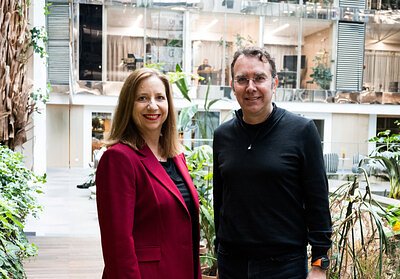
Beyond Data: Microsoft & HABS Build AI That Understands Humans
PARIS – March 10, 2026 – In a move that signals a significant shift in the trajectory of artificial intelligence, tech giant Microsoft has announced a strategic collaboration with HABS, a Paris-based pioneer in Neuro-AI. The partnership aims to build and deploy a new generation of "human-aware" AI systems capable of understanding and adapting to the real-time cognitive and emotional states of their users.
The collaboration brings together HABS's specialized research in cognitive signal interpretation with Microsoft's vast cloud computing and AI infrastructure. The goal is to address what many see as a fundamental limitation of current AI: its ability to process vast amounts of data without understanding the human context behind it. This initiative promises to create AI that is not just intelligent, but also empathetic and adaptive, with initial applications targeting critical sectors like healthcare, cybersecurity, and retail.
A New Paradigm: AI That Measures Cognition
At the heart of this collaboration is HABS's unique Neuro-AI technology, born from two decades of research at the intersection of neuroscience and artificial intelligence. Unlike conventional AI systems that infer a user's state from behavioral data like clicks and keystrokes, HABS's technology is designed to measure cognition directly.
The company utilizes non-intrusive methods, such as electroencephalography (EEG) scanning, to capture and translate the brain's electrical signals. These signals are then processed by sophisticated neural networks within a federated AI architecture, transforming raw brainwave data into structured cognitive indicators. HABS claims its system can identify over 20 distinct cognitive and emotional states—including mental workload, surprise, fatigue, and even purchase intention—with what it describes as "unprecedented scientific precision." These decoded signals are used to generate proprietary "NeuroMarkers," which can serve as metrics for everything from concentration levels to biometric authentication.
"At HABS, we build AI that understands the human behind the data, not by inference, but by measuring cognition itself," said Olivier Locufier, Founder and CEO of HABS, in the announcement. "Collaborating with Microsoft allows us to scale this vision globally. We are laying the foundation for a new category of human-aware AI, capable of reading cognitive signals in real time, respecting human context, and augmenting decision-making across critical industries."
Microsoft's Strategic Push into Human-Aware Systems
For Microsoft, this partnership is a calculated move that aligns perfectly with its broader strategy of embedding AI as a fundamental layer across its entire product ecosystem. The company has invested tens of billions of dollars into expanding its AI infrastructure and forging key partnerships to maintain its competitive edge. This collaboration with HABS represents a strategic effort to move beyond generalized AI and develop highly specialized, industry-specific solutions that address core limitations of the technology.
By integrating HABS's Neuro-AI, Microsoft aims to create a new standard for AI platforms—systems that are inherently safer, more effective, and better aligned with human capabilities. The plan involves a progressive, horizontal integration of the technology across Microsoft's key platforms, including its Azure cloud services and industry-specific AI agents.
"The collaboration with HABS aligns with the incredible potential we see in AI technologies to empower people," noted Adir Ron, Microsoft's Cloud & AI Director for Startups & ISVs in EMEA. "Neuro-AI is seeking to transform how technology interacts with people, making systems more adaptive, safer, and human-aware. By working with HABS's on AI, cloud, and data platforms, we are not only addressing today's challenges but laying the foundations for a new era in which AI better understands context and intent."
From Hospitals to High-Street: The Potential Applications
The initial focus of the partnership on healthcare, retail, and cybersecurity highlights the transformative potential of AI that can interpret human cognition. While specific pilot programs are yet to be detailed, the capabilities of the combined technologies point toward a range of powerful applications.
In healthcare, the technology could revolutionize diagnostics and patient care. HABS's NeuroMarkers could assist in the early detection of neurological diseases, while real-time cognitive monitoring could offer objective assessments of pain or distress in patients who cannot communicate verbally.
In cybersecurity, human-aware AI could introduce a new layer of defense. Biometric authentication using unique neural signatures could create nearly unbreachable security protocols. Furthermore, systems could monitor the cognitive load of security analysts during a cyberattack, helping to prevent burnout and critical errors in high-pressure situations.
For the retail sector, the implications are equally profound. An AI that understands a shopper's cognitive state could create hyper-personalized experiences, adapting a website's layout or product recommendations based on detected interest or confusion, moving far beyond current personalization algorithms.
The Mind Readers: Navigating a New Ethical Frontier
While the promise of human-aware AI is immense, the technology also opens a Pandora's box of complex ethical and privacy challenges. The ability to "read" cognitive signals brings society to a new frontier where thoughts and emotions could become data points, raising profound questions about mental privacy and autonomy.
Neural data is arguably the most intimate data a person has, potentially revealing subconscious thoughts, hidden emotions, and mental health status. Experts in neuro-ethics warn of the potential for this data to be used for profiling, manipulation, or even "cognitive hacking" if it falls into the wrong hands. The risk of creating hyper-persuasive marketing that preys on subconscious desires or discriminating against individuals based on their cognitive profiles is a significant concern.
The regulatory landscape is struggling to keep pace. While medical data is protected under laws like HIPAA, consumer neurotechnology largely operates in a legal "gray area." In the United States, states like Colorado and Minnesota have begun to take legislative action, amending privacy laws to include "neural data" as sensitive information requiring explicit consent for collection. These efforts reflect a growing recognition that existing legal frameworks may be insufficient to protect what some are calling "cognitive liberty"—the right to control one's own mental processes.
Both HABS and Microsoft have emphasized their commitment to the "responsible deployment" of this technology. Microsoft, in particular, has built its AI strategy around principles of fairness, transparency, and security. As these powerful new systems are integrated into society, the success of this venture will depend not only on its technological prowess but on the ability of its creators to build robust ethical guardrails that ensure human-aware AI serves humanity without compromising its privacy and autonomy.