
- 13,000 children reunited with families since 2018
- 2,174 placements in 2024 alone
- 18 countries now using Children First Software (CFS)
Experts agree that Both Ends Believing's data-driven, tech-enabled approach is revolutionizing child welfare by significantly accelerating family reunifications and reducing institutional care reliance.
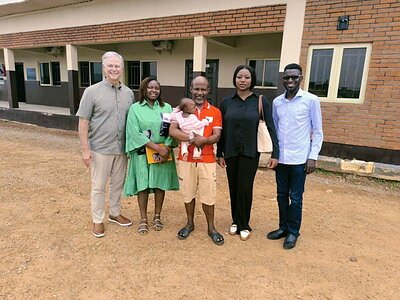
Beyond Charity: Tech Maps a Path Home for the World's Lost Children
DALLAS, TX – December 08, 2025 – In the world of global nonprofits, anniversaries are often marked by fundraising galas and sentimental retrospectives. But for Both Ends Believing (BEB), its 15th year is a testament to a different kind of strategy: one built on scalable technology, strategic partnerships, and a relentless focus on data to solve one of humanity’s most heartbreaking logistical failures—the millions of children lost in the anonymity of institutional care.
The Dallas-based organization just announced it has now helped unite more than 13,000 children with families since the 2018 launch of its proprietary software. This isn't just a milestone; it's a proof of concept. BEB is demonstrating how a brand can tackle a global crisis not just with goodwill, but with the ruthless efficiency of a tech company, fundamentally altering the operating system of child welfare across the globe.
The Digital Identity: From Paper Files to Permanent Families
At the core of the global orphan crisis is a data problem. UNICEF estimates at least 2.7 million children live in residential care, a figure widely considered an underestimate due to poor record-keeping. In many nations, a child's entire history—their identity, family connections, and legal status—exists only in a precarious paper file, vulnerable to being lost, damaged, or simply forgotten in a cabinet. This administrative black hole can trap a child in an institution for years, rendering them invisible to the very systems designed to protect them.
Both Ends Believing’s strategic intervention was to treat this not as an insurmountable tragedy, but as a systems engineering challenge. The result is the Children First Software (CFS), a secure, cloud-based platform developed in partnership with public-sector tech giant Tyler Technologies. The software’s mission is simple but profound: to give every child a permanent, portable digital identity.
Instead of a dusty folder, each child gets a comprehensive digital profile. The CFS platform is more than a simple database; it’s a complete case management ecosystem with six modules guiding social workers through every step: from initial child registration and creating a permanency plan to qualifying prospective families and monitoring post-placement success. Data security is paramount, with the platform utilizing the same robust protocols as U.S. government systems to protect highly sensitive information.
This digital transformation is collapsing timelines. What once took years of painstaking manual work—cross-referencing files, tracking down distant relatives, navigating legal hurdles—can now be managed with data-driven precision. A mobile app allows social workers to register children and update files from remote areas without internet connectivity, a critical feature in many of the 18 countries where BEB operates. The result, as the organization states, is that placements that once took years now take months.
Building a Scalable Model for Global Impact
Perhaps the most disruptive element of BEB’s brand strategy is its business model: the Children First Software is provided to governments at no cost. This removes the primary barrier to entry for resource-strapped nations and reframes the relationship from a vendor-client transaction to a deep, systemic partnership. BEB doesn't just hand over software; its teams provide the implementation, training, and support needed to embed the system within a country's national child welfare framework.
This approach has fueled remarkable growth. Under the leadership of former Board Chair Mark Schwartz, the organization expanded from 3 to 14 countries. Now, under new President Bruce Graham, who took the helm in September 2024, that number has grown to 18, with Cambodia marking its first entry into Asia.
Graham’s background is uniquely suited to this mission. He is the retired Chief Strategy Officer of Tyler Technologies, the very company that helped build CFS. His career, which includes growing Tyler's market value from $400 million to over $20 billion, is steeped in scaling complex technology solutions. His transition from the corporate boardroom to leading this nonprofit signals a doubling-down on technology as the central pillar of BEB's strategy for global expansion.
"We believe every child deserves to be known, safe, loved, and with a family," Graham stated in the anniversary announcement. "Before CFS, children languished in institutions for years. Now, with digital identity and real-time data, we're seeing life-changing placements happen faster than ever."
The Human ROI: Measuring Success in Changed Lives
For the business leaders and marketing professionals who read this column, return on investment is a familiar metric. At Both Ends Believing, the ROI is measured in futures reclaimed. The 13,000 placements since 2018—with 2,174 in 2024 alone—are more than just numbers on a dashboard. They represent individual children moved from the developmental poverty of an institution to the nurturing environment of a family.
The data reveals a nuanced approach. In countries like the Dominican Republic, where 100% of institutionalized children were enrolled in CFS, the vast majority of placements were domestic kinship care or adoptions. In Ethiopia, most placements have been biological family reunifications. This counters the common misconception that the goal is solely international adoption. In fact, research shows over 80% of children in institutions have at least one living parent, and CFS is a powerful tool for family tracing and reunification, which is the primary goal whenever possible.
Case studies from the field make the impact tangible. In Uganda, a "Digital Victory" occurred when a child's electronic profile on CFS was sufficient to secure a court care order, sparing the child a traumatic physical appearance. In Ethiopia, a 13-year-old boy living on the streets was successfully reunited with his mother thanks to the system. These are not just anecdotes; they are demonstrations of a system working as designed.
As Graham noted, the impact transcends individual placements. "We're not just improving systems," he added. "We're breaking cycles. When a child is placed with a family, it changes their future—and the future of their community."
Navigating the Complex Landscape of Child Welfare
Both Ends Believing is a key player in a growing movement to leverage technology for child protection, but it is not alone. Major international bodies like UNICEF and Save the Children have deployed open-source platforms like Primero and CPIMS+ for case management and family reunification, facilitating thousands of placements in crisis zones. Organizations like Lumos and Miracle Foundation are advocating fiercely to end institutionalization entirely.
Within this ecosystem, BEB has carved out a distinct and powerful niche. While open-source tools offer flexibility, BEB provides a comprehensive, secure, and fully supported platform specifically designed to empower national governments. By giving authorities ownership of the data and the process, it fosters long-term, systemic change rather than temporary, project-based intervention. This focus on building sovereign capacity is a core differentiator.
The challenge remains immense. The millions of children still living in institutions represent a market of incalculable human need. But as Both Ends Believing celebrates 15 years, it offers a compelling blueprint for other mission-driven brands. It shows that by combining a clear-eyed strategic vision, powerful technological tools, and a partnership-based business model, it is possible to build a brand that doesn't just tell a good story, but actively rewrites the stories of thousands of children for the better. The recent expansion into Cambodia is not just another pin on the map; it is the next chapter in a global strategy that is proving its worth, one child at a time.