
- $3 million committed for 2026 Community First® Developer Program
- $12 million awarded since 2022, supporting over 200 internships and fellowships
- 75% of grant funds required to be used for paid intern/fellow compensation
Experts would likely conclude that FHLBank Chicago's strategic investment in developing affordable housing professionals addresses a critical workforce gap, potentially enhancing the effectiveness of broader housing initiatives.
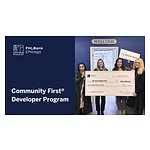
Beyond Bricks: FHLBank Chicago's Bet on the People Who Build Housing
CHICAGO, IL – June 29, 2026 – The Federal Home Loan Bank of Chicago (FHLBank Chicago) today announced it is opening applications for its 2026 Community First® Developer Program, committing another $3 million to a challenge that funding alone cannot solve. While headlines often focus on interest rates and material costs, this initiative targets a more fundamental bottleneck in the affordable housing crisis: a critical shortage of skilled development professionals.
In a strategic move that underscores the evolving role of regional financial institutions, the bank is channeling grants ranging from $50,000 to $200,000 to organizations in Illinois and Wisconsin. The goal is not to fund construction directly, but to cultivate the next generation of leaders who can navigate the complex world of affordable housing development. It's a long-term play in a sector desperately needing short-term solutions, and it might just be one of the most effective strategies on the table.
"Expanding housing supply and addressing affordability challenges requires a skilled workforce prepared to meet growing demand," said Katie Naftzger, SVP and Community Investment Officer at FHLBank Chicago. Her statement gets to the heart of the issue. A lack of affordable housing isn't just a market failure; it's an operational one. Without the project managers, financial analysts, and community liaisons to turn capital into homes, even the most ambitious funding programs can stall. This program is designed to build that human infrastructure.
A Sustained Strategy, Not a Silver Bullet
This isn't a fledgling effort. Since its inception in 2022, the Developer Program has become a cornerstone of FHLBank Chicago's community investment strategy, awarding $12 million and supporting over 200 internships and fellowships. The 2025 cycle alone saw $5.9 million distributed to 28 organizations, creating pathways for more than 100 aspiring professionals.
The program's design, which was developed with input from the bank's Community Investment Advisory Council, is intentionally precise. It stipulates that at least 75% of grant funds must be used for intern and fellow compensation, ensuring that these are not unpaid, token positions but substantive career opportunities. This focus on paid experience is crucial for attracting a diverse talent pool that may not have the financial cushion for traditional, unpaid entry points into the industry.
By requiring applicants to partner with one of FHLBank Chicago's member institutions—which include local banks, credit unions, and community development financial institutions (CDFIs)—the program creates a powerful, collaborative ecosystem. It connects capital and expertise in a way that strengthens the entire development pipeline.
From Theory to Tangible Impact
The real measure of success lies with the organizations on the ground. For AK Development, a recipient in the 2025 cycle, the program has been a game-changer. "This funding allows us to invest in future affordable housing leaders while expanding our capacity to serve communities today," said Ariam Kesete, the firm's founder. He highlighted how the hands-on experience provided through the program strengthens both his workforce and his ability to move critical projects forward.
This sentiment is echoed by financial partners who see the program's value multiply within their communities. "The Developer Program helps connect funding with organizations addressing housing needs in our communities," noted Heather Nelson, President and CEO of Spring Bank. "We're proud to partner with FHLBank Chicago to invest in the next generation of affordable housing leaders."
Other success stories paint a vivid picture of the program's impact. In Wisconsin, Kaba-Baal LLC used its 2025 grant to bring on fellows who contributed to senior housing projects in River Falls and Columbus. In Chicago, a partnership with BMO funneled $440,000 to The Resurrection Project and the Illinois Housing Council, supporting roles in active developments and amplifying the council's own Emerging Leaders Internship program. These are not abstract investments; they are direct infusions of talent into projects that communities desperately need.
A Pillar of Regional Economic Development
The Developer Program does not operate in a vacuum. It is a key component of FHLBank Chicago's multi-faceted approach to community investment, sitting alongside larger, more traditional funding mechanisms. The bank’s Affordable Housing Program (AHP), for example, recently closed a competitive funding round that saw 88 applications requesting a staggering $115 million in subsidies for over 3,400 housing units. This overwhelming demand highlights the scale of the housing shortfall.
What it also reveals is the critical importance of the Developer Program. If the AHP provides the fuel, the Developer Program is building the engine. Without a growing cohort of skilled professionals capable of deploying that $115 million effectively, the capital's impact is diminished. By investing in talent, FHLBank Chicago is ensuring its larger financial commitments can be successfully executed, maximizing the return on investment for the communities it serves.
This integrated strategy, which also includes down payment assistance through its Downpayment Plus (DPP) program and discounted funding via its Community Advance product, positions FHLBank Chicago as more than a government-sponsored enterprise. It acts as a strategic catalyst for regional economic resilience, demonstrating how a financial institution can address systemic social challenges by investing in human capital.
As applications open for the 2026 cycle, with a deadline of July 31, the focus remains clear. In an era defined by complex problems, the most elegant solutions are often about people. By systematically building a pipeline of dedicated and skilled professionals, FHLBank Chicago is making a calculated bet that the best way to build more homes is to first build the leaders who will bring them to life.