
- First REMUS 130 delivered to an unidentified U.S. ally (June 16, 2026)
- 90% of REMUS 100 series units remain in active service after 25 years
- REMUS 130 features modular, open-architecture design for rapid sensor/payload integration
Experts would likely conclude that the REMUS 130 represents a strategic leap in autonomous underwater systems, offering allies enhanced adaptability and cost-efficiency in maritime security.
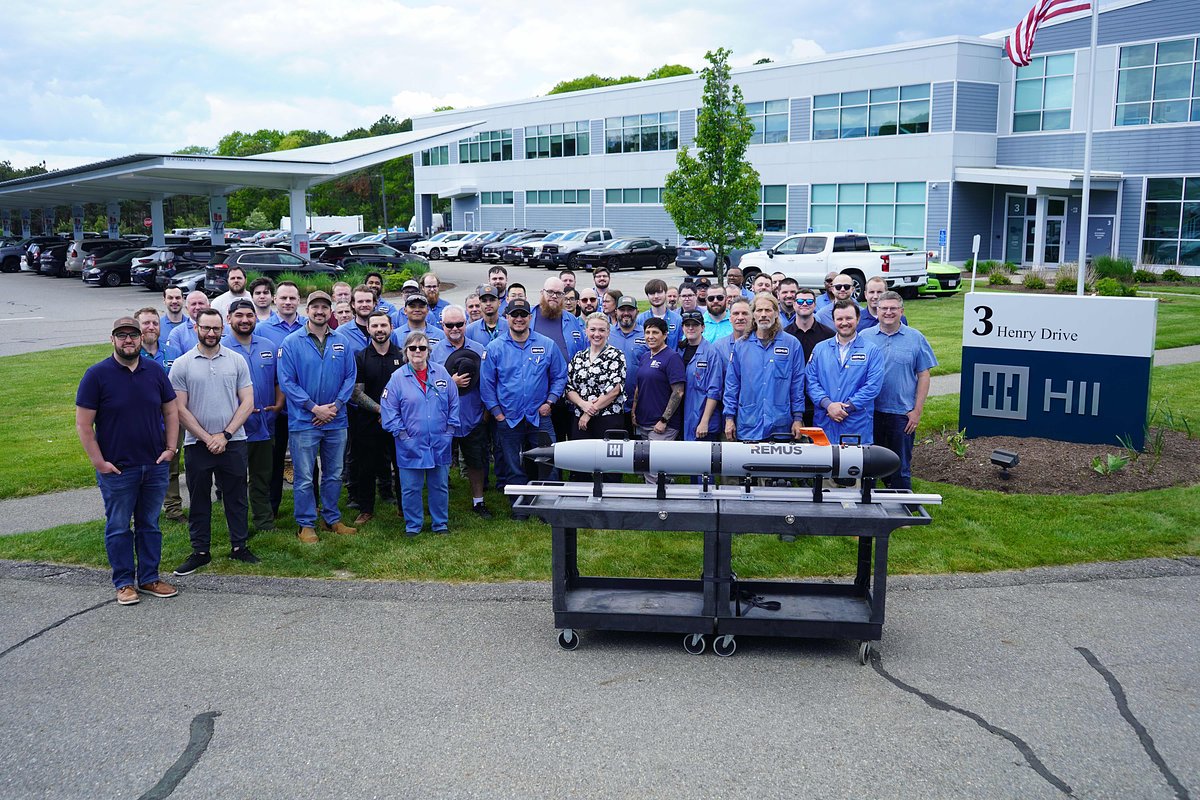
Beneath the Waves: HII's REMUS 130 Signals a New Era in Naval Strategy
POCASSET, Mass. – June 16, 2026 – In a move that ripples far beyond the waters of coastal Massachusetts, HII, America’s largest military shipbuilder, has delivered the first of its new REMUS 130 unmanned underwater vehicles (UUVs) to an unidentified U.S. ally. On the surface, it’s the delivery of a new piece of hardware. But viewed through a strategic lens, this event represents a significant inflection point in the complex systems of global maritime security. It signals the maturation of affordable, adaptable autonomous technology and its proliferation to allied forces on the front lines of naval competition.
For over two decades, the REMUS family of UUVs has been the global workhorse for undersea missions, a trusted name for navies and research institutions alike. This new delivery, however, isn't just an incremental update. The REMUS 130 is the vanguard of a new generation, designed not just to perform missions, but to adapt to them in ways that fundamentally alter the calculus of undersea operations.
A New Generation of Undersea Sentinels
The REMUS 130 builds upon the legacy of the highly successful REMUS 100 series, a platform so reliable that over 90% of all units deployed in the last 25 years remain in active service. Yet, the 130 is a generational leap forward, defined by its internal architecture rather than just its physical specifications. While it retains the compact, two-person-portable design, a 100-meter depth rating, and a 10-hour endurance, its true innovation lies in its brain and nervous system.
At its core is a modular, open-architecture design. In a world of proprietary, closed systems, this is a revolutionary concept. It transforms the UUV from a fixed-function tool into a versatile platform, akin to a smartphone that can run different apps. Allied navies can now rapidly integrate new sensors, software, and payloads—whether from HII, a third party, or developed in-house—to meet evolving threats and mission requirements. This flexibility drastically reduces lifecycle costs and prevents technological lock-in, ensuring the platform remains relevant for years to come.
Powering this adaptability is HII’s Odyssey Autonomous Control System (ACS), a sophisticated software core that functions as the vehicle's intelligent brain. Already deployed on REMUS platforms in over 30 countries, Odyssey enables advanced capabilities like collaborative autonomy, where multiple vehicles can work together on a single mission, and sensor fusion, which creates a more complete and accurate picture of the undersea environment. This is the key to unlocking the true potential of unmanned systems: moving from pre-programmed drones to intelligent, robotic partners.
“The delivery of the first REMUS 130 represents an important step in the continued evolution of the REMUS family,” said Duane Fotheringham, president of the Unmanned Systems group in HII’s Mission Technologies division. “REMUS 130 builds on that legacy with a highly capable, modular platform that delivers greater flexibility, interoperability and value while leveraging common architecture across the REMUS fleet.”
The Strategic Ripple Effect: Bolstering Alliances
The decision to provide this advanced technology to an ally is a deliberate strategic choice. In an era of renewed great power competition, the strength of alliances is paramount. By equipping partners with tools like the REMUS 130, the United States is fostering a more resilient and capable collective defense network. This extends beyond simple hardware sales; it's about building interoperability from the seabed up.
With 14 NATO navies already operating REMUS systems, the introduction of the 130—built on a common technology foundation with other modern variants—further streamlines multinational operations. When allied forces use platforms with shared control systems and data architecture, they can plan, execute, and share intelligence more seamlessly. This is critical in time-sensitive missions like mine countermeasures (MCM), a primary role for the REMUS 130.
Sea mines, both old and new, represent a potent asymmetric threat, capable of denying access to critical ports and strategic chokepoints with relatively low cost and effort. Deploying a network of autonomous REMUS 130s to detect, classify, and map minefields keeps human sailors and expensive manned vessels out of harm's way. For an allied nation tasked with securing its own coastal waters, this capability is a game-changer, providing a cost-effective means to ensure freedom of navigation and protect its maritime economy.
Beyond MCM, the vehicle's modularity allows it to be a multi-tool for maritime security. Outfitted with different sensors, it can conduct covert intelligence, surveillance, and reconnaissance (ISR), map the seabed for submarine operations, or perform environmental monitoring. This empowers allies to build a comprehensive understanding of their own maritime domain, a foundational element of national sovereignty and regional stability.
Navigating a Crowded and Competitive Market
HII's strategic push with the REMUS 130 does not occur in a vacuum. The global market for compact UUVs is a fiercely competitive space, populated by established European and American defense firms like Kongsberg Maritime, Saab, and L3Harris Technologies. Each offers capable systems vying for military and commercial contracts.
Against this backdrop, HII's strategy appears twofold. First, it leverages the unparalleled legacy and trust of the REMUS brand. With over 750 vehicles delivered worldwide, HII has an enormous installed base and a reputation for reliability that is difficult for competitors to replicate. Second, the company made a shrewd business decision to develop the REMUS 130 with internal funding, specifically aiming to offer its proven modularity and long service life at a reduced cost.
This addresses a critical market gap. While many navies desire advanced autonomous capabilities, budgets are often constrained. By providing a highly adaptable, future-proof platform at an affordable price point, HII is positioning the REMUS 130 not just for top-tier naval powers, but for a much broader range of U.S. allies and partners seeking to modernize their forces. It's a calculated move to expand market share by democratizing access to high-end undersea technology.
The Unmanned Ascent of a Shipbuilding Giant
The REMUS 130 story is also a chapter in the larger narrative of HII's corporate evolution. Long defined by the steel hulls of aircraft carriers and destroyers, the company is systematically transforming itself into an all-domain defense technology provider. The success of its Unmanned Systems group is central to this pivot.
The technological DNA of the REMUS 130 is shared with the REMUS 300, the platform that serves as the basis for the U.S. Navy’s new Lionfish UUV program—the service's first and only cyber-compliant unmanned vehicle. This direct lineage from a company program to a major U.S. Navy program of record validates HII's technology and manufacturing prowess. Furthermore, ongoing research into launching and recovering UUVs from submarine torpedo tubes shows a clear vision for deeper integration of unmanned systems into core naval operations.
This first delivery of a REMUS 130 is therefore more than a single transaction. It is a tangible indicator of how the currents of technology, economics, and geopolitics are converging beneath the waves. It demonstrates how a legacy shipbuilder is innovating to stay ahead, how autonomy is becoming an essential tool for national and allied security, and how the future of maritime power will be defined as much by networks of intelligent machines as by the capital ships that deploy them.