
- 6m³ cargo compartment: The BanmeGo T6 features a substantial 6m³ cargo capacity for efficient urban deliveries.
- 550 TOPS computing power: The robot's high-performance platform handles 550 trillion operations per second for real-time AI processing.
- Open ecosystem approach: BanmeGo's modular design allows partners to customize the robot for specific tasks without system overhauls.
Experts view BanmeGo's modular, open-ecosystem approach as a potential game-changer in autonomous logistics, though its success will depend on overcoming regulatory hurdles and competing with established proprietary systems.
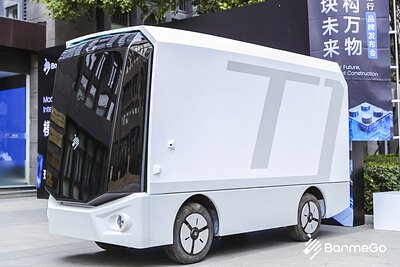
BanmeGo's 'LEGO-Style' Robot Aims to Reshape Urban Delivery
SHANGHAI – January 30, 2026 – A new contender has entered the bustling field of autonomous logistics with a decidedly novel approach. Chinese unmanned delivery brand BanmeGo made its public debut in Shanghai today, launching its first smart delivery robot, the BanmeGo T6. Moving beyond the proprietary, closed-off systems common in the industry, the company is championing a modular, 'LEGO-like' design and an open ecosystem philosophy, aiming to democratize access to advanced delivery automation.
In an industry dominated by tech giants with vertically integrated solutions, BanmeGo’s strategy is to provide a flexible and adaptable platform for global partners. The company's stated mission is to lower the barriers for intelligent transformation across various sectors, from logistics parks to factory floors.
The 'LEGO-fication' of Logistics
The core of BanmeGo's innovation lies in its 'LEGO-style' modularity. The BanmeGo T6 is not presented as a one-size-fits-all solution but as a highly adaptable base. It features an automotive-grade chassis for robust performance on diverse road conditions and utilizes standardized interface protocols. This design allows different functional modules to be easily integrated, enabling partners to customize the robot for specific tasks and environments without requiring a complete system overhaul.
This approach stands in contrast to many established players in the autonomous delivery space, such as Nuro in the U.S. or the logistics arms of Chinese giants like JD.com and Meituan, which often deploy proprietary hardware and software. By fostering an "open ecosystem, efficient deployment, efficient and collaborative win-win," BanmeGo hopes to accelerate adoption by allowing businesses to build upon its core technology.
This could mean a logistics firm could adapt the T6 for specialized cargo, or a manufacturing plant could integrate it into a unique assembly line workflow. The emphasis on out-of-the-box usability is intended to shorten deployment times and reduce the high costs often associated with custom automation projects. The T6 itself is built for serious work, featuring a substantial 6m³ cargo compartment designed to maximize load efficiency for single trips in complex urban settings.
Under the Hood: Embodied Intelligence and Advanced AI
Powering the T6 is a formidable technology stack designed for the emerging era of 'embodied intelligence'—AI that learns and interacts with the physical world through a robotic body. The robot is equipped with a self-developed 'Smartware 2.0' middleware and a high-performance 550 TOPS computing platform. This massive processing power, capable of 550 trillion operations per second, is critical for handling the immense data stream from the robot's redundant sensor suite and executing complex AI models in real-time.
The brain of the operation is an integrated framework combining a "vehicle-based end-to-end large model" with a "cloud-based agent." This hybrid architecture gives the T6 significant onboard intelligence to navigate dynamic environments and make immediate decisions without constant cloud connectivity. Simultaneously, the cloud-based component can handle more intensive computations, aggregate data from a fleet of robots for collective learning, and push improvements. This entire system supports Over-the-Air (OTA) updates, allowing the T6's capabilities to evolve and improve long after it has been deployed.
This technological push aligns with China's broader ambitions to become a global leader in artificial intelligence and robotics. By developing its own middleware and sophisticated AI models, BanmeGo is positioning itself not just as a hardware manufacturer, but as a core technology provider in the autonomous systems landscape.
Navigating a Crowded and Complex Market
The BanmeGo T6 rolls into a market that is both promising and fiercely competitive. The demand for unmanned delivery is surging, driven by the growth of e-commerce, rising labor costs, and the relentless pursuit of supply chain efficiency. However, the path to widespread adoption is fraught with challenges.
With its large cargo capacity and road-worthy chassis, the T6 appears aimed more at business-to-business logistics and middle-mile delivery than the small sidewalk robots from companies like Starship Technologies that handle last-mile food and grocery orders. This positions it more directly against larger autonomous delivery vehicles designed for public roads.
The most significant hurdle remains the regulatory maze. While China's government has been supportive of autonomous vehicle testing, deploying large fleets in complex urban environments requires navigating a patchwork of local and national regulations that are still evolving. Safety, reliability, and public acceptance are paramount.
BanmeGo's phased strategic roadmap acknowledges these realities. The initial phase focuses on building a core foundation of robots and cloud infrastructure, likely targeting controlled environments like industrial parks and logistics centers where deployment is less complex. The subsequent phases aim to accelerate the robot's algorithmic intelligence for more sophisticated operations, before a final phase of multidimensional expansion into new markets and physical forms. Ultimately, the success of this ambitious vision will depend on whether its open, collaborative philosophy can outpace the entrenched, proprietary systems that currently dominate the road.