
Bambu Lab X2D: Dual-Nozzle 3D Printing for the Masses at Just $649
- Price: $649 (standard model), $899 (Combo version with multi-material feeding system)
- Dual-extrusion system: Optimized for practical support structures, reducing post-processing time
- Automation: 31 sensors for real-time monitoring and automatic calibration
Experts view the Bambu Lab X2D as a game-changer in consumer 3D printing, offering professional-grade features at an accessible price, making advanced manufacturing capabilities more attainable for a broader audience.
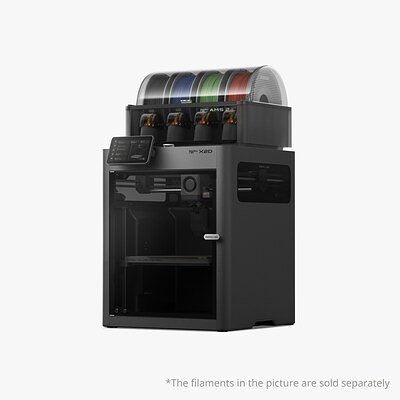
Bambu Lab X2D: Dual-Nozzle 3D Printing for the Masses at Just $649
FRANKFURT, Germany – April 17, 2026 – Tech innovator Bambu Lab has officially launched the X2D, a next-generation flagship 3D printer that aims to dismantle the final barriers between complex creation and the average user. With an aggressive starting price of $649 and a feature set previously reserved for much more expensive machines, the X2D is positioned not just as a new product, but as a direct challenge to the notion that 3D printing must be a difficult, technical hobby.
Since its groundbreaking X1 series in 2022, Bambu Lab has been on a mission to make 3D printers that simply work. The X2D doubles down on this philosophy, integrating a dual-extrusion system, extensive automation, and a deeply integrated ecosystem. The company's message is clear: the era of tinkering, troubleshooting, and failed prints is over. The new goal is to empower users to create physical objects as easily as they would print a document.
Initial reception has been overwhelmingly positive, with early adopters and reviewers noting the price was "surprisingly approachable" and "significantly lower than community estimates." The printer, which began shipping from US warehouses within days of its April 14th launch, is being hailed as a major step forward in making advanced manufacturing capabilities accessible to a wider audience of designers, creators, and households.
The 'Appliance' Approach to Creation
The most significant shift the X2D represents is its treatment of the 3D printer as a household appliance rather than a hobbyist's toolkit. Bambu Lab states the device is for people who want to "create, not troubleshoot technical issues," and its design reflects this mantra. The core of this experience lies in radical automation.
The machine is equipped with 31 sensors that constantly monitor every aspect of its operation. Before each print, the X2D performs a fully automatic calibration, checking everything from the tension of its belts to the levelness of its print bed. During the printing process, these sensors provide real-time feedback, allowing the system to compensate for any deviations or stop a print entirely if a critical error is detected, saving time and expensive filament.
This hands-off approach is a stark contrast to the traditional 3D printing experience, which often requires hours of manual calibration and trial-and-error. With the X2D, the user's interaction is intended to be minimal: select a model, click print, and return later to a finished object. This simplicity is further enhanced by features designed for a home or office environment. The fully enclosed print chamber is actively temperature-controlled for material stability and features a triple-stage air filtration system—combining a G3 pre-filter, a HEPA H12 filter, and activated carbon—to capture particles and absorb odors, all while operating at a quiet sub-50 dB noise level.
Dual Extrusion Redefined for Practicality
At the heart of the X2D's hardware innovation is its dual-extrusion system, featuring two separate nozzles. While multi-color printing is a possibility, the system's true genius, according to early user feedback, lies in its practical application for support structures. Many complex 3D models require temporary supports to be printed for overhanging or bridging sections. Removing these supports on a single-nozzle printer is often a laborious and delicate process of cutting, sanding, and scraping that can easily damage the final object.
The X2D's second nozzle allows for the use of specialized breakaway or dissolvable support materials. This transforms post-processing from a tedious chore into a simple action. Once the print is complete, supports can be snapped away cleanly or, in the case of dissolvable filament, washed away with water, leaving a flawless surface finish behind. "For anyone who wants the enclosed format and dual extrusion... in a more capable package, it's a no-brainer," noted one user on a popular 3D printing forum.
It is important to note that the auxiliary nozzle utilizes a Bowden-style filament path, which is optimized for reliability with support materials rather than matching the high-speed, high-quality performance of the main direct-drive nozzle. While this makes it less ideal for intricate, multi-color work compared to more specialized systems, it perfects its role in simplifying the creation of complex, ready-to-use parts straight off the build plate.
Beyond the Box: The Power of the Ecosystem
Bambu Lab is selling more than just a piece of hardware; it is selling entry into the "Bambu Experience." The X2D is the latest vehicle for an integrated ecosystem where hardware, software, materials, and community are designed to work as a single, frictionless system. This holistic strategy is a key differentiator in a market often characterized by a fragmented, do-it-yourself approach.
The experience begins with software like Bambu Studio for desktop slicing and the Bambu Handy mobile app for remote monitoring. It extends to MakerWorld, the company's 3D model platform where designs often come with pre-validated print settings optimized for specific Bambu printers and filaments. This removes the guesswork, ensuring that what a user sees on the screen is what they get in their hands.
This closed-loop system is designed to shrink the distance between an idea and a physical object. By profiling its own filaments, standardizing components, and validating community models, Bambu Lab has deliberately removed layers of friction that have historically kept potential creators on the sidelines. The result is a user journey that feels cohesive and reliable, fostering a sense of confidence that encourages experimentation and creativity.
Market Impact and a New Standard
With its accessible price point and professional-grade features, the X2D is poised to significantly disrupt the consumer 3D printing market. The standard model is available for $649, while a Combo version that includes a multi-material feeding system for more advanced color and material mixing is priced at $899. These prices place the X2D in direct competition with mid-range printers but offer capabilities, like the heated chamber and true dual-extrusion, that are often found in machines costing two to three times as much.
Early sales figures and retail availability reflect strong demand. The printer is available directly from Bambu Lab's website and has already appeared at major US retailers like Micro Center, indicating a robust launch strategy. For many current printer owners, the X2D presents a compelling upgrade path. As one community member calculated, for only a small price increase over the company's own P1S model, the X2D adds a heated chamber and a second nozzle for supports, making it an incredible value proposition.
By combining an approachable price with a relentless focus on user experience and reliability, Bambu Lab is making a powerful statement. The X2D is not just an iterative update; it is a calculated move to redefine the entry-level standard for 3D printing and expand the market from a niche group of technical enthusiasts to any person who has an idea they want to hold in their hands.