
- Energy Density: 265Wh/kg, enabling longer operating times
- Maximum Discharge Current: 50 amps, with internal resistance ≤5 milliohms (mΩ)
- Operating Temperature Range: -20°C to 80°C, ensuring all-weather reliability
Experts view BAK's tabless 2170-50D2 battery as a significant advancement in power and safety, particularly for high-demand applications like professional tools, robotics, and emerging tech sectors, offering a practical step toward semi-solid-state battery technology.
BAK Battery Unveils Safer, More Powerful Tabless Cell for Future Tech
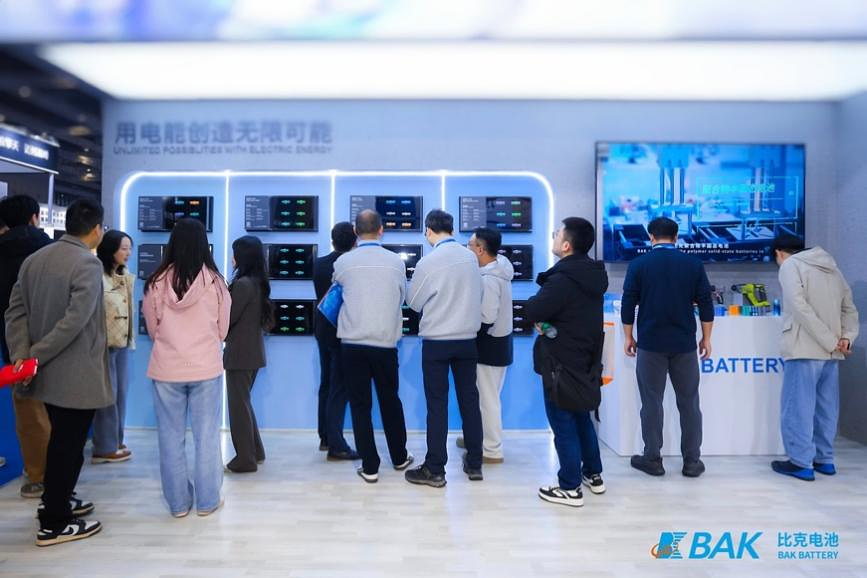
NEW YORK, NY – March 24, 2026 – At the 39th China International Hardware Fair, Shenzhen BAK Power Battery Co., Ltd. (BAK Battery) unveiled a new cylindrical battery cell that promises to push the boundaries of performance and safety for a host of demanding applications. The debut of the tabless 2170-50D2 model signals a significant stride in battery technology, combining high power output with advanced safety features designed to meet the needs of professional power tools, robotics, and emerging high-tech sectors.
As industries increasingly shift toward cordless, high-performance equipment, the limitations of traditional batteries—including power fade under load, limited runtime, and safety concerns—have become major pain points. BAK's latest offering directly confronts these challenges, showcasing a suite of technological upgrades that could set a new benchmark for what's possible with portable power.
A Leap in Performance Specifications
The new 2170-50D2 is engineered to deliver both endurance and raw power. The battery boasts an impressive energy density of 265Wh/kg, a figure that translates to longer operating times for devices on a single charge. For professionals on a job site or robots on a factory floor, this means less downtime for recharging and greater overall efficiency.
This high capacity is paired with formidable power delivery. The battery's internal resistance is no more than 5 milliohms (mΩ), and it supports a maximum discharge current of 50 amps. This combination is critical for high-load applications like professional-grade saws or drills, ensuring they maintain stable, consistent power without faltering. The low internal resistance, a key benefit of its tabless architecture, also minimizes heat generation during intense use, reducing energy loss and preventing work interruptions caused by overheating.
Furthermore, BAK has engineered the cell for exceptional durability across extreme conditions. It operates reliably within a wide temperature range of -20°C to 80°C. This expanded thermal tolerance, particularly the high 80°C limit, surpasses many conventional lithium-ion cells and guarantees stable performance in environments from severe cold to high heat, ensuring all-weather operational capability.
The Safety Breakthrough: Solid-State Coating
Perhaps the most significant innovation in the 2170-50D2 is its safety technology. For the first time, BAK has incorporated a proprietary "solid-state electrolyte coating." This represents a practical application of semi-solid-state battery principles, a technology widely seen as the next frontier in energy storage.
Traditional lithium-ion batteries use a flammable liquid electrolyte, which carries inherent risks of leakage and thermal runaway—a dangerous chain reaction that can lead to fires. BAK's approach applies a solid, non-flammable coating that enhances safety from both a material and structural standpoint. This coating helps suppress the formation of lithium dendrites, metallic growths that can cause internal short circuits, a primary cause of battery failure and fires.
By moving toward a semi-solid state, BAK is addressing the core safety concerns of lithium-ion technology without waiting for the full, and still commercially challenging, maturation of pure solid-state batteries. This hybrid approach provides a tangible safety upgrade for today's products, making high-power devices more stable and reliable, especially under the complex and demanding conditions of professional use.
Powering the Future: Beyond the Workshop
While the immediate benefits for the power tool market are clear, BAK is strategically positioning its advanced tabless technology to fuel growth in several emerging high-tech sectors. The company's press release explicitly mentions robotics, cleaning equipment, and drones, but the implications extend even further into industries with stringent power and safety requirements.
- eVTOL (Electric Vertical Take-Off and Landing) Aircraft: The urban air mobility market, projected to grow at over 21% annually to exceed $26 billion by 2032, is entirely dependent on battery breakthroughs. The high power, high energy density, and enhanced safety of cells like the 2170-50D2 are critical for making these electric aircraft viable.
- Robotics: As robots become more autonomous and mobile in manufacturing, logistics, and healthcare, their power sources must be reliable and long-lasting. The global robot battery market is expanding rapidly, with lithium-ion technology already holding over 85% market share. Advanced cells that offer longer runtimes and faster charging are in high demand.
- Data Center Battery Backups (BBU): The explosion of AI is driving unprecedented demand for data centers, which require robust battery backup systems. The market for data center BBUs is projected to nearly triple to $3.5 billion by 2034. Lithium-ion solutions are replacing older lead-acid batteries due to their higher energy density and faster response, and technologies that improve safety and thermal stability are highly prized.
By developing a battery that meets the needs of these diverse, high-growth markets, BAK is executing a strategic expansion from its established base in power tools into the foundational technologies of the future.
BAK's Strategic Vision and the Competitive Landscape
The launch of the 2170-50D2, which is slated for mass production in the fourth quarter of 2026, is part of a broader, well-defined strategy. It builds upon the company's existing tabless product matrix, which includes its 18650, 2170, and larger 46-series cells. This new model, along with upgraded versions of other products showcased at the fair, demonstrates a relentless focus on iterative improvement in response to user needs.
BAK's commitment to R&D is evident in its forward-looking roadmap. The company has already demonstrated semi-solid battery prototypes with energy densities exceeding 350Wh/kg and has publicly stated its goal of reaching 450Wh/kg with future chemistries. This places it in a competitive position within a dynamic industry dominated by giants like CATL, LG Energy Solution, and BYD.
By focusing on the specialized niche of high-performance cylindrical cells and pioneering the commercial application of semi-solid-state technology, BAK is carving out a role as a key innovator. The company's continuous advancements are not just about creating better batteries; they are about enabling the next generation of technology, empowering everything from smarter tools to autonomous vehicles with safer, more reliable, and more powerful energy solutions.