
- $390M Contract: BAE Systems secures a $390 million deal to upgrade Bradley Fighting Vehicles to the A4 configuration.
- 675-HP Engine: The A4 features a new 675-horsepower Cummins engine for enhanced mobility.
- 2029 Fielding: The next-gen XM30 vehicle is projected for fielding by 2029.
Experts view this upgrade as a strategic move to maintain battlefield dominance while bridging the gap until the next-generation XM30 vehicle is ready.
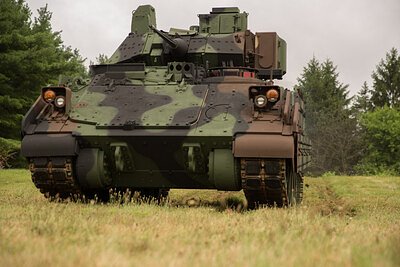
BAE's $390M Deal: Upgrading a Legend for the Next-Gen Battlefield
YORK, PA – November 26, 2025
The U.S. Army is injecting nearly $400 million into one of its most iconic platforms, signaling a clear strategy of blending proven hardware with futuristic technology. BAE Systems announced it has secured a contract modification worth over $390 million to upgrade another batch of Bradley Fighting Vehicles to the advanced A4 configuration. This move isn't just about maintenance; it's a strategic overhaul designed to keep the Army's armored fist sharp, lethal, and relevant for the conflicts of tomorrow.
The contract underscores a critical trend in modern defense: the immense value of iterative innovation. Rather than waiting for a complete replacement, the military is investing heavily in transforming its veteran platforms into future-ready assets. For business leaders and investors, this contract offers a window into the robust economics of the defense industrial base and the strategic thinking that drives multi-billion-dollar modernization programs.
The Anatomy of a Modern Warhorse
The Bradley A4 is far more than a fresh coat of paint on a legacy chassis. The upgrade represents a fundamental re-engineering of the vehicle's core systems to address the demands of a digitized, networked battlefield. The enhancements focus on three critical areas: mobility, lethality, and survivability, all underpinned by a completely new digital architecture.
At its heart, the A4 boasts a significant power upgrade. A new 675-horsepower Cummins engine and modernized transmission provide the necessary muscle to keep pace with the M1 Abrams main battle tank across rough terrain, a crucial requirement for cohesive Armored Brigade Combat Team (ABCT) operations. This increased power also supports the vehicle's expanded electrical needs, which are substantial. The A4 features a completely new digital backbone, enabling superior situational awareness, secure network connectivity, and seamless communication within the ABCT.
This digital transformation directly impacts the vehicle's lethality. The A4 integrates a full ballistic fire control system, complete with aided dual-target tracking and hunter-killer capabilities. While it retains its formidable 25mm cannon and TOW anti-tank missiles, the ability to acquire and engage targets is now faster and more precise. Furthermore, survivability is enhanced with improved fire suppression systems and integrated IED jammers. Some variants are even being fitted with the Iron Fist Active Protection System, designed to intercept incoming rockets and missiles before they strike—a critical defense against the proliferating threats seen in recent global conflicts.
A Strategic Bridge to the Future
This significant investment in the Bradley platform is a calculated move within the U.S. Army's broader modernization strategy. While the A4 is a formidable machine, it also serves as a crucial "bridge capability." It ensures the Army's armored brigades are not left with a capability gap while the next-generation replacement, the XM30 Mechanized Infantry Combat Vehicle, is developed.
The XM30 program, formerly known as the Optionally Manned Fighting Vehicle (OMFV), represents the long-term future. The Army has already selected two powerhouse teams, American Rheinmetall Vehicles and General Dynamics Land Systems, to compete for the final design. With prototypes expected by 2027 and fielding projected for 2029, the XM30 promises a revolutionary leap in capability, featuring a more powerful 50mm cannon, a remote turret to increase crew survivability, and a hybrid-electric engine for silent mobility.
By upgrading its existing fleet to the A4 standard, the Army ensures its frontline units remain dominant for the rest of the decade. It also provides a testbed for integrating the very technologies—advanced networking, diagnostics, and sensor fusion—that will be foundational to the XM30 and other future combat systems. This dual-track approach of upgrading the old while developing the new is a hallmark of pragmatic, long-term defense planning.
Fueling the Defense Industrial Engine
Beyond the strategic implications, the $390 million contract is a powerful economic driver, reinforcing BAE Systems' role as a cornerstone of the U.S. defense industrial base. For the company, it represents a sustained revenue stream from one of its flagship programs, ensuring production lines remain active and its skilled workforce is retained.
"Lethality, performance and next-generation capability is what the Bradley A4 brings to the fight," said Bill Sheehy, Ground Maneuver product line director for BAE Systems, in the company's announcement. "This award not only fuels our commitment to keep the Army and our allies ready for the fight, but it also ensures our U.S. manufacturing lines stay hot and ready for continued production."
Sheehy's comment highlights a vital aspect of such contracts: industrial readiness. The work is distributed across a robust network of BAE Systems facilities, touching communities in Pennsylvania, South Carolina, Alabama, Minnesota, California, and Michigan. This geographic diversification creates a resilient supply chain and distributes the economic benefits, sustaining high-skilled manufacturing jobs across the country. In an era of geopolitical uncertainty, maintaining this "hot and ready" industrial capacity is considered a matter of national security in itself.
The Power of Public-Private Partnership
A key, yet often overlooked, element of this industrial engine is the powerful public-private partnership model. Production of the Bradley A4 is executed in close collaboration with the Red River Army Depot (RRAD) in Texarkana, Texas. This partnership, which celebrated its 20th anniversary in 2024, is a model of efficiency. RRAD, a government-owned facility, handles the overhaul of major vehicle subassemblies, after which BAE Systems completes the final assembly, integration, and testing.
This symbiotic relationship leverages the strengths of both sectors. The economic impact is profound. In 2023 alone, RRAD contributed an estimated $1.6 billion to the Texas economy and supported over 9,200 direct and indirect jobs. This contract ensures that impact continues, funneling federal defense spending directly into local economies and sustaining a critical hub of military-grade industrial expertise. It demonstrates how a single defense contract can create a ripple effect that strengthens regional economies, fosters technological skill, and ultimately supports the warfighter on the front lines. The continuous upgrade of the Bradley, a platform in service since the 1980s, proves that with strategic investment and innovative partnerships, even legacy systems can be adapted to dominate the battlefields of the future.