
- 50+ senior B2B marketing leaders interviewed for the report
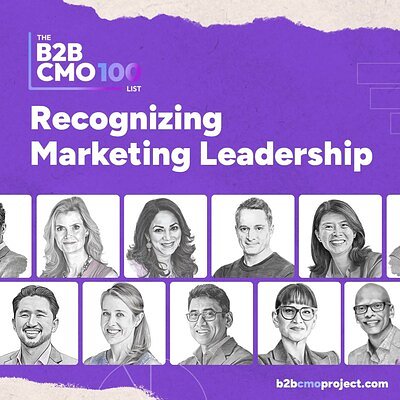
- B2B CMO 100 list recognizing top executives redefining the role
- 5 core imperatives identified for modern B2B marketing leadership
Experts agree that successful B2B CMOs must evolve beyond traditional marketing roles, focusing on strategic influence, AI adoption, and measurable business impact to secure their position in the C-suite.
B2B CMOs Get a New Playbook for C-Suite Influence and Growth
SAN FRANCISCO, CA – April 28, 2026 – In a direct challenge to the traditional marketing playbook, The B2B CMO Project today unveiled its inaugural B2B CMO 100 list and a pivotal research report, The B2B CMO Imperative: The New Rules for B2B Marketing Leadership. The dual announcement signals a major shift in the industry, offering a new framework for marketing executives under pressure to prove their strategic value beyond lead generation and campaign execution.
Founded by marketing technology pioneer Jon Miller, co-founder of Marketo, and veteran marketing leader Sydney Sloan, former CMO of SalesLoft and G2, The B2B CMO Project aims to redefine the role of the Chief Marketing Officer. The new report and list of top executives are the organization's first major steps toward establishing a new standard for leadership in the B2B sector, moving the CMO from a functional head to an indispensable driver of business strategy and growth.
Redefining the Playbook: The Five Imperatives
At the heart of the announcement is The B2B CMO Imperative report, which argues that the established marketing playbook has run its course. Based on in-depth interviews with over 50 senior B2B marketing leaders, conducted using G2's AI Voice interview solution, the research identifies a clear divergence between CMOs who are gaining influence and those who are seeing their roles diminish.
The report distills these findings into five core imperatives for modern B2B marketing leaders:
- C-Suite Credibility: Moving beyond marketing jargon to earn trust and influence with the CEO, CFO, and board by speaking the language of business impact.
- Measurement Reform: Abandoning outdated or misleading metrics in favor of models that accurately reflect marketing's contribution to revenue and strategic goals.
- Brand Investment: Championing brand as a long-term financial asset and a critical driver of differentiation, not just a line item for creative campaigns.
- AI Visibility: Leading the organization's strategic adoption of artificial intelligence, using it to unlock customer intelligence and operational efficiency, rather than delegating it as a purely technical function.
- Organizational Design: Reimagining marketing team structures and workflows to foster agility, collaboration, and alignment with modern go-to-market strategies.
"The research makes clear that the CMOs who are winning aren't playing by the old rules," said Sydney Sloan, Co-Founder and Strategic Advisor for The B2B CMO Project. "They have built powerful brands, reimagined how their teams work with AI and are influencing the strategic direction of their companies. The B2B CMO Imperative and our podcast share the learnings and frameworks from these incredible leaders."
From Tactic to Strategy: Recognizing a New Breed of CMO
Complementing the report, the B2B CMO 100 list puts a face to these new rules, recognizing executives who are already living them. The list includes marketing leaders from some of the most influential companies in the technology landscape, including Databricks, Canva, DataDog, Samsara, ServiceNow, and Snowflake. According to the project, these individuals are not just executing strategy handed down from above; they are shaping it.
Honorees are credited with owning their company's market positioning, injecting critical customer intelligence into product development and pricing decisions, and successfully guiding their organizations through the seismic shifts brought on by AI. The list serves as both a recognition of excellence and an aspirational benchmark for the wider community.
"We created the B2B CMO 100 because the CMO role is being redefined in real time, and the people on this list are the ones doing the redefining," stated Jon Miller, Co-Founder and CEO of The B2B CMO Project. "They're proving that marketing leaders who operate as business executives don't just survive the pressure — they become indispensable to growth. We want every B2B marketing leader to see what's possible."
The Architects of Change and Industry Backing
The project's credibility is significantly bolstered by its founders. Jon Miller, in particular, occupies a unique position as one of the architects of the very marketing automation playbook he now argues is flawed. His work at Marketo helped popularize the concept of the Marketing Qualified Lead (MQL), a metric that has dominated B2B marketing for over a decade. His current perspective, shaped by subsequent roles at Demandbase and his new venture Phave, suggests that an over-reliance on such metrics has led marketers astray from their core purpose of driving sustainable growth.
This willingness to challenge his own legacy lends significant weight to the project's call for "Measurement Reform." The B2B CMO Project, as a whole, is positioned as a peer-driven community for senior leaders to navigate these complex challenges together through research, exclusive events, and candid conversations.
Underscoring the initiative's perceived importance, a powerful consortium of industry leaders has signed on as founding sponsors. This group includes LinkedIn, G2, Demandbase, Webflow, 2X, Goldcast by Cvent, Sendoso, CHEQ, and Phave. The collective backing of these B2B technology and media powerhouses suggests a broad consensus that the time has come to elevate the conversation around marketing leadership and establish a new benchmark for success in the industry.
Navigating the AI Mandate and the End of Old Metrics
Among the five imperatives, the dual focus on AI and measurement reform stands out as particularly urgent. The report frames AI not as a futuristic tool but as a present-day mandate for leadership. The CMOs succeeding today are those who have moved beyond experimentation and are operationalizing AI to gain a competitive advantage. This aligns with broader industry trends showing AI is a top priority for C-suites seeking efficiency and deeper customer insights.
The simultaneous call to overhaul measurement is a direct response to a persistent pain point. For years, CMOs have struggled to prove ROI and connect marketing activities to revenue in complex B2B sales cycles. The project's findings suggest that successful leaders are abandoning simplistic metrics for more nuanced models that capture brand impact, pipeline velocity, and customer lifetime value. By championing this shift, the B2B CMO Project provides a critical framework for marketing leaders to build credibility with their CFOs and CEOs, securing their seat at the strategic table not just as communicators, but as essential architects of the company's future.