
- $18M raised in seed funding, totaling $25M in capital
- 160,000 engineer shortage projected in the semiconductor industry by 2032
- Ax-Prover engine ensures mathematically proven correctness in AI reasoning
Experts agree that Axiomatic AI's approach of grounding AI reasoning in formal mathematical and physics-based verification is critical for advancing trustworthy AI in high-stakes engineering and scientific applications.
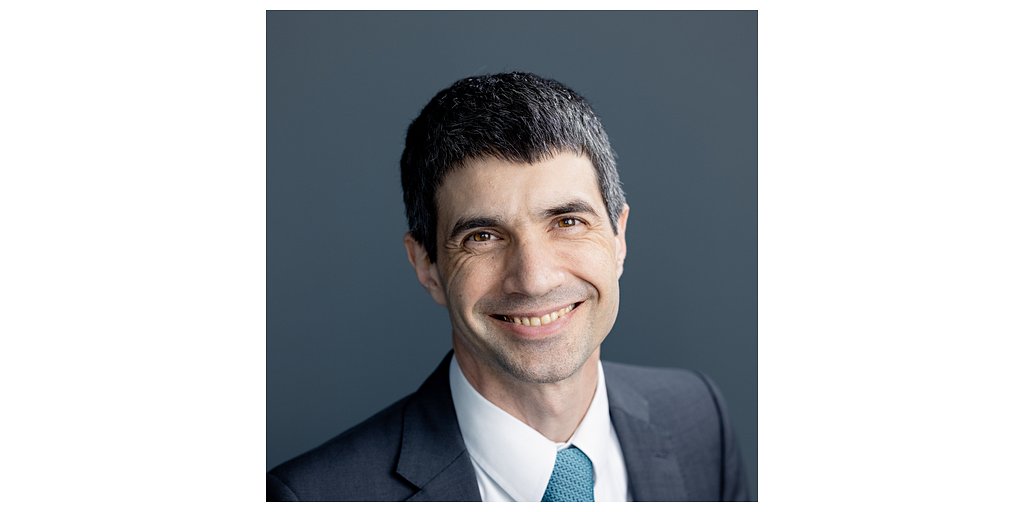
Axiomatic AI Raises $18M to Build a New Standard for Trustworthy AI
CAMBRIDGE, Mass. – March 09, 2026 – While generative artificial intelligence captures the public imagination with its creative and linguistic feats, a critical flaw prevents its widespread adoption in high-stakes industries: it can’t be trusted. Addressing this fundamental challenge, Cambridge-based Axiomatic AI today announced an $18 million seed funding round, bringing its total capital raised to $25 million. The company is not merely tweaking existing models; it is building an entirely new intelligence infrastructure designed to ensure AI operates reliably and verifiably within the strict confines of physical law.
The round was led by deep-tech investor Engine Ventures, with significant participation from Kleiner Perkins, Big Sur Ventures, and others. The capital will fuel the expansion of Axiomatic’s platform, which integrates frontier AI with formal mathematical and physics-based verification. The goal is to create a new standard of AI for science and engineering—one that moves beyond plausible suggestions to provable, auditable reasoning.
The Hallucination Problem in High-Stakes Engineering
Modern AI models, particularly Large Language Models (LLMs), are masterful at pattern recognition and generation. They can produce text, images, and code that appear remarkably human-like. However, this proficiency comes with a significant risk: the models can “hallucinate,” fabricating information with complete confidence. In creative applications, this can be a nuisance; in engineering, it can be catastrophic.
“Today’s AI can suggest designs. It cannot prove they obey physics,” the company noted in its announcement. This gap is the central barrier to deploying AI in fields like semiconductor design, photonics, and advanced manufacturing, where a single, minute error can lead to billions of dollars in losses or catastrophic system failures. The National Institute of Standards and Technology (NIST), where Axiomatic AI’s CEO previously served, has identified hallucinations and AI’s ability to “cheat” by finding shortcuts that don't adhere to physical principles as key challenges to safe deployment.
As engineering complexity accelerates, the manual verification processes currently used to check AI-assisted designs become a bottleneck, eroding productivity and increasing risk. This problem is compounded by a looming workforce crisis. The semiconductor industry alone is projected to face a shortage of approximately 160,000 engineers by 2032, making AI-driven productivity gains a matter of national strategic importance.
From Prediction to Proof: A New AI Paradigm
Axiomatic AI’s solution, branded Axiomatic Intelligence™, is purpose-built to solve this verification crisis. Instead of relying solely on statistical correlations from vast datasets, the platform grounds its reasoning in the non-negotiable laws of mathematics and physics. It combines the generative power of frontier AI models with a rigorous verification layer that acts as a constant, automated fact-checker.
This system provides formal auditability, meaning every step of the AI's reasoning can be traced and validated against fundamental principles. This allows the platform to automate and orchestrate complex engineering workflows while guaranteeing correctness. The company's underlying Ax-Prover engine, for instance, formally verifies computational steps, ensuring that when an AI agent performs an operation, it is mathematically proven to be correct before the result is returned. This approach effectively eliminates hallucinations within its operational domain.
“We are defining the standard that science and engineering AI must meet,” said Jake Taylor, CEO of Axiomatic AI. “As demand for the hardware underpinning our economy accelerates, machine learning systems must move beyond assistance into accountable collaboration. AI that cannot justify its reasoning, to the level needed for engineering, cannot scale into high-stakes technical domains.”
A Team Forged in Academia and Public Policy
The company’s ambitious mission is backed by a founding team with rare and formidable expertise. The roster reads like a who's who of deep-tech, uniting globally recognized experts from MIT and other top-tier institutions with high-level government experience. CEO Jake Taylor formerly served as the Assistant Director for Quantum Information Science at the White House and as a Senior Advisor for Critical and Emerging Technologies at NIST. His public policy background provides a unique perspective on the national imperative for trustworthy AI standards.
The scientific bedrock of the company is equally robust. Co-founders include MIT professors Dirk Englund and Marin Soljačić, who are leading figures in photonics, quantum computing, and physics. They are joined by Frank Koppens of the Institute of Photonic Sciences and Joyce Poon from the University of Toronto, both distinguished experts in their respective fields.
This fusion of academic rigor and policy insight is central to the company’s vision. “Humanity's greatest achievement– the scientific method– could become sidelined by black-box AI,” said co-founder Dirk Englund. “When we started Axiomatic AI, the core mission was to build a different kind of system–one in which reasoning would be rooted in math, deductive reasoning, and interpretability, so that engineers and scientists are empowered rather than replaced by machines.”
Investor Confidence and Market Traction
The $25 million in total funding from a syndicate of top-tier venture capital firms underscores the market’s appetite for a solution to AI’s reliability problem. Lead investor Engine Ventures, which specializes in tough-tech companies born from scientific breakthroughs, sees Axiomatic as a foundational player for the next era of industrial innovation.
“Science and engineering are the backbone of modern civilization. The shift from prediction to provable reasoning will define the next era of AI adoption in critical industries,” said Israel Ruiz, President and General Partner at Engine Ventures. “Axiomatic is building the infrastructure layer that makes that shift possible.”
The company is already demonstrating its value with an early access program that includes multiple Fortune 100 and 500 enterprises. These partners span the technology supply chain, from semiconductor equipment manufacturers and foundries to fabless design organizations and photonics firms. By working directly with these industry leaders, Axiomatic AI is integrating its verification platform into real-world workflows, compounding its domain-specific knowledge and proving its platform’s utility on the most complex problems facing engineers today.