
- $75 billion: Projected market size for AI in IT Service Management (ITSM) by 2033
- 4.6/5: Atera's average rating across 2,000+ reviews, with some users reporting 70% faster issue resolution
- 70% faster: Early adopters reported resolving issues faster using Atera's AI features
Experts view Atera's autonomous AI agent 'Robin' as a potential game-changer in IT support, though its success will depend on overcoming integration challenges and proving measurable productivity gains in large enterprises.
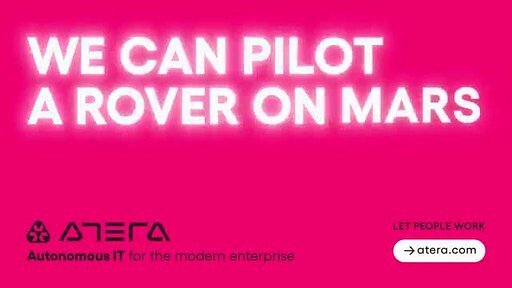
Atera Declares an End to IT Tickets with Autonomous AI Agent 'Robin'
LAS VEGAS, NV – March 10, 2026 – In a bold move aimed at reshaping the landscape of enterprise technology, AI-powered IT platform Atera has announced the next generation of its autonomous agent, Robin. The company is making a provocative claim: that this technology will bring about the end of the IT support ticket as we know it, resolving workplace tech disruptions before they escalate into productivity-killing gridlock.
Launched alongside a massive global brand campaign titled "Let People Work," Atera is positioning its technology not just as a new product, but as a fundamental shift in how businesses manage their IT infrastructure. The announcement promises to move organizations from a state of constant, reactive troubleshooting to a future of proactive, autonomous resolution, freeing up human potential for more strategic work. But in a market saturated with AI promises, the key question is whether Atera's vision can translate into a tangible reality for complex, large-scale enterprises.
The Dawn of the Autonomous IT Agent
At the heart of the announcement is Robin by Atera, an AI agent that operates directly on an employee's device. Atera is careful to distinguish Robin from more common AI tools that analyze knowledge bases or power chatbots. Instead, Robin is designed as a system of action, autonomously diagnosing and resolving incidents in real time. This includes performing tasks that typically require IT intervention, such as resetting passwords, installing approved software with administrative rights, restarting hung services, or even performing complex profile resets.
"Enterprise technology failures are a death by a thousand cuts," said Gil Pekelman, CEO and co-founder of Atera, in the company's official announcement. "Too many organizations are caught in a vicious cycle of extinguishing urgent tickets, instead of advancing strategic initiatives that drive real business value." Pekelman’s statement frames the core problem Atera aims to solve: the immense drain on resources caused by the cumulative effect of minor tech issues.
To that end, the new version of Robin introduces several features intended to give IT departments both power and control. Custom AI Workflows with Playbooks allow IT professionals to guide Robin's behavior for any support scenario, while a new ability to analyze attachments like PDFs and CSVs aims to speed up troubleshooting. A 'Flexible Resolution Policy' gives administrators the final say, allowing them to configure whether Robin resolves issues independently or escalates them based on pre-set confidence levels.
'Let People Work': A Manifesto or Marketing?
Accompanying the technology is the ambitious "Let People Work" campaign, an enterprise-wide marketing effort that includes television, digital, and out-of-home advertising, along with a significant presence at the HIMSS healthcare tech conference. The campaign's messaging is a direct rebuke of what Atera calls "enterprise drag and AI half-promises."
Chris Lane, Atera's Vice President of Brand, described the initiative as an "enterprise-wide liberation manifesto." He added, "We want to be the antithesis of the Software-as-a-Straitjacket model that has come to define the space." The campaign's central thesis is that by eliminating technology friction, companies can unlock their employees' true potential, shifting focus from fixing problems to driving growth.
This anti-hype stance is a calculated risk in a market where grand claims about AI are common. Atera is betting that by focusing on tangible outcomes—less time on support calls, more time on core job functions—it can cut through the noise. The campaign targets senior leaders by arguing that the seemingly minor daily tech hiccups compound into a major drain on productivity and business results at the enterprise scale.
Navigating a Crowded and Competitive Landscape
Atera's bold declaration enters a fiercely competitive market. The AI in IT Service Management (ITSM) sector is projected to grow exponentially, with some market analysts predicting it will exceed $75 billion by 2033. This growth has attracted a host of established giants and agile startups, including NinjaOne, Kaseya, N-able, and ServiceNow, all of whom are integrating AI and automation into their own platforms.
The industry trend is clearly toward hyperautomation and predictive analytics. The challenge for Atera will be to prove that Robin's autonomous, action-oriented approach is a true paradigm shift rather than an incremental improvement. While competitors focus on using AI to better manage tickets, Atera's claim to eliminate them is its core differentiator and its biggest hurdle to prove.
From Hype to Reality: The Enterprise Adoption Challenge
For any enterprise considering such a platform, the journey from a press release to a successful, scaled deployment is fraught with challenges. The success of any AI model is fundamentally dependent on high-quality, well-governed data and seamless integration with existing, often legacy, systems—a significant barrier in many large organizations. Furthermore, a persistent AI skills gap and organizational resistance to change can derail even the most promising technology.
Independent user reviews of Atera's existing platform, which includes the foundational technology for Robin, are generally positive, frequently praising its all-in-one approach, cost-effectiveness, and strong automation capabilities. Across more than 2,000 reviews on major software review sites, the platform averages a 4.6 out of 5-star rating. One early adopter noted their team was able to resolve issues "70% faster" using the platform's AI features. However, some users also point to areas for improvement, citing occasional inconsistencies with third-party software patching and a desire for more customizable reporting—feedback that highlights the complexities of managing diverse enterprise IT environments.
Atera's success will hinge on its ability to navigate these complexities and demonstrate a clear return on investment, moving beyond pilot projects to become a trusted, indispensable part of the enterprise IT stack.
The Human Factor: Redefining Roles in the AI Era
Perhaps the most profound implication of truly autonomous IT is its impact on people. The "Let People Work" campaign rightly suggests that reducing tech friction can boost productivity and morale for all employees. When the tools simply work, people are free to focus on innovation and collaboration.
For IT professionals, this shift could be transformative. By automating the relentless tide of routine support requests, platforms like Robin have the potential to elevate the role of IT from a reactive helpdesk to a strategic business partner. This would free up highly skilled technicians to focus on complex challenges like cybersecurity, digital transformation initiatives, and managing the very AI systems that are taking over routine tasks. This vision promises a future where technology doesn't just support the business but actively accelerates its mission, empowering its people to achieve their full potential.