
- 18,000-square-meter smart factory with an annual production capacity of over one million units
- 2,100-square-meter laboratory equipped with nearly 200 professional testing instruments
- Dual-warehouse system in China and the United States for faster fulfillment
Experts agree that Arrvel’s vertically integrated manufacturing model and strategic logistics network provide a strong competitive edge in quality control, supply chain resilience, and market responsiveness.
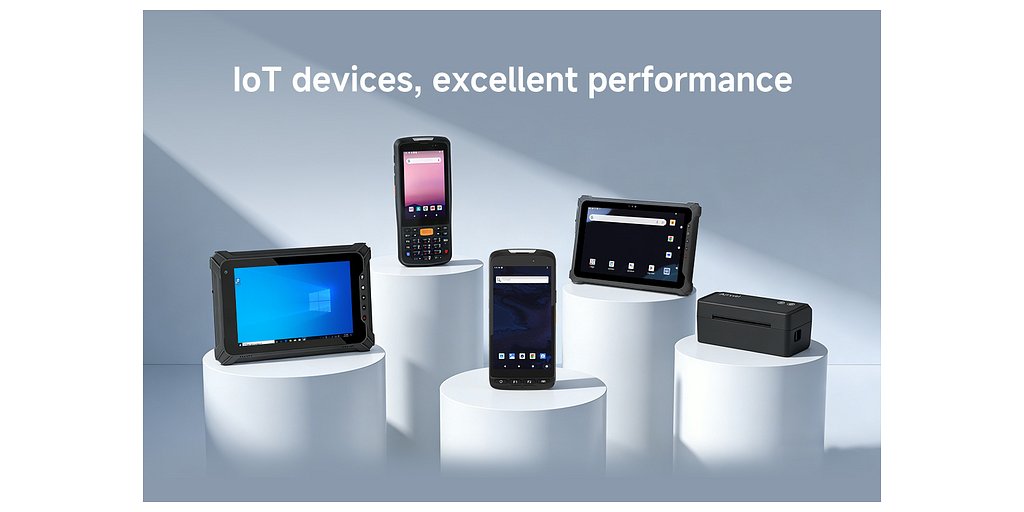
Arrvel’s Global Push: In-House Manufacturing as a Competitive Edge
SHENZHEN, China – April 23, 2026 – A new contender has entered the competitive global industrial technology arena, as Arrvel announces a major international expansion. The Shenzhen-based brand is launching a dual-pronged assault on the market with a portfolio that includes rugged tablets for demanding field environments and high-performance label printers aimed at the burgeoning e-commerce and small business sectors. While new brand launches are common, Arrvel’s strategy hinges on a powerful, and increasingly rare, operational model: end-to-end, in-house manufacturing.
Backed by what it describes as a publicly listed parent company with over a decade of experience in rugged computing, Arrvel is betting that its control over the entire production process—from research and development to final assembly—will provide a decisive advantage in quality, speed, and reliability. This move, combined with a strategic dual-warehouse system in China and the United States, signals a deliberate plan to disrupt markets long dominated by established players.
The Vertical Integration Blueprint
In an era where outsourcing manufacturing is the norm, Arrvel is championing a vertically integrated approach. The company reports operating its own 18,000-square-meter smart factory, boasting an annual production capacity of over one million units. This facility is complemented by a 2,100-square-meter laboratory with nearly 200 professional testing instruments, all intended to ensure that every device meets stringent quality standards.
This commitment to controlling its own production is the cornerstone of Arrvel’s value proposition. Industry analysts note that such a strategy, while capital-intensive, can yield significant long-term benefits in the industrial hardware space. In-house manufacturing allows for unparalleled quality control, a critical factor for rugged devices where failure in the field can lead to costly downtime and operational disruption. It also enables a more agile innovation cycle. By integrating R&D and production under one roof, companies can rapidly prototype, test, and deploy product updates, responding to market feedback and technological advancements far more quickly than competitors reliant on third-party manufacturers.
Furthermore, this model offers a degree of supply chain resilience that has become increasingly valuable. By minimizing dependence on external suppliers, the company can better insulate itself from geopolitical disruptions, quality control lapses from partners, and other logistical bottlenecks that have plagued the global electronics industry. Arrvel’s slogan, “Connect the World, Arrive All,” appears to be as much an internal manufacturing philosophy as it is an external marketing message.
A Tale of Two Markets
Arrvel’s product strategy is uniquely bifurcated, targeting two distinct but interconnected segments of the modern economy. On one side are its rugged tablets, designed for industries like logistics, fleet management, and industrial inspection. These devices feature IP65-IP68 water and dust resistance and MIL-STD-810H/G drop protection, specifications that place them in direct competition with offerings from established market leaders such as Zebra Technologies, Honeywell, and DT Research. In this crowded field, where durability and reliability are table stakes, Arrvel’s claim of superior quality control through its manufacturing process will be its primary differentiator.
On the other side of its portfolio are high-performance label printers designed for small businesses and e-commerce operations. This market, populated by brands like Dymo, Brother, and a host of agile, direct-to-consumer players like Munbyn and Rollo, prioritizes speed, ease of use, and cost-effectiveness. Arrvel’s printers promise high-speed output, a compact desktop footprint, and flexible connectivity via Bluetooth and USB. Here, the company’s vertically integrated model could translate into more reliable hardware that reduces common pain points for entrepreneurs who depend on efficient order fulfillment. The strategy appears to be unifying these disparate product lines under a single mission: providing dependable tools that boost productivity, whether on a factory floor or in a home office.
The Power and Mystery of a Decade’s Experience
Central to Arrvel’s narrative is the foundation provided by its parent company. The press release repeatedly emphasizes that the brand is “backed by a publicly listed parent company with over ten years of experience” in the rugged computing sector. This heritage is positioned as the source of its proven engineering, advanced manufacturing techniques, and established R&D infrastructure. It suggests that Arrvel is not a startup in the traditional sense, but rather the commercial spearhead of a seasoned, but unnamed, industrial powerhouse.
However, the identity of this parent company remains undisclosed in public communications. This lack of transparency makes it difficult to independently verify the financial stability and market history that Arrvel leverages in its messaging. While the story of a decade-long journey in specialized technology is compelling, the anonymity of its benefactor adds a layer of mystery to the brand’s ambitious global push. For investors and potential enterprise customers, understanding the corporate structure behind Arrvel will likely be a key part of their due diligence as the brand seeks to build trust and capture market share.
Logistics as a Linchpin
Beyond manufacturing, Arrvel’s other strategic pillar is its global logistics network. The company has established a dual-warehouse system with facilities in China and the United States. This is a well-recognized strategy for optimizing global supply chains, designed to directly support its claim of “faster fulfillment.” By positioning inventory closer to its key target markets, Arrvel can dramatically reduce shipping times, a critical advantage for both industrial clients awaiting mission-critical hardware and e-commerce businesses needing to quickly scale their shipping operations.
Supply chain experts confirm that such a distributed warehousing model not only improves customer service through speed but also mitigates risk. It creates a buffer against potential port closures, shipping delays, or regional disruptions at a single location. For a company aiming to serve a global customer base with physical hardware, this logistical foresight is not just a convenience but a core competitive weapon. As Arrvel works to establish itself against deeply entrenched competitors, its ability to deliver reliable products quickly and efficiently may prove to be just as important as the technology inside them.