
- Arizona ranks 3rd in the nation for utility-scale energy storage, with 20 gigawatt-hours installed (set to double by 2027).
- Phoenix area's data center power capacity projected to double to 3.75 gigawatts by 2031.
Experts agree that Arizona's tech boom demands specialized safety solutions, with private fire departments like Rural Metro Fire playing a critical role in mitigating industrial hazards from AI and clean energy infrastructure.
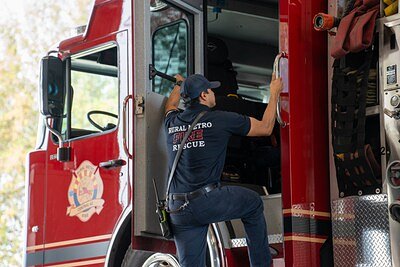
Arizona's Tech Boom Ignites a New Fire Frontier
MESA, AZ – June 03, 2026 – Beneath the vast Arizona sky, a new landscape is taking shape. Fields of glass and silicon stretch toward the horizon, punctuated by monolithic structures humming with the sound of the digital age. This is the frontline of the nation’s twin revolutions in artificial intelligence and clean energy. But this rapid progress, fueled by billions in investment, carries a hidden and volatile risk—one that traditional emergency services are ill-equipped to handle. Stepping into this high-stakes gap is Rural Metro Fire, a private department betting that the future of progress requires a new frontier in safety.
A New Breed of Industrial Hazard
The solar farms, hyperscale data centers, and, most notably, the massive Battery Energy Storage Systems (BESS) sprouting across the state represent a paradigm shift in industrial risk. Arizona now ranks third in the nation for utility-scale energy storage, with over 20 gigawatt-hours installed—a capacity set to double by 2027. These facilities are the lynchpin of the new energy grid, but their core technology, lithium-ion batteries, presents a formidable challenge.
When these batteries fail, they can enter a state of “thermal runaway,” a rapid, self-sustaining chemical reaction where cell temperatures can skyrocket past 600°C. The result is not just a fire, but a potential explosion, the release of a cocktail of toxic and flammable gases, and a stubborn blaze that can reignite hours or even days after being suppressed. “A conventional fire engine showing up to a lithium-ion battery fire is like bringing a garden hose to a volcano,” an industrial safety consultant, who works with energy developers, explained anonymously. “The chemistry, the scale, and the potential for cascading failures are unlike anything most firefighters have ever trained for.”
This reality is codified in stringent national standards like NFPA 855, which mandates sophisticated hazard mitigation and emergency operations plans for BESS installations. Similarly, the state’s booming data center market—projected to double its power capacity in the Phoenix area to 3.75 gigawatts by 2031—presents its own complex puzzle. These facilities are mazes of high-voltage electrical systems, backup generators, and sensitive IT equipment, all operating under immense heat loads. A fire here not only threatens a billion-dollar asset but also risks being fought with the wrong tools, as traditional water suppression can destroy the very servers a company is trying to save. This has led to the development of NFPA 75, a separate standard dedicated to protecting information technology equipment.
The Private Sector Solution
It is precisely this specialized need that Rural Metro Fire Central Arizona is moving to address. Operating in the region since 1948, the nation’s largest private fire department is positioning itself not merely as a first responder, but as an integrated safety partner for the developers building this new infrastructure. The company’s expansion is focused on the industrial corridors of Maricopa and Pinal counties, areas often lying outside traditional, tax-funded fire districts.
“Solar farms, BESS facilities and data centers need highly competent, nimble and specialized fire protection services, and that's why they are all turning to Rural Metro in Pinal County,” says Tim Soule, Chief of Rural Metro Fire Central Arizona. His statement underscores a strategic shift from reactive emergency response to proactive risk management. “The complexity of these sites requires partners who collaborate with developers, builders, hyperscalers and operators all the way along the development path. That's the conversation we're already in across Arizona.”
This model involves engaging with companies at the pre-development stage, building fire and EMS coverage directly into project timelines. This ensures that from day one, the facility’s design, safety protocols, and response plans are aligned with the unique hazards on site. The company’s ability to scale this model was demonstrated in December 2025, when it secured an exclusive agreement to provide fire services for the newly incorporated town of San Tan Valley and its 100,000 residents, proving its capacity to handle both municipal and complex industrial needs.
Pinal County: Ground Zero for Hyperscale Growth
The epicenter of this convergence is Pinal County, a region undergoing a profound economic transformation. It is slated to host colossal projects like the 3,000-megawatt La Osa Data Center Campus, among others, that will demand enormous power and sophisticated infrastructure. For county planners and economic development agencies, attracting these investments is a strategic priority, but it hinges on de-risking the projects for developers and their insurers.
“You can’t just rezone a thousand acres of desert and hope a hyperscaler shows up,” noted a local economic development official. “They come with a checklist, and at the top is infrastructure reliability and safety. Having a dedicated, specialized emergency service provider like Rural Metro that understands their specific risks is no longer a luxury; it’s a prerequisite for investment.”
Rural Metro’s planned expansion into Southern Pinal County, complete with new fire stations and purpose-built apparatus for hyperscale campuses, is a direct answer to that need. It represents a market-driven solution where the public sector’s jurisdictional lines and capital limitations might otherwise create a critical service gap, potentially stalling development. This public-private dynamic allows the county to foster growth without placing the entire burden of highly specialized industrial safety onto its existing public resources, which remain focused on residential and commercial needs.
Securing the Infrastructure of Tomorrow
The story unfolding in the Arizona desert is more than a local business development. It’s a microcosm of a national challenge: how to build the physical foundation for a digital and decarbonized economy safely. The immense power and chemical energy required to run AI models and stabilize a renewable-powered grid must be managed. Rural Metro’s strategy offers a compelling template for how to do it.
By treating specialized safety as a competitive advantage, Arizona is creating an ecosystem where high-tech giants can build with confidence. The regulatory framework, guided by NFPA standards and enforced by local Authorities Having Jurisdiction (AHJs), ensures this private solution adheres to rigorous, nationally recognized safety protocols. This isn't a deregulated free-for-all but a structured evolution of emergency services, adapting to the demands of a new industrial era.
As trucks continue to roll into Pinal County, laying the groundwork for the next wave of data centers and energy storage projects, the quiet expansion of a specialized fire department may be one of the most critical components in the entire value chain. It’s a powerful reminder that progress is not just about the breakthrough technologies that capture headlines, but also about the unglamorous, essential work of managing their consequences.