
- $13.5 million: Cost of the Advanced Manufacturing and Welding building housing the cleanroom.
- $102 billion: Capital commitments from the semiconductor industry in Arizona since 2020.
- 5-10 skilled technicians: Needed for every engineer with a four-year degree in the semiconductor industry.
Experts agree that the West-MEC cleanroom initiative is a critical step in addressing the national semiconductor workforce shortage, offering a scalable model for integrating high-tech vocational training into K-12 education to support economic competitiveness and supply chain security.
Arizona's High-Tech Bet: K-12 Cleanroom Forges Future Chip Workforce
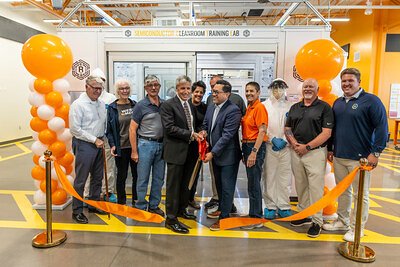
GLENDALE, AZ – April 14, 2026 – Amid the hum of advanced filtration systems and the glow of specialized equipment, a group of high school students dressed in full-body cleanroom suits—colloquially known as “bunnysuits”—offered a glimpse into Arizona's economic future. The scene unfolded at the grand opening of the Western Maricopa Education Center (West-MEC) Advanced Manufacturing Cleanroom on April 13, a facility celebrated as the nation's first K-12 career and technical education (CTE) semiconductor cleanroom of its size.
This ribbon-cutting ceremony at West-MEC's Northeast Campus was more than a typical school dedication. It marked a strategic milestone in America’s race to secure its microchip supply chain. As industry leaders, educators, and policymakers gathered, it became clear that this state-of-the-art facility represents a bold answer to one of the nation's most pressing economic challenges: a severe shortage of skilled technicians needed to power the burgeoning semiconductor industry.
From Blueprint to Cleanroom
The new cleanroom is the crown jewel of West-MEC’s $13.5 million Advanced Manufacturing and Welding building, a project constructed by McCarthy Building Companies and designed by Grace Design Studios. The facility is meticulously engineered to mirror the real-world production floors of semiconductor giants. Inside, students are not just reading from textbooks; they are engaging in hands-on training with industry-standard equipment, learning everything from photolithography and reactive ion etching to robotics and automated systems.
Cleanrooms are ultra-sterile environments, essential for manufacturing the microscopic circuits on silicon wafers that form the basis of all modern electronics. Even a single speck of dust can ruin a microchip. By training in this authentic environment, students learn the strict protocols and precise skills required from day one on the job. The curriculum, developed in close partnership with industry leaders, covers wafer design, microscopy, and the operation of Programmable Logic Controller (PLC) systems that are the backbone of modern manufacturing.
A Strategic Answer to a National Crisis
The opening of the West-MEC cleanroom is perfectly timed. Arizona has aggressively positioned itself as “America’s Semiconductor HQ,” attracting staggering levels of investment. Since 2020, the state has secured over $102 billion in capital commitments from the semiconductor industry. This includes Taiwan Semiconductor Manufacturing Co.'s (TSMC) historic investment, which has grown to a potential $165 billion for multiple fabrication plants, and Intel's ongoing $35 billion expansion of its Arizona operations.
These massive projects are projected to create tens of thousands of high-paying manufacturing and construction jobs. However, this rapid growth has exposed a critical vulnerability: a widening skills gap. There simply are not enough qualified technicians to run the fabs, maintain the equipment, and ensure production quality. For every engineer with a four-year degree, the industry needs five to ten skilled technicians, many of whom require specialized associate degrees or certifications.
This is where West-MEC's model becomes a game-changer. By preparing a skilled workforce at the high school level, the program directly addresses the talent bottleneck. It provides a steady pipeline of job-ready graduates, significantly reducing the time and cost that companies like TSMC and Amkor Technology would otherwise spend on recruitment and foundational training. For these industry giants, the cleanroom is not just an educational initiative; it is a vital component of their operational strategy and a solution for sustainable growth.
Forging the Future Workforce Through Partnership
The success of the West-MEC program hinges on an unprecedented level of collaboration between education and industry. During the opening ceremony, West-MEC Superintendent Dr. Spurgeon emphasized this unique synergy. "This is how education and industry should be working together," he stated. "Our partners aren't just coming to us looking to hire students later, they're investing in them now. They help shape what we teach, provide hands-on experience, and ensure our students graduate ready to step directly into these careers."
Industry partners like Amkor, a leading semiconductor packaging and test services provider, have met directly with West-MEC students to showcase career opportunities and are co-developing curriculum. This direct engagement ensures the training remains relevant and aligned with the fast-evolving needs of the industry. Students in the program earn industry-recognized credentials and college credit, giving them a powerful head start whether they choose to enter the workforce, pursue an apprenticeship, or continue their education after graduation.
For the students themselves, the program offers a clear and accelerated path to a prosperous future in a high-demand field. Dressed in their cleanroom gear and confidently demonstrating complex procedures for event attendees, they represented a new generation of American manufacturing talent being cultivated right in their local community.
A Blueprint for America's Tech Future
While the immediate impact of the cleanroom will be felt across Arizona, its significance extends far beyond the state line. The initiative serves as a national blueprint for how to proactively build the workforce required to support the goals of the federal CHIPS and Science Act, which aims to bolster domestic semiconductor manufacturing and reduce reliance on foreign supply chains. As billions in federal funding flow to new manufacturing projects across the country, the question of who will staff these facilities has become paramount.
Organizations like the SEMI Foundation, a key partner in the West-MEC project, are dedicated to solving this talent deficit by promoting workforce development initiatives. The West-MEC model demonstrates a scalable and effective approach, proving that the talent pipeline can begin long before college. By integrating advanced vocational training into the K-12 system, communities can empower their youth while simultaneously building the industrial base essential for national security and economic competitiveness.
By embedding industry needs directly into the high school curriculum, West-MEC is not just building a facility; it is constructing a sustainable talent pipeline that promises to power Arizona’s high-tech economy for decades to come.