
- Global Edge AI market projected to reach $110 billion by 2034
- ARBOR's AEC-8000 delivers 2070 FP4 TFLOPS performance
- EdgeX-6000 features up to 64-core AMD EPYC™ Embedded 8004 processors
Experts agree that ARBOR's rugged, high-performance Edge AI solutions represent a critical advancement in industrial automation, enabling real-time decision-making in demanding environments.
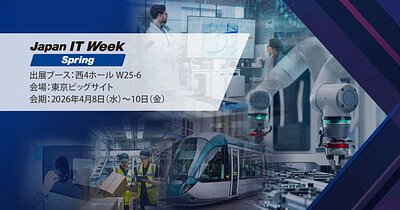
ARBOR Ignites Edge AI Revolution with Next-Gen Rugged Supercomputers
TOKYO, JAPAN – March 11, 2026 – The future of industrial automation and artificial intelligence is not just in the cloud; it's on the factory floor, at the patient's bedside, and on the city streets. At Japan IT Week 2026, global industrial computing leader ARBOR Technology is showcasing a powerful new vision, "From Edge to Action," demonstrating that the true potential of AI is unlocked when immense computational power is brought directly to the source of data. The company is unveiling a suite of rugged, high-performance hardware designed to transform industries by making real-time, intelligent decision-making a reality in the most demanding environments.
With the global Edge AI market projected to soar to nearly $110 billion by 2034, the race is on to build the foundational infrastructure that can support this explosive growth. ARBOR is positioning itself at the forefront of this movement, not merely as a component supplier, but as an architect of complete, reliable systems that bridge the gap between raw data and immediate, impactful results.
The Smart Factory Gets a Rugged Upgrade
For years, the promise of Industry 4.0 has hinged on connecting machinery and systems to achieve new levels of efficiency. ARBOR's latest solutions aim to accelerate this transformation by providing the durable and intelligent tools needed for next-generation manufacturing. Central to this strategy are two new rugged tablets designed for distinct but complementary industrial roles.
The ART10-ECA rugged tablet is a high-performance, Windows-based platform engineered for the rigors of industrial automation and field control. With an IP65-rated seal protecting it from dust and water and the ability to withstand 1-meter drops, the device is built to operate reliably amidst the vibrations, temperature fluctuations, and potential impacts of a busy factory or field site. Its core strength lies in its ability to seamlessly integrate with existing Manufacturing Execution Systems (MES) and Enterprise Resource Planning (ERP) systems, providing operators and managers with real-time data visualization and control directly on the production line.
Complementing this is the Ruby 10 rugged tablet, a solution focused on mobile payment and enterprise management. In logistics, retail, and field service, the ability to securely process transactions and manage device fleets is critical. The Ruby 10 addresses this with integrated front-screen NFC and a crucial EMVCo LoA certification, ensuring compliance with global payment security standards. Furthermore, its certification by 42Gears' SureMDM allows IT administrators to manage, secure, and monitor deployed devices from a central console, a vital feature for maintaining operational control and security across a large-scale mobile workforce.
Bringing Supercomputing Power to the Edge
While rugged tablets are transforming workflows, ARBOR's most ambitious innovations lie in bringing server-grade computing power to the edge. This shift from centralized data centers to localized processing is critical for applications where latency can have significant consequences, such as in healthcare diagnostics and public safety.
The EdgeX-6000 represents a monumental step forward for clinical and medical research environments. Billed as an Edge AI High-Performance Computing (HPC) platform, it is powered by AMD EPYC™ Embedded 8004 series processors, featuring up to 64 cores. This immense processing power, traditionally confined to climate-controlled server rooms, is now available at the clinical edge. It is specifically engineered for computationally intensive tasks like genomic sequencing and the analysis of complex medical imaging, turning massive datasets into actionable diagnostic insights in a fraction of the time.
Perhaps the most forward-looking announcement is the AEC-8000, an industrial-grade AI supercomputer that harnesses the groundbreaking power of NVIDIA's recently unveiled Blackwell GPU architecture. This powerhouse delivers an astonishing 2070 FP4 TFLOPS of performance, a figure that signals a new era for real-time video analytics. ARBOR states the system is optimized for massive-scale analysis, capable of processing over 64 simultaneous high-definition video streams. This capability opens the door for truly intelligent cities, with applications in real-time traffic flow analysis, public space monitoring, and automated security threat detection. For manufacturers, it enables hyper-accurate quality control systems that can analyze products on a high-speed production line with unparalleled detail.
The Unseen Hero: Reliability in Harsh Environments
The technological prowess of AMD EPYC processors and NVIDIA Blackwell GPUs is undeniable, but their power is only useful if the systems housing them can survive in their intended environments. This is where ARBOR's deep expertise in industrial-grade hardware becomes the critical differentiator. The company's focus on "Reliable Edge AI" is not just a marketing theme but a core design philosophy.
The IP65 ratings and drop resistance specifications are just the surface. This commitment to durability extends to component selection, thermal management, and system-level security. The AEC-8000, for instance, is not only a performance beast but is also compliant with the IEC-62443-4-1 cybersecurity standard, ensuring it is designed with a secure development lifecycle process. This is essential for critical infrastructure where a cyber-attack could have devastating physical consequences.
This focus on building resilient, secure, and reliable infrastructure addresses a key challenge in the adoption of Edge AI. As industries from manufacturing to healthcare become more reliant on automated, AI-driven decisions, the underlying hardware must be unfailingly dependable. An interruption in processing due to hardware failure is not just an inconvenience; it can halt production, compromise patient care, or create a security vulnerability.
"Our vision, 'From Edge to Action,' reflects our mission to empower customers with the tools they need to make smarter, faster decisions," said Ivan Huang, Vice President of APAC at ARBOR Technology, in the company's official announcement. "With the Ruby 10 and ART10-ECA, we are making autonomous, high-efficiency manufacturing a reality today." This sentiment encapsulates the company's broader strategy: translating cutting-edge processing technology into practical, robust tools that solve real-world problems and drive the next wave of industrial transformation.