
- 10% to 20% of shipping and inventory errors are caused by labeling issues, leading to significant operational disruptions. - 150 million consumer packages processed by Ambi Robotics' AI, trained on 250,000 hours of production data. - $67 million in funding from investors like Tiger Global, supporting Ambi Robotics' industry footprint.
Experts would likely conclude that AmbiVision represents a significant advancement in warehouse automation, addressing critical barcode-reading challenges with AI-driven cognitive OCR, thereby improving efficiency and reducing manual intervention in logistics operations.
Ambi Robotics’ New AI Vision Reads What Damaged Barcodes Can't
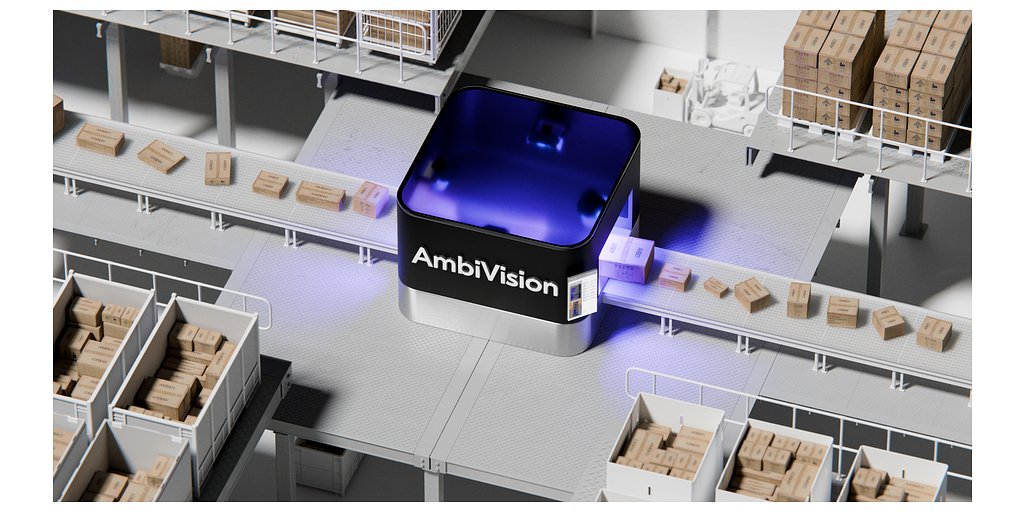
BERKELEY, CA – March 11, 2026 – In the high-speed world of logistics, a single smudged, torn, or missing barcode can bring a multi-million dollar automated system to a grinding halt. To solve this pervasive and costly problem, AI and robotics firm Ambi Robotics has unveiled AmbiVision, a new software application designed to give automated systems the intelligence to see and understand packages, even when traditional scanners fail.
The High Cost of Barcode Dependency
The modern supply chain is built on the humble barcode, but its fallibility represents a significant hidden tax on efficiency. Industry audits estimate that labeling issues are responsible for 10% to 20% of all shipping and inventory errors. When a scanner fails, the consequences ripple through the facility. Automated conveyor belts stop, packages are diverted to manual exception lanes, and workers must intervene to decipher labels, slowing down the entire operation and introducing the risk of human error.
These disruptions are more than just minor inconveniences. They lead to stalled dispatches, inaccurate inventory counts, and costly chargebacks from retailers. For a company processing millions of items, even a 1% scan failure rate translates to tens of thousands of manual interventions, driving up labor costs and eroding margins. With the industry moving towards the more data-rich 2D barcodes under the GS1 Sunrise 2027 initiative, the pressure on companies to modernize their identification capabilities is mounting, as falling behind could mean lost contracts and lasting reputational damage.
Cognitive OCR: Teaching Robots to Read
AmbiVision tackles this challenge by moving beyond simple barcode dependency. The software, part of the company's AI Skill Suite, employs what Ambi Robotics calls "Cognitive Optical Character Recognition" (OCR). Unlike traditional OCR which can be rigid and easily fail with varied fonts or poor print quality, AmbiVision uses a sophisticated AI model to interpret routing and handling information from printed text and visual cues on the package itself.
“AmbiVision delivers the intelligence necessary to autonomously handle any item, especially where traditional machine vision fails,” said Jeff Mahler, CTO and co-founder of Ambi Robotics, in a statement. “We developed AmbiVision because existing solutions were too rigid for the inconsistent labeling and varied text found in real-world distribution centers.”
This capability is powered by AmbiOS, the company's hardware-agnostic operating system, and its PRIME-1 AI foundation model. The system's intelligence is not theoretical; it has been trained on a massive real-world dataset, drawing from over 250,000 hours of production data and the processing of 150 million consumer packages across its deployed fleet. This vast experience allows AmbiVision to perform a suite of tasks, including measuring item dimensions for robotic handling, tracking items in real-time, verifying compliance with shipping requirements, and inspecting for visible damage before a package moves further down the supply chain.
A Confident Bet on Proven ROI
To prove its technology's value, Ambi Robotics is taking an unusually transparent approach. The company is offering a complimentary 30-day AmbiVision deployment program. Through this initiative, Ambi Robotics installs a scan tunnel directly in a customer's facility to process live inventory, providing a risk-free trial. At the end of the 30-day period, the customer receives a detailed performance report outlining read rates, accuracy, and decode times for key identifiers like purchase order numbers and item codes.
This strategy reflects a deep understanding of the logistics industry's cautious and data-driven approach to new technology adoption.
“As a former executive at Walmart and UPS, I understand that technology must be proven with demonstrated ROI before it is implemented at scale,” stated Jim Liefer, CEO of Ambi Robotics. “We are proving the reliability of AmbiVision on the very items that currently cause bottlenecks in our customers’ facilities. By providing this transparency and data upfront, we can demonstrate exactly how this intelligence layer will streamline their specific, real-world workflows.”
The program is limited to three companies at a time, selected from a waitlist, signaling strong initial interest and a confident, targeted market entry.
Reshaping the Automated Warehouse
The introduction of AmbiVision places Ambi Robotics at the forefront of a key trend in warehouse automation: advanced perception. While competitors like Plus One Robotics and RightHand Robotics have made significant strides in giving robots "eye-hand coordination" for picking and sorting tasks, AmbiVision's focus on cognitive reading for exception handling addresses a distinct and critical bottleneck. The software's compatibility with leading hardware from providers like Cognex further suggests a strategy of integration rather than proprietary lockdown.
This technological leap also reframes the conversation around automation and the human workforce. Rather than aiming for full worker replacement, technologies like AmbiVision augment automated systems to handle greater variability, reducing the need for humans to perform the tedious and error-prone task of manual exception handling. This allows logistics operators to redeploy their staff to more complex, value-added roles that require uniquely human problem-solving skills.
Backed by $67 million in funding from investors like Tiger Global and strategic partnerships with industry giants such as Pitney Bowes and OSM Worldwide, Ambi Robotics has already established a significant footprint in the industry. With hundreds of its robotic systems deployed across the U.S., the launch of AmbiVision is not just an announcement of a new product, but a demonstration of a mature AI platform extending its capabilities to solve one of the supply chain's most persistent challenges. This move strengthens the foundation for a future where distribution centers can operate with greater autonomy, resilience, and efficiency.