
- $21.6 billion invested in Saudi Arabia's cultural sector since 2016
- 80+ modern and contemporary works featured in the inaugural Arduna exhibition
- 2 million visitors annually targeted by 2035 under the Journey Through Time Masterplan
Experts view the AlUla Contemporary Art Museum as a strategic pillar of Saudi Vision 2030, blending cultural heritage with global contemporary art to reshape the region's identity and economy, though its long-term success will depend on navigating geopolitical scrutiny and fostering organic creativity.
AlUla's Art Oasis: A New Museum Forges a Global Cultural Dialogue
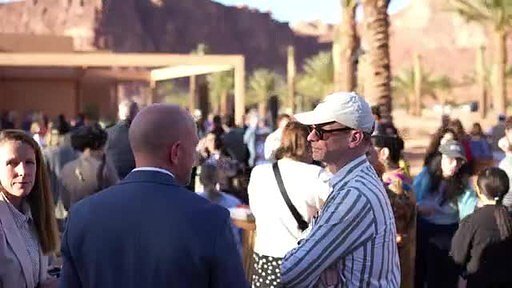
ALULA, Saudi Arabia – February 02, 2026 – In a landscape carved by millennia of history, a new cultural landmark has been formally christened. Arts AlUla has officially announced the AlUla Contemporary Art Museum, a cornerstone initiative aimed at transforming this ancient desert oasis into a vibrant global arts destination. The announcement coincided with the launch of Arduna, the museum's pioneering exhibition, which opened on January 31st as part of the fifth AlUla Arts Festival.
Set against the dramatic backdrop of towering sandstone mountains and lush palm groves, the museum represents a significant milestone in Saudi Arabia's ambitious cultural agenda. It seeks not only to house art but to create a dynamic platform for dialogue—bridging AlUla's profound heritage as a cultural crossroads with the leading edge of contemporary artistic thought.
A Vision Rooted in the Land
The future physical home of the museum will be designed by celebrated architect Lina Ghotmeh, whose selection followed a highly competitive international competition. Ghotmeh is tasked with creating a structure that does more than just occupy space; it must enter into a conversation with the 7,000 years of continuous civilization that define AlUla. Her design philosophy emphasizes a deep, symbiotic relationship with the natural environment.
Initial concepts reveal a vision of the museum as a "living landscape," where architecture and nature are inextricably linked. Ghotmeh's approach avoids imposing a monolithic structure on the delicate oasis. Instead, the museum is envisioned as a series of garden pavilions, carefully integrated into the terrain to guide visitors on a journey that weaves together art, agriculture, and the surrounding environment. This context-driven ethos, rooted in the site's climate, light, and history, promises a building that feels both timeless and forward-looking, echoing Ghotmeh’s celebrated work on projects like the Serpentine Pavilion in London.
"The AlUla Contemporary Art Museum marks another vital chapter in AlUla's journey, connecting our deep local heritage with the innovations shaping the global art landscape," said Hamad Alhomiedan, Director of Arts & Creative Industries at the Royal Commission for AlUla. "Rooted in AlUla's monumental landscape and its people, and through bold commissions, landmark exhibitions, and deep collaborations, we are building a platform that elevates Saudi and regional voices into meaningful dialogue with the world."
'Arduna': A Dialogue Between Worlds
As a preview of its collaborative and cross-cultural mission, the museum's inaugural exhibition, Arduna—meaning "our land" in Arabic—sets a high curatorial standard. Co-curated with the prestigious Centre Pompidou in Paris and supported by the French Agency for AlUla Development (AFALULA), the exhibition explores humanity's evolving relationship with nature. It features over 80 modern and contemporary works, creating a powerful dialogue between international icons and regional talents.
Visitors will encounter masterpieces by Pablo Picasso and Wassily Kandinsky alongside compelling new commissions and works by leading artists from Saudi Arabia and the wider Middle East, including Manal AlDowayan, Ayman Zedani, and the late Etel Adnan. This deliberate juxtaposition places globally recognized art within a distinctly Arabian context, challenging and enriching the interpretation of each piece. The partnership with Centre Pompidou, formalized in 2023, extends beyond this exhibition, encompassing strategic advice, staff training, and long-term research collaboration, signaling a deep commitment to building a world-class institution from the ground up.
Arduna runs until April 15, 2026, serving as the centerpiece of the AlUla Arts Festival and offering the first tangible glimpse of the museum's potential to foster a truly international exchange of ideas.
The Cultural Pillar of Vision 2030
The AlUla Contemporary Art Museum is not an isolated project but a strategic pillar of Saudi Vision 2030, the Kingdom's sweeping national plan to diversify its economy and society away from oil dependency. Culture is central to this transformation, with over $21.6 billion invested in the sector since 2016 to create jobs, boost tourism, and project a new image on the world stage.
The museum is a key component of the Royal Commission for AlUla's (RCU) "Journey Through Time Masterplan," a 15-year program to sustainably develop the region as a "living museum." This plan aims to attract two million visitors annually by 2035, supported by new infrastructure like an expanded airport and the striking Maraya concert hall. The museum complements other ambitious cultural initiatives, most notably Wadi AlFann, or 'Valley of the Arts,' a future large-scale land art destination featuring permanent, monumental works by artists like James Turrell and Agnes Denes set directly into the desert landscape.
Together, these projects are designed to position AlUla as an unparalleled destination where natural wonder, ancient history, and contemporary creativity converge, creating a sustainable cultural ecosystem that contributes to the national economy and enriches the lives of its residents.
Art, Ambition, and Global Scrutiny
This monumental investment in culture is also a calculated exercise in soft power. By building world-class institutions and fostering partnerships with entities like the Centre Pompidou, Saudi Arabia is actively reshaping its global identity. However, such ambitious, state-led cultural projects inevitably attract international scrutiny. Critics often raise concerns about "artwashing," arguing that these initiatives can be used to divert attention from the country's human rights record.
While the RCU emphasizes sustainable development and community engagement, the broader geopolitical context remains a part of the narrative surrounding Vision 2030. Furthermore, some analysts point to the challenges of fostering a genuinely organic creative scene that is not overly reliant on government funding. The long-term success of the AlUla Contemporary Art Museum will depend not only on its architectural grandeur and the quality of its exhibitions but also on its ability to navigate these complex dynamics.
For now, the launch of Arduna and the formal naming of the museum mark a moment of tangible progress. It represents a bold invitation to the world to engage with a new chapter in Saudi Arabia's story—one written in the language of art, set against a landscape of unparalleled antiquity, and looking resolutely toward the future.