
- 12 million passengers annually benefit from Air Europa's new medical assistance system.
- 2,200 cabin crew members empowered with AI-guided tools and real-time physician access.
- 1 million real-world in-flight medical cases used to train the AI system for accuracy.
Experts view Air Europa's integration of AI and telemedicine as a groundbreaking advancement in aviation safety, setting a new industry standard for in-flight medical care.
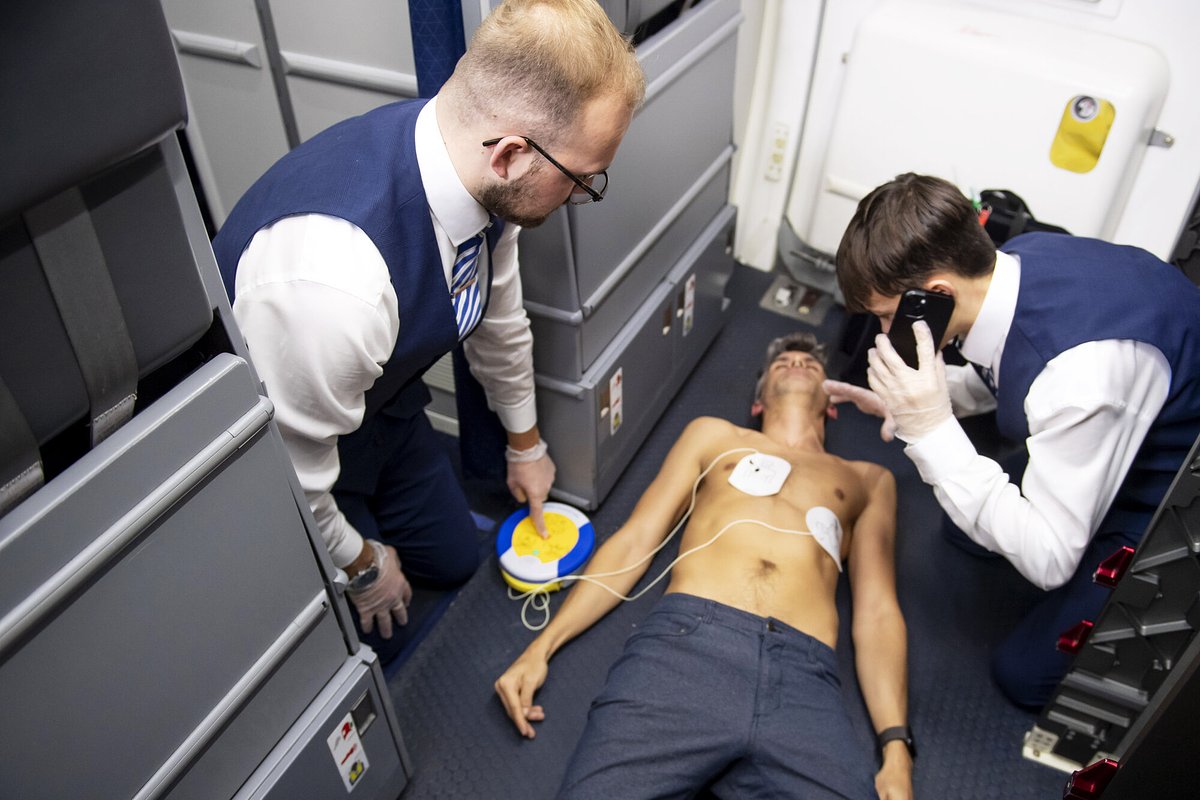
Air Europa Sets New Safety Standard with Onboard AI and Telemedicine
MADRID, Spain – April 16, 2026 – Air Europa is pioneering a new era of passenger safety by becoming the first Spanish airline to integrate a comprehensive, high-tech medical assistance system across its entire fleet. In a strategic alliance with MedAire, a global leader in aviation medical services, the airline is equipping its crews with artificial intelligence-guided tools and real-time access to emergency physicians, effectively placing a virtual doctor on every flight.
This initiative marks a significant leap beyond traditional in-flight first aid, establishing a new benchmark for passenger care in European skies. The system, which began rolling out this March, will provide an end-to-end medical safety net, from pre-boarding assessments on the ground to advanced clinical support at 30,000 feet. The partnership will benefit the more than 12 million passengers who fly with Air Europa and its subsidiary, Air Europa Express, each year.
"We are constantly working to ensure the maximum safety of our passengers, and being able to respond quickly, accurately, and efficiently, especially while in flight, is part of that," explained Ivan Gutierrez, Director of Operations at Air Europa. "Deploying these solutions reinforces the solid preparation of our crews and provides even more peace of mind for travelers, as we now have the direct support of professionals who are used to dealing with any emergency situation."
A Doctor in the Cabin: How the Technology Works
The backbone of this new safety protocol is MedAire's integrated ecosystem of technology and expert support, designed to prevent, assess, and manage medical incidents with unprecedented efficiency.
The process begins on the ground. Air Europa's ground staff can now utilize MedAire’s Passenger Fit-to-Fly digital tool. This system allows them to conduct a structured assessment of any passenger who appears unwell or has a recent history of medical issues, such as a recent hospitalization. The tool uses a sophisticated algorithm to determine if a passenger is at an increased risk of an in-flight medical event, escalating complex cases to MedAire's medical professionals for a final boarding recommendation. This proactive measure aims to prevent emergencies before the aircraft even leaves the gate.
Once airborne, the cabin crew is empowered with two powerful tools. The first is the MedAire In-Flight App, an AI-guided application that provides step-by-step instructions for assessing a sick or injured passenger. Crucially, its assessment protocols are not based on theoretical models but have been trained on MedAire's exclusive dataset of over one million real-world in-flight medical cases. This provides a level of reliability and accuracy previously unavailable to cabin crews, guiding them through scenarios from chest pain and seizures to suspected infectious diseases.
The second, and most critical, component is MedLink, MedAire’s 24/7 in-flight medical advisory service. Through satellite communications or onboard connectivity, the crew can use the app to establish a direct line to a team of aviation-trained emergency physicians. These doctors can view the assessment data captured by the crew, provide real-time clinical guidance, advise on the use of the aircraft’s medical kit, and help make the critical decision of whether a flight diversion is medically necessary.
“Air Europa’s crews will now have access to the same proven medical support ecosystem trusted by more than 300,000 crew members worldwide,” said Peter Tuggey, Managing Director for MedAire in Europe, the Middle East, Africa, and Asia Pacific. “What makes these tools so powerful is not only the speed of access to expert support, but the depth of operational insight behind them.”
A Strategic Move for Market Leadership
This investment in cutting-edge medical technology is a deliberate strategic move by Air Europa to solidify its position as a leader in passenger safety and care. By becoming the first Spanish carrier to adopt such a comprehensive system, the airline gains a significant competitive advantage and reinforces its brand promise of innovation and excellence. This commitment was recently recognized when Air Europa became the first European airline to receive the prestigious Seven Star PLUS certification from AirlineRatings.com, an award that acknowledges the highest levels of safety and product quality.
The operational and financial implications are substantial. Medical diversions are incredibly costly for airlines, involving expenses for fuel, landing fees, and passenger re-accommodation. By providing expert medical assessment in real-time, the MedLink service can help crews manage many situations safely onboard, potentially avoiding unnecessary and disruptive diversions. This enhances operational efficiency while ensuring the passenger receives the appropriate level of care.
By standardizing this advanced medical ecosystem across its modern fleet of Boeing 787 Dreamliners and Boeing 737s, Air Europa is sending a clear message to the traveling public: passenger well-being is its highest priority. This is likely to build significant trust and confidence among travelers, particularly in a post-pandemic world where health and safety are paramount concerns.
Empowering Crew, Enhancing Safety
At the heart of this initiative is the empowerment of Air Europa’s more than 2,200 cabin crew members. While all flight attendants undergo rigorous training in first aid and CPR, they are not medical professionals. The MedAire system transforms their role during an emergency, elevating them from first responders to advanced care facilitators.
Armed with the In-Flight App, crew members are no longer solely reliant on memory and basic training in high-stress situations. The app provides a structured, calm, and logical workflow, ensuring all critical information is gathered and relayed accurately. This streamlined communication—directly from the cabin to MedLink doctors—eliminates the potential for miscommunication that can occur when messages are relayed through the cockpit, allowing pilots to focus on flying the aircraft safely.
This new capability builds upon the airline's existing safety infrastructure, which includes first aid kits, comprehensive medical kits, and automatic external defibrillators (AEDs) on every aircraft. The combination of well-trained crew, robust equipment, and immediate access to expert medical advice creates a powerful safety net that allows the team to act with greater confidence and effectiveness in any scenario.
The Future of Onboard Cardiac Care
Air Europa's commitment to medical innovation does not stop here. In a second phase of the project, the airline will again break new ground in Spain by equipping its long-haul Boeing 787 Dreamliner fleet with lightweight, clinical-grade 12-lead ECG (electrocardiogram) devices. These portable systems are designed for use by non-medical personnel and will allow cabin crew to capture comprehensive cardiac data from a passenger experiencing chest pain or other symptoms.
This data can be transmitted in real time to the MedLink physicians, giving them the diagnostic insight comparable to what would be available in an emergency room. This capability will revolutionize the management of in-flight cardiac events, enabling more confident diagnoses and informed decisions about treatment and potential diversions. As Peter Tuggey noted, this addition represents “another important step forward in strengthening onboard cardiac response.” This forward-thinking approach could influence future regulatory standards set by bodies like the European Union Aviation Safety Agency (EASA), potentially encouraging wider adoption of advanced telemedicine solutions across the industry.