
- 30 A321XLRs: Air Canada is adding 30 of these aircraft to its fleet, marking a strategic shift in its network.
- 4,700 nautical miles: The A321XLR's stated range, enabling new long-thin transatlantic routes.
- 30% lower fuel burn: The aircraft offers significantly improved fuel efficiency compared to previous-generation models.
Experts view the A321XLR as a game-changer for transatlantic travel, enabling cost-effective, direct flights to underserved markets while acknowledging operational trade-offs like reduced cargo space and single-aisle constraints on long-haul comfort.
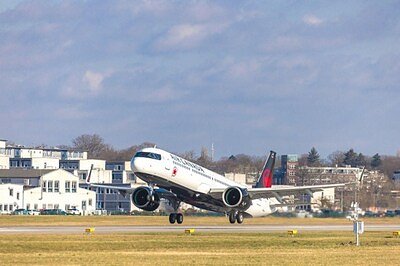
Air Canada's New A321XLR: Bridging Oceans with a Narrowbody Jet
HAMBURG, Germany – April 24, 2026 – Air Canada today took delivery of its first Airbus A321XLR, a groundbreaking aircraft that promises to reshape the airline's international network and redefine the economics of transatlantic travel. The delivery in Hamburg marks the carrier's entry as the first Canadian operator of the extra-long-range, single-aisle jet, a pivotal moment in its ambitious fleet renewal strategy.
This aircraft, on lease from SMBC Aviation Capital, is the first of 30 A321XLRs slated to join the Air Canada fleet. The arrival signals a strategic shift, enabling the airline to bridge the operational gap between its short-haul narrowbody planes and its large widebody jets. The A321XLR is designed to fly farther and more efficiently than any single-aisle aircraft before it, opening a new frontier of routes that were previously not viable.
A New Strategy for Transatlantic Connectivity
The core appeal of the A321XLR is its ability to operate "long-thin" routes—international flights with demand that doesn't necessarily justify the capacity of a larger Boeing 787 or Airbus A330. With a stated range of up to 4,700 nautical miles, the new jet empowers Air Canada to connect its hubs in Montreal and Toronto with a host of new and underserved European destinations.
The airline has already outlined an aggressive deployment plan. Initial routes from Montreal will include non-stop service to European cities like Berlin, Lyon, and Toulouse—the home of Airbus itself. Service will also extend to leisure destinations such as Palma de Mallorca and Porto. From Toronto, the A321XLR will be deployed on routes to Manchester and Copenhagen. One of the longest planned routes, Copenhagen to Toronto, will push the aircraft's endurance with a scheduled block time of up to nine hours.
This strategy allows Air Canada to offer point-to-point service to secondary markets, bypassing the need for connections at larger European hubs. For travelers, this means more convenience and shorter travel times. For the airline, it means tapping into new revenue streams with an aircraft that boasts approximately 30% lower fuel burn per seat compared to previous-generation competitor aircraft.
The Passenger Proposition: Comfort Meets Compromise
Inside, Air Canada has configured the A321XLR to offer a premium experience, aiming to dispel any notion of a low-cost, long-haul compromise. The aircraft features a two-class layout with 182 seats. The highlight is the Air Canada Signature Class cabin, which boasts 14 full-flat seats in a 1-1 configuration, giving every premium passenger direct aisle access—a first for the airline's single-aisle fleet.
The 168 Economy class seats are also next-generation designs intended to maximize personal space. All passengers will experience the modern Airbus Airspace cabin, which features extra-large overhead bins that provide 60% more storage, an advanced ambient lighting system designed to reduce jetlag, and a lower cabin altitude to enhance comfort. In-flight connectivity is robust, with Bluetooth audio streaming for the entertainment system, USB-C and AC power at every seat, and complimentary Wi-Fi for Aeroplan members.
However, the introduction of narrowbody jets on routes stretching over eight or nine hours presents a new set of considerations. While the A321XLR is one of the quietest in its class, some industry analysts and passengers on other airlines have noted the inherent trade-offs. A single aisle can lead to slower boarding and deplaning, and the smaller galley spaces can impact the speed and efficiency of meal services. Furthermore, the ratio of passengers to lavatories can sometimes result in queues, a common concern on long-haul flights that is amplified in a more constrained airframe.
The Economics of a Game-Changer
The A321XLR's arrival is not just about new routes; it's a calculated financial and operational move. The decision to acquire the first 15 aircraft through a lease agreement with SMBC Aviation Capital reflects a broader industry trend. Leasing provides airlines like Air Canada with greater flexibility, allowing them to modernize their fleet and expand their network without the massive upfront capital expenditure required for direct purchases. This asset-light approach is crucial in a volatile industry, preserving capital for other strategic investments.
The aircraft's Pratt & Whitney GTF engines are central to its economic appeal, delivering significant fuel savings and reduced emissions. This efficiency is critical for profitability on the thinner routes it is designed to serve. However, the design that gives the A321XLR its remarkable range also presents a commercial trade-off. An additional rear center fuel tank, necessary for the extended range, permanently occupies space in the cargo hold. This reduces the available volume for freight, a lucrative revenue source for airlines on many transatlantic routes. Air Canada is betting that the passenger revenue from these new, direct routes will more than compensate for the reduced cargo capacity.
Redefining the Market and its Challenges
With over 500 orders from more than 20 customers worldwide, the Airbus A321XLR has been hailed as a market-defining aircraft. It effectively creates a new segment, serving as a modern replacement for the beloved but aging Boeing 757, which once dominated similar long-range, narrowbody missions.
Despite the enthusiasm, early operators have navigated a learning curve. The aircraft's entry into service was delayed from original projections as regulators required additional safety modifications to the novel rear fuel tank. These changes added weight, leading some analysts to suggest the practical, real-world range with a full passenger load is closer to 4,000-4,500 nautical miles, depending on weather and other operational factors. This is still a formidable range but highlights the difference between brochure specifications and daily operations.
Furthermore, the commitment to sustainability is a key part of the aircraft's story. The A321XLR can operate on blends of up to 50% Sustainable Aviation Fuel (SAF), and Airbus aims for 100% SAF capability by 2030. While this aligns with Air Canada's goal of net-zero emissions by 2050, the widespread adoption of SAF remains hampered by limited supply and high costs. For now, the aircraft's primary environmental contribution comes from its fundamental fuel efficiency. As Air Canada begins integrating the A321XLR into its daily operations, the global aviation industry will be watching closely to see how this game-changing aircraft performs in the real world, testing the limits and promises of long-haul, single-aisle flight.
Topics & Related
Financial Services
Technology
Sustainability & Climate
Expansion
Cryptocurrency & Digital Assets
Related Company Pulse