
- 2035: Maryland aims to phase out new gas-powered vehicle sales by this year.
- 43%: Zero-emission vehicles must make up 43% of new vehicle sales by 2027.
- $700: Maximum state rebate for homeowners covering 50% of EV charging equipment and installation costs.
Experts agree that Maryland's aggressive EV adoption policies, combined with robust state and federal incentives, are driving a critical shift toward home charging infrastructure, with local contractors playing a pivotal role in ensuring safe and efficient installations.
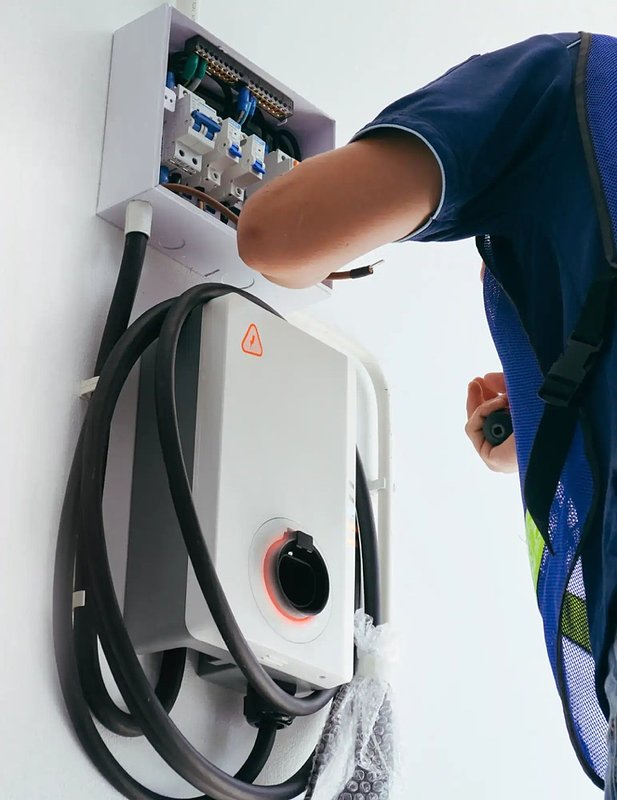
Maryland's EV Future: Local Contractors Power the Home Charging Boom
CROFTON, MD – January 30, 2026 – As Maryland accelerates toward its goal of phasing out new gas-powered vehicle sales by 2035, a critical piece of the puzzle is falling into place not on state highways, but inside residential garages. Local electrical contractors are stepping up to build the home charging infrastructure essential for this transition, and Crofton-based Deshaies Electrical Services has positioned itself at the forefront of this shift by expanding its residential EV charger installation services across Anne Arundel County.
The move comes in response to a surge in demand from homeowners looking to capitalize on state and federal incentives while preparing for the inevitable rise of electric vehicles. With a growing number of residents considering EVs for their next purchase, the convenience and cost-effectiveness of charging at home have become paramount.
The Policy Powering the Plug
Maryland’s ambitious environmental policies are the primary engine driving the demand for home charging solutions. The state has adopted California's Advanced Clean Cars II rule, a regulation that mandates a steady increase in zero-emission vehicle (ZEV) sales, culminating in a ban on the sale of new gasoline-powered cars and light trucks by 2035. The roadmap requires 43% of new vehicles sold in the state to be zero-emission by model year 2027, creating a clear and urgent timeline for infrastructure development.
To soften the financial impact on consumers and spur adoption, the state has rolled out a suite of incentives. Homeowners can receive a rebate covering 50% of the cost of EV charging equipment and installation, capped at $700. Businesses, nonprofits, and government entities can access a similar rebate with a more generous $5,000 limit. These state-level benefits are further amplified by a federal tax credit, which can cover 30% of installation costs up to $1,000 for homeowners in eligible low-income or rural areas.
“Residents across the county are planning ahead as EVs become a larger part of Maryland’s transportation landscape,” said Mike Deshaies, President of Deshaies Electrical Services, in a recent announcement. “By expanding our EV charging installation services to homes, we’re helping families access charging systems that support daily use and long-term ownership.”
However, the transition has not been without its complexities. State regulators recently delayed enforcement of penalties against auto dealers for failing to meet the 2027 and 2028 sales targets, acknowledging industry concerns about supply and readiness. Furthermore, new fees are being introduced, including an annual registration surcharge of $125 for ZEVs and $100 for plug-in hybrids starting July 1, 2025, to help offset lost gas tax revenue. These evolving policies underscore the dynamic nature of the transition and highlight the need for homeowners to have clear, reliable guidance.
Demystifying the Home Charging Installation
For many Maryland homeowners, the prospect of installing an EV charger can be daunting. The process involves more than simply mounting a box on the wall; it requires a thorough understanding of a home’s electrical system, local building codes, and permitting requirements. This is where specialized electrical contractors play a crucial role.
Deshaies Electrical Services is addressing these concerns by offering a comprehensive service that guides homeowners from initial assessment to final inspection. The company provides installations for both Level 1 chargers, which use a standard 120-volt outlet for slower, overnight charging, and the more popular Level 2 chargers, which require a 240-volt circuit—similar to an electric dryer—and can replenish an EV’s battery in a matter of hours.
A key part of the service is a detailed electrical system assessment. Many older homes in Anne Arundel County were not built to handle the sustained electrical load of a Level 2 charger. An assessment determines if the home's main electrical panel has sufficient capacity or if an upgrade is necessary. This proactive step prevents issues like overloaded circuits and ensures the system is both safe and reliable. The company emphasizes clear, upfront estimates to eliminate financial surprises and manages all necessary permitting and documentation, simplifying a potentially bureaucratic process for the homeowner.
“The electricians were very polite and courteous,” noted former client Howard Williams in a public review. “I liked their professionalism, and they answered all the questions I asked without hesitation.” This focus on customer communication and education is critical in a field filled with technical jargon and unfamiliar requirements.
A Strategic Spark in a Changing Market
For a local business like Deshaies Electrical, founded in 2011, the expansion into EV charging represents a savvy adaptation to a rapidly evolving energy market. By aligning its services with state policy and consumer trends, the company is not only tapping into a new revenue stream but also solidifying its relevance for the decades to come. This strategic pivot allows the contractor to leverage its core expertise in residential and commercial electrical work—including panel upgrades, custom wiring, and emergency generators—to meet a modern need.
The company’s established reputation, backed by over 200 five-star Google reviews praising its fair pricing and clean workmanship, provides a foundation of trust for customers venturing into the new territory of EV ownership. The ability to integrate an EV charger installation with a necessary panel upgrade or other electrical improvements offers homeowners a streamlined, one-stop solution.
This business model is becoming increasingly vital as the energy landscape grows more complex. Homeowners are not just thinking about their cars; they are evaluating whole-home energy solutions, from solar panels to battery storage. Contractors who can provide integrated services and expert guidance on how these systems work together are positioned for long-term success. The company’s services also extend to the commercial sector, offering installation of workplace charging stations and systems for small fleets, further embedding it within Maryland’s clean energy infrastructure.
“Our role is to help homeowners understand their electrical systems and complete installations that meet current requirements and support future needs,” Deshaies added. As EV prices become more competitive and a wider variety of models enter the market, the demand for reliable, professional installation services is only expected to grow, ensuring that Maryland’s homes are ready for an all-electric future.