
- 97% Negative Predictive Value (NPV): The VISTA iQ™ scanner has a 97% accuracy in classifying low-risk lumps as benign, reducing unnecessary procedures. - $130,000 Annual Revenue Boost: Clinics using the scanner could see an additional $130,000 in yearly revenue. - 40-Second Non-Invasive Scan: The device provides immediate results, transforming diagnostic workflows.
Experts agree that the VISTA iQ™ scanner represents a significant advancement in early cancer detection for dogs, offering both clinical and financial benefits for veterinary practices.
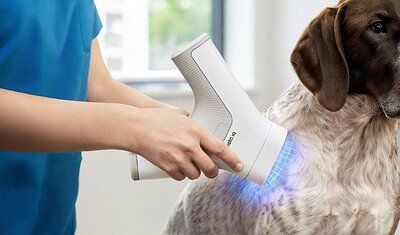
AI Vet Scanner Promises Early Cancer Detection and $130K Clinic Boost
HILLSIDE, N.J. – January 20, 2026 – A new AI-powered device is poised to fundamentally change how veterinarians diagnose cancer in dogs, turning a historically anxious waiting game into a 40-second, non-invasive scan. HT Vet, a veterinary health technology firm, today launched its VISTA iQ™ scanner, a tool that not only promises earlier cancer detection but also offers a significant financial lifeline to veterinary clinics, potentially adding $130,000 in annual revenue per practice.
This next-generation device combines patented Heat Diffusion Imaging (HDI) with artificial intelligence to screen suspicious lumps and bumps on dogs, providing immediate, actionable information directly in the exam room. The launch addresses a critical gap in canine care, where millions of masses go undiagnosed each year, and a growing economic pressure on veterinary practices that need new, high-value services to thrive.
A New Frontier in Canine Oncology
For years, the standard approach to a newly discovered lump on a dog has been a difficult choice between invasive, costly procedures and a worrisome "wait and see" strategy. HT Vet's technology aims to eliminate this dilemma. The VISTA iQ is a handheld scanner that a veterinarian or technician can use to perform a painless, 40-second scan on the affected area.
The device works by applying a controlled heat source and then using an infrared sensor to measure how heat diffuses through the tissue. Malignant tissues, due to their different cellular structure and blood flow, exhibit unique thermal signatures compared to healthy or benign tissue. The scanner's AI algorithm, trained on a massive database of thermal images, analyzes these patterns to classify the mass's risk level.
Scientific validation studies on the device's core technology are compelling. A 2023 study evaluating over 660 masses found that the system had a negative predictive value (NPV) of 97%. This high NPV is a crucial metric, meaning that when the VISTA iQ classifies a lump as low-risk, there is a 97% probability it is indeed benign. This provides veterinarians with a powerful, data-backed tool to confidently reassure pet owners and avoid unnecessary procedures.
The technology directly confronts the dangers of delayed diagnosis. "I was shocked to see the diagnostics are not being done for a large group of patients. I have seen too many cases where the 'wait and see' approach has changed everything for the trajectory of that patient," said Craig Clifford, a board-certified veterinary oncologist, in a statement. "If say a Mast Cell Tumor or Soft Tissue Sarcoma were caught earlier, we're talking survival times in the thousands of days, where because we waited, we're now dealing with a non-resectable tumor or a metastatic tumor."
Transforming Practice and Profitability
Beyond its clinical advantages, the VISTA iQ is positioned as a powerful business tool. The company projects that a single device can generate $130,000 in additional annual revenue for a clinic. This figure is based on the device's ability to drive better client compliance and increase the progression of suspicious cases to necessary follow-up procedures.
Currently, only about 39% of the 19 million annual veterinary visits for lumps and bumps proceed to a fine-needle aspirate (FNA). With the VISTA iQ's immediate risk assessment, HT Vet projects that the surgery conversion rate from these FNAs can climb from 15% to 40%. This shift not only generates revenue from surgeries but also from the preceding diagnostic steps like histopathology and oncology consultations.
This innovation arrives at a critical time for the veterinary industry. According to iVET360's 2025 Veterinary Industry Benchmark Report, while price increases have bolstered clinic revenues, they have also contributed to a decline in overall patient visit volumes. This trend signals an urgent need for new service offerings that provide advanced, affordable care without simply raising the price of existing services.
"Clinics need to differentiate between services that are 'nice-to-have' and necessary services that prioritize the patient's health, in order to sustain growth," stated Shani Toledano, CEO of HT Vet. "VISTA iQ is the key that unlocks better outcomes for both the clinics and their patients... This is more than a tool; it's a strategic growth advantage for the entire veterinary ecosystem."
Available through an annual subscription, the VISTA iQ model makes the advanced technology accessible without a prohibitive upfront capital investment, providing clinics with a predictable cost structure and a scalable path to growth.
Streamlining Diagnostics from Exam Room to Lab
The practical impact on a clinic's daily workflow is a core part of the VISTA iQ's value proposition. The quick, technician-operable scan can be seamlessly integrated into initial wellness or sick-pet visits, transforming how practices manage these common cases.
Dr. Michael Morris, a practice owner at Animal Hospital Southwest, described the change: "Before, we spent a lot of time doing fine needle aspirates, waiting on results, and having tough conversations with clients who weren't sure whether to move forward. Now, we can screen a lump in minutes, talk through the findings right there in the exam room, and make confident decisions together."
This streamlined process empowers pet owners with immediate information, reducing anxiety and enabling them to participate more fully in their pet's healthcare decisions. The technology also benefits the wider diagnostic ecosystem, with projections suggesting that diagnostic labs could earn up to $30,000 annually from each clinic using the device due to the increased volume of submitted samples.
Strong market confidence is evident even at launch. HT Vet reports that several hundred clinics have already pre-ordered the VISTA iQ. Furthermore, nationwide distribution agreements with industry giants Patterson, MWI, and Covetrus ensure that the technology can be rapidly adopted by a significant portion of the roughly 30,000 veterinary clinics across the United States, which represent an estimated $900 million domestic market opportunity.
The VISTA iQ, which builds upon the success of its predecessor with an improved wireless and ergonomic design, is making its official debut at the VMX 2026 veterinary conference in Orlando, Florida. With its technology already in use in countries from the UK and Germany to Australia, the U.S. launch marks a major milestone in making proactive, data-driven cancer screening a new standard of care for dogs everywhere.