
- WisPaper's AI upgrade aims to create a 'closed-loop workflow' for seamless research transitions, reducing procedural bottlenecks.
- The 'WisModel' uses 'Intent Verification' to mitigate AI hallucinations by validating findings against direct academic quotes.
- The platform integrates literature review, hypothesis development, experimentation, and analysis into a single environment.
Experts view WisPaper's AI upgrade as a significant step toward streamlining academic research, though they caution against over-reliance on AI, emphasizing the need for human oversight in critical thinking and data interpretation.
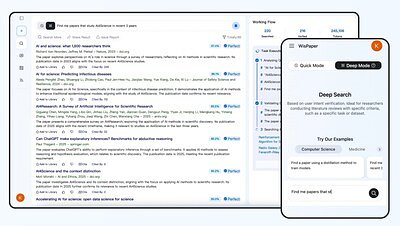
AI Upgrade Aims to End Academic Drudgery, Accelerate Discovery
SINGAPORE – April 15, 2026 – The world of academic research, often characterized by painstaking, sequential steps, is facing a significant technological shift. Today, Singapore-based WisPaper announced a major upgrade to its AI-powered research agent, promising to transform the fragmented and laborious process of scientific discovery into a seamless, accelerated workflow. The move signals a deeper integration of artificial intelligence into the core of knowledge production, aiming to free researchers from procedural tasks to focus on innovation.
The announcement comes as AI agents, popularized by platforms like OpenClaw, are moving beyond general consumer applications and into highly specialized fields. WisPaper's update aims to be more than just another tool; it's positioned as a "full-chain research accelerator" designed to manage the entire scientific journey within a single, connected environment.
Reframing the Research Process
Modern scientific inquiry is a multi-stage marathon, traditionally involving a linear progression from literature review and hypothesis development to experimentation and analysis. Each stage often requires different tools and significant manual effort to bridge the gaps, creating bottlenecks that can slow progress and limit the scope of exploration.
WisPaper’s upgrade directly confronts this challenge by creating what it calls a "closed-loop workflow." Instead of treating research as a series of disconnected tasks, the platform integrates these steps. "The system enables transitions between stages to occur more seamlessly, reducing interruptions and improving overall research continuity," the company explained in its announcement. This integrated approach means a researcher can move from discovering relevant literature to organizing findings, developing experimental frameworks, and analyzing results without constantly switching contexts or manually transferring data between applications like Zotero, Google Scholar, and various data analysis programs.
The goal is to enable a more iterative and fluid mode of research. By reducing the friction between steps, the system is designed to support the parallel exploration of multiple ideas. This could allow research teams to pursue several hypotheses at once, receive faster feedback on their viability, and pivot more efficiently, potentially shortening the cycle from initial question to validated result.
Beyond Automation: A New AI Co-Pilot
This upgrade reflects a crucial evolution in how AI is being deployed in scientific settings. Early AI tools in academia focused on automating isolated tasks—checking grammar, summarizing articles, or managing citations. WisPaper’s ambition is to create a true AI "co-pilot" that participates across the entire workflow.
At the heart of this new capability is the "WisModel," a proprietary AI agent trained specifically for the nuances of academic inquiry. A key feature is its "Deep Search" function, which goes beyond simple keyword matching. It uses a process called "Intent Verification" where the AI decomposes a researcher's complex query and must validate its findings against direct quotes from academic papers. According to a technical paper released by the company, this method significantly mitigates the risk of AI "hallucinations"—the generation of plausible but false information or citations—a critical flaw in many general-purpose AI models.
This deeper level of AI integration allows the system to handle more routine and structured processes with less direct user input. It can automatically process and organize vast libraries of academic materials, extract key data, and suggest next steps. This frees researchers from what many call "academic drudgery" and allows them to operate at a higher strategic level, focusing their expertise on defining critical problems, interpreting complex results, and exercising final judgment.
The Race to Revolutionize the Lab
WisPaper's launch does not happen in a vacuum. It enters a bustling and highly competitive market of AI tools all vying to become indispensable to the modern researcher. The landscape is populated by a variety of players, from specialized literature discovery tools like Elicit and Research Rabbit to comprehensive AI writing assistants such as Paperpal. Even general-purpose AIs like Claude and ChatGPT are being adapted for academic brainstorming and drafting.
Where WisPaper aims to differentiate itself is in its holistic, end-to-end vision. While many competitors excel at one part of the research lifecycle—be it search, analysis, or writing—WisPaper is betting that the greatest value lies in unifying them all. Its platform combines a powerful scholar search engine, a sophisticated library for knowledge management, and personalized "AI Feeds" that proactively recommend new and relevant publications.
This push toward integration reflects a broader "AI arms race" in science and technology. As national and institutional prestige becomes increasingly tied to the pace of innovation, the tools that accelerate discovery are seen as strategic assets. The competition is not just between companies but also between different philosophies of how AI should assist human intellect, with WisPaper championing a deeply integrated, co-pilot model.
Promise and Peril in the AI-Powered Lab
The potential benefits of such powerful tools are immense. Researchers and university administrators alike are hopeful that AI can help manage the ever-expanding firehose of published literature, accelerate breakthroughs in medicine and materials science, and democratize access to high-level research capabilities. Early users of similar AI summarization tools have praised the "cognitive relief" they provide, allowing them to assess more papers in less time.
However, the rapid infusion of AI into the scientific process is not without its challenges and ethical considerations. Experts caution against over-reliance on these systems, which could lead to an erosion of critical thinking and data interpretation skills among a new generation of researchers. "The human in the loop remains the most critical component," noted one academic technologist, speaking on the condition of anonymity. "The AI can find correlations, but it's the researcher who must determine causation and meaning."
Concerns about algorithmic bias, data privacy, and the "black box" nature of some AI models are also paramount. For science to remain trustworthy, its methods must be transparent. As AI becomes more deeply embedded in generating and analyzing data, ensuring the reproducibility and explainability of AI-driven conclusions will be a formidable challenge for the entire academic community. The evolving role of the scientist may soon require not just expertise in a chosen field, but also a sophisticated understanding of how to effectively and ethically collaborate with an artificial intelligence.