
- Nearly one-third of American households struggle to pay their utility bills
- Bidgely has won its third consecutive Environment+Energy Leader Award
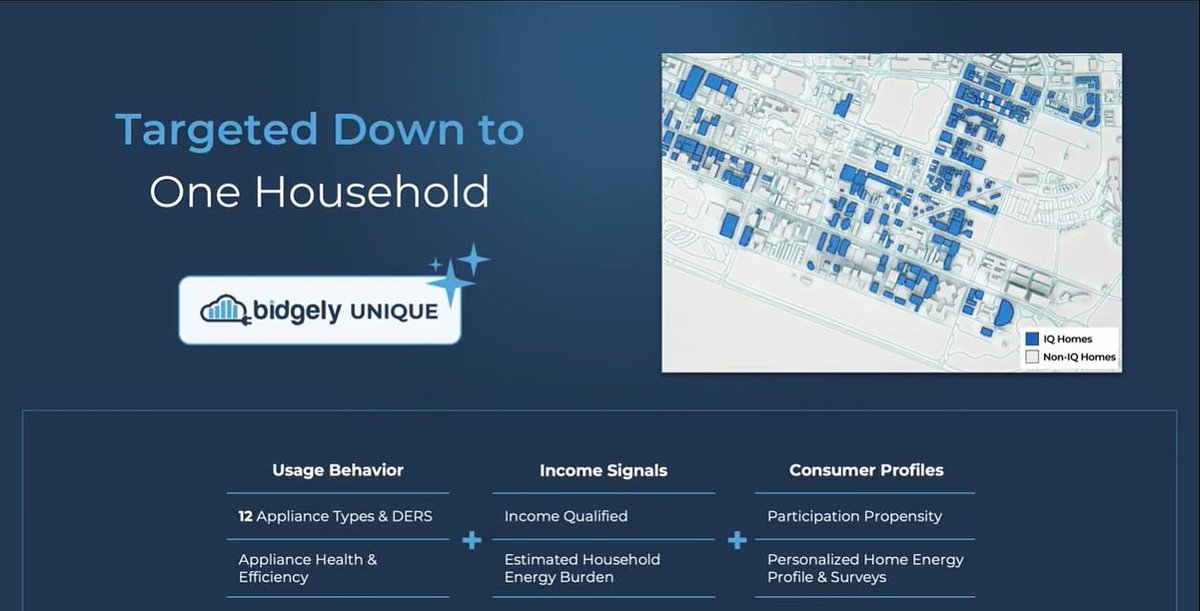
- The company's AI analyzes smart meter data at a premise-by-premise level to identify at-risk households
Experts would likely conclude that Bidgely's AI-driven approach represents a significant advancement in addressing energy poverty, offering more precise identification of vulnerable households and improving access to critical assistance programs.
AI Tackles Energy Poverty, Earning Bidgely Its Third Major Award
LOS ALTOS, CA – April 22, 2026 – As nearly one-third of American households grapple with the escalating cost of energy, a California-based technology firm is gaining recognition for deploying artificial intelligence to address the crisis. Bidgely, a pioneer in AI-powered energy intelligence, has received a 2026 Environment+Energy Leader Award for its Affordability and Income-Qualified program, a solution designed to radically improve how utilities identify and assist their most vulnerable customers.
The award marks the company's third consecutive win from the prestigious E+E Leader program, highlighting a consistent pattern of innovation. This year’s recognition focuses on the critical issue of energy affordability, celebrating how Bidgely's technology moves beyond outdated methods to connect struggling families with essential financial relief.
“With nearly one-third of American households struggling to pay their utility bills, Bidgely’s Affordability and Income-Qualified program empowers utilities to bridge the gap between vulnerable customers and essential relief resources,” said Gautam Aggarawal, Chief Revenue Officer at Bidgely, in a statement. “It’s an honor to receive our third consecutive E+E Leader award for AI solutions that tackle the industry’s most urgent challenges.”
Beyond the Census: AI's New Precision
For decades, utilities have relied on coarse, often fragmented census data and zip code-level demographics to identify customers eligible for assistance programs. This approach, while well-intentioned, creates significant blind spots, leaving countless families to fall through the cracks. Many who qualify for aid are never identified, while others who don't meet strict federal thresholds still face immense financial strain from high energy burdens.
Bidgely’s award-winning program overhauls this system by applying a high-definition lens to customer data. Leveraging 19 foundational patents in AI analytics, the company's UtilityAI™ platform analyzes raw smart meter data at a granular, premise-by-premise level. Instead of looking at a neighborhood, the AI looks at a household. It dissects energy consumption patterns to infer a home's unique characteristics and challenges without compromising privacy.
This sophisticated analysis allows utilities to uncover the “invisible qualified”—low-income residents who are eligible for support but are missed by traditional filters. Furthermore, the technology can detect households that, while falling outside federal poverty thresholds, are nonetheless struggling with a disproportionately high energy burden. By identifying these at-risk, middle-income customers, utilities can proactively offer budget counseling, energy efficiency solutions, or flexible payment plans before they fall into arrears.
From Identification to Action: The GenAI Assistant
Identifying customers in need is only half the battle. The next, and often most difficult, step is successfully engaging them and guiding them through what can be a complex and cumbersome application process for assistance. Friction in this “last mile” of engagement is a primary reason why program funds often go unused and outreach efforts fail.
To solve this, Bidgely has integrated a GenAI Energy Assistant into its platform. This tool automates and personalizes the entire engagement journey. It can dynamically adapt the language, tone, and timing of communications—whether through email, text, or a web portal—to resonate with different customer segments. For instance, it can send a message that directly connects a household's recent high cooling usage to the benefits of a weatherization program, making the call to action immediately relevant.
The assistant creates a hyper-personalized enrollment journey, simplifying applications and providing interactive guidance that helps eliminate the confusion and frustration that lead to abandonment. This automated, tailored approach not only boosts enrollment in critical assistance programs but also enhances the overall customer experience, fostering trust and empowering individuals to take control of their energy costs.
A Triple Win for Customers, Utilities, and Regulators
The impact of this technology extends beyond individual households, creating a trifecta of benefits for customers, utilities, and regulatory bodies. For customers, the primary benefit is improved access to vital financial relief and energy-saving tools. For utilities, the solution offers a powerful strategy for improving operational health.
By maximizing enrollment in assistance programs, utilities can more effectively prevent customer arrears from accumulating, a significant financial liability. It also ensures that critical public funding for these programs is fully utilized, rather than being left on the table. This proactive support helps reduce service disconnections and improves customer satisfaction scores.
This approach also aligns with a growing movement among state regulators to embed energy equity into utility operations. States like Colorado and Oregon have passed legislation requiring Public Utility Commissions (PUCs) to consider equity in all their work. Regulators are increasingly mandating that utilities not only offer support programs but also demonstrate measurable success in reaching vulnerable communities. AI-driven tools provide the data-backed evidence needed to meet these evolving regulatory targets and prove that equity goals are being actively addressed.
A Pattern of Industry-Defining Innovation
This 2026 award is the latest in a series of accolades for Bidgely, cementing its position as a leader in applying AI to the energy sector's most pressing problems. In 2025, the company was recognized by E+E Leader for its EV Intelligence solution, which helps utilities manage grid strain from electric vehicle charging. In 2024, its foundational UtilityAI™ platform earned a “Top Product of the Year” award for its broad impact on energy management.
“As organizations navigate an increasingly dynamic and uncertain operating environment, the ability to improve efficiency, reduce emissions and deliver measurable results has never been more critical,” noted Sarah Roberts, Co-President and Publisher of Environment+Energy Leader. “This year’s winners demonstrate the innovation and leadership required to move forward with clarity and impact.”
In a competitive market that includes major software vendors and specialized startups, Bidgely differentiates itself with its patented, purpose-built AI that delivers verifiable, behind-the-meter insights. As the energy transition accelerates and affordability challenges persist, the ability to transform raw data into actionable, equitable outcomes is proving to be an indispensable tool for the modern utility.
Topics & Related
Decarbonization
Generative AI
Machine Learning
Revenue
Software & SaaS
AI & Machine Learning
ChatGPT
Energy Systems
Related Company Pulse