
- 48-hour film production: AI technology enables the creation of complete films within a 2-day window.
- $1 million initiative: TapNow's '10,000 Parallel Universes' program funds AI-native storytelling projects.
- Agentic canvas integration: Platform combines multiple AI models (Seedance 2.0, Kling 3.0, Google's VEO) into a unified filmmaking workflow.
Experts view AI as a transformative tool for filmmaking that augments human creativity, though concerns about aesthetic homogenization and job displacement remain significant considerations.
AI Rewrites the Film Script: The 48-Hour Movie Is Now a Reality
AUSTIN, Texas and SAN FRANCISCO – April 17, 2026 – A seismic shift is underway in the world of filmmaking, where production schedules once measured in months or years are being radically compressed into a matter of hours. The catalyst for this disruption is a new breed of artificial intelligence, exemplified by TapNow AI, which recently unveiled a technology poised to redefine the creative process from the ground up.
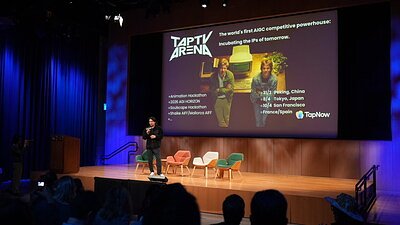
At a packed SXSW panel, TapNow CEO Jessie Qin introduced the company's flagship product: the first "agentic canvas" for filmmaking. Described as a real-time, always-on creative partner, the platform promises to bring an integrated, fluid experience to a notoriously fragmented industry. The concept didn't remain theoretical for long. It was immediately put to the test at Soulscape, a global AI cinema summit and hackathon co-hosted by TapNow, demonstrating in real-time the platform's power to turn ambitious ideas into finished films.
The 'Agentic Canvas' Explained
At the heart of TapNow's innovation is the "agentic canvas," a system designed to function as an "AI Executive Director." This goes far beyond simple text-to-video generation. The platform provides a comprehensive, unified environment where creators can ideate, generate, and iterate on video content without juggling a dozen different software tools. It integrates a vast matrix of frontier AI models—including Seedance 2.0, Kling 3.0, and Google's VEO—into a single, coherent workflow.
Unlike many competitors that focus on single-purpose generation, TapNow's system is built on a node-based interface. This allows filmmakers to visually connect different creative blocks—scripts, storyboards, character models, audio tracks, and video clips—to build and refine their production pipeline. This structure is designed to offer granular control while maintaining ease of use, a balance that has often eluded other platforms.
Key features include a "Cinema Lab" that offers professional-grade controls over camera angles, lens combinations, and motion, allowing for sophisticated cinematography. The AI can automate pre-production tasks by breaking down existing film clips to analyze their cinematic logic, providing creators with structured templates for shot composition, pacing, and color grading. The "agentic" paradigm means the AI can understand broad creative goals, break them down into tasks, and adapt its strategy, essentially collaborating with the human director to execute a vision.
From Concept to Creation in 48 Hours
The true test of this technology came at Soulscape's 48-hour AIGC (AI-Generated Content) Hackathon. The event brought together thousands of filmmakers and digital artists to work directly with AI, moving the technology from a theoretical tool to a practical production partner. The results were startling. Teams produced a slate of short films with clear narrative structures and consistent visual styles, a significant leap from the often disjointed outputs of earlier-generation AI video tools.
Notably, the hackathon's winning project was created using the TapNow platform. The success of films like "Before Me," completed entirely within the 48-hour window, served as a powerful proof of concept. "This signals a broader shift: AI is beginning to enter the actual workflows of professional creators, rather than remaining on the periphery as an experimental tool," said Klaus He, co-founder of TapNow, at the event. This transition from experimental curiosity to a core production utility marks a critical inflection point for the industry.
Another project highlighted was "Glasswork," a feminist film praised for its emotional depth and nuanced AI-generated performances, demonstrating that the technology can be used for more than just visual spectacle. It points toward a new production model where individual creators, unburdened by the immense costs and logistical hurdles of traditional filmmaking, can deliver fully realized, emotionally resonant work.
A New Era of AI-Native Storytelling
TapNow is betting that this new model will spawn an entirely new creative ecosystem. To accelerate this vision, the company has launched "10,000 Parallel Universes," a global initiative backed by over $1 million in funding. The program invites creators to use the platform to build original story worlds from the ground up, starting with a trailer but designed to evolve into larger narrative universes. This initiative is a clear signal that the focus is shifting from one-off AI-generated clips to building scalable, AI-native intellectual property (IP).
The platform's unique transparency further supports this ecosystem. Through a feature called "TapTV," creators can publish not only their finished films but also their entire node-based workflows. This open-source approach allows others to study, clone, and remix projects, creating a collaborative environment that could dramatically accelerate learning and innovation within the AI filmmaking community.
Navigating the Human-AI Creative Landscape
The rapid advancement of agentic AI in film is not without debate. While proponents celebrate the democratization of filmmaking and the potential for an explosion of creativity, others voice significant concerns. Industry experts caution against the risk of "aesthetic homogenization," where films generated by AI trained on the same vast datasets begin to look and feel alike, potentially stifling true originality.
Furthermore, the question of authorship and the future of creative jobs looms large. As AI takes on roles traditionally held by storyboard artists, cinematographers, and editors, unions and industry veterans are grappling with how to adapt. Some argue that AI is merely a powerful workflow tool, incapable of replicating the lived experience, cultural nuance, and spontaneous genius that are the hallmarks of human creativity. According to one industry analyst, AI's inability to possess lived experience remains its most significant limitation in generating stories with genuine emotional and cultural resonance.
However, the prevailing view is one of collaborative evolution rather than outright replacement. The technology is seen as a way to augment human creativity, allowing filmmakers to rapidly visualize and iterate on ideas that would have previously been too costly or time-consuming to explore. The role of the director is not disappearing but is instead shifting towards becoming a curator of ideas and a conductor of AI agents. As this new production model spreads, the first generation of AI-native story IP is already emerging, creating a new frontier for entertainment.
The question is no longer whether AI can make films. The technology is here, and it is rapidly becoming more powerful and accessible. The real question is who will harness its potential to tell the next generation of stories, and whether the rest of the industry will be joining now—or trying to catch up later.