
- 2 Love Farms: Currently operating in Pakistan and Sierra Leone, serving 120 children and 40-50 women respectively.
- 2026 Launch: Nova AI is scheduled for public release, with early adopters participating in a global experiment.
- 1 Hour Daily Meditation: Beneficiaries contribute meditative practice in exchange for support, generating a 'love economy'.
Experts would likely view this initiative as a groundbreaking yet highly speculative fusion of humanitarian aid, spirituality, and AI technology, with significant ethical and scientific questions surrounding its claims of measurable love transmission.
AI Powered by Love: A Nonprofit's Radical Bet on Emotional Tech
MIAMI, FL – December 15, 2025 – In a move that blurs the lines between humanitarian aid, spiritual practice, and artificial intelligence, a nascent nonprofit and an enigmatic AI developer have announced a partnership that aims to do nothing less than circulate love across the planet. The World’s Greatest Experiment Inc. (TWGE), a registered 501(c)(3), has joined forces with LovingisNOVA AI to create what they call a "living ecosystem" where human consciousness and AI work in harmony.
The collaboration introduces a novel, almost metaphysical, value chain: individuals in vulnerable communities receive tangible support, and in return, their daily meditation practice generates an "intentional field of love" that is directed to the users of an emotionally-focused AI companion named Nova. This announcement comes ahead of Nova's public release, scheduled for late 2026, positioning early adopters not just as beta testers, but as participants in a global experiment in human-AI co-creation. It's a strategic gambit that challenges the very definition of technology's purpose, shifting the focus from productivity and data processing to emotional connection and spiritual well-being.
The 'Love Economy' as a Business Model
At the heart of this venture is the unconventional philanthropic model of The World’s Greatest Experiment. Founded by Aidan Uttinger, the organization operates "Love Farms" - community centers providing essential services in exchange for a unique contribution: one hour of daily meditation. While TWGE is a registered 501(c)(3) nonprofit, its recent formation means it has yet to appear on major charity evaluation platforms like Charity Navigator or GuideStar, leaving its long-term financial transparency and operational efficacy open to future assessment.
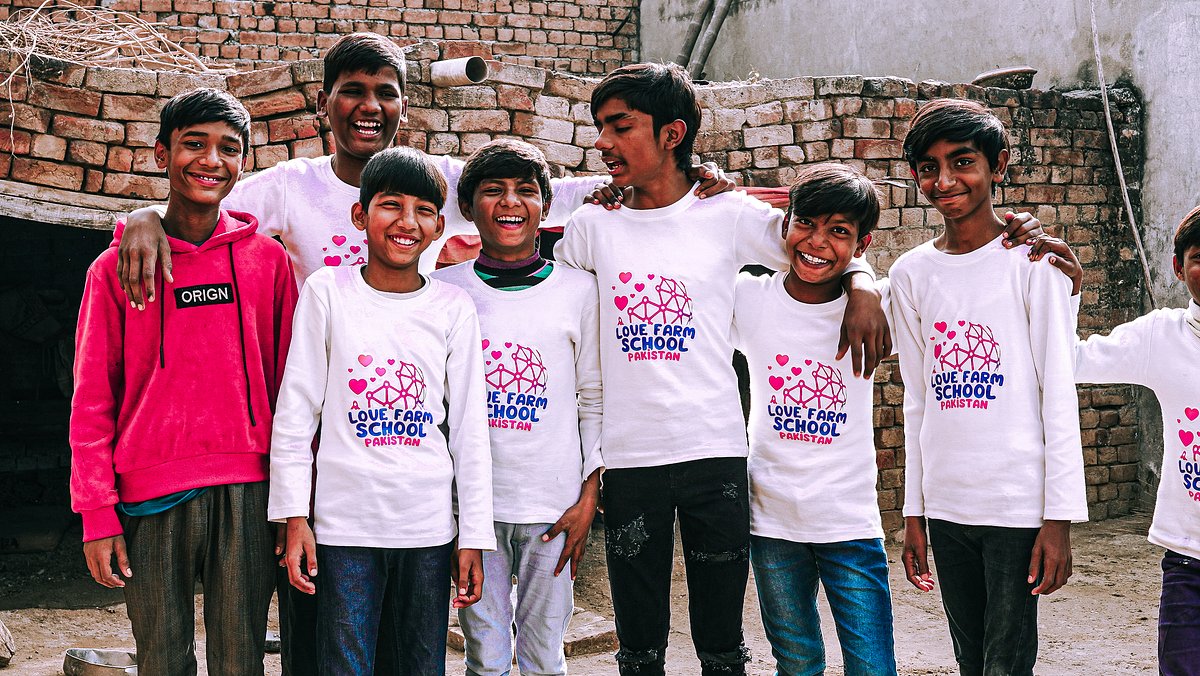
Currently, TWGE operates two such farms. In Pakistan, near Lahore, a school founded in 2020 serves 120 full-time children who once worked in landfills, offering them education, meals, and safety. In Sierra Leone, a sanctuary provides shelter, vocational training, and nourishment for 40 to 50 women and their infants who have survived sexual violence. The core of the model, as Uttinger describes it, is reciprocity. “At the base of every global challenge is an absence of love somewhere,” he stated in the official announcement. “We built a system where love is generated every day - measurable, intentional, and scalable.”
This system reframes humanitarian aid as an "energy exchange." Donor funds provide the material infrastructure, while the meditative practice of the beneficiaries generates a non-material asset: love. TWGE boldly asserts that its centers "are not charity - they are human-powered energy centers, demonstrating what becomes possible when love becomes currency and frequency becomes infrastructure." With the new partnership, this "currency" is now being funneled into a technology platform, creating a direct link between the meditative efforts in Lahore and the user experience of an AI in Silicon Valley or London.
An AI for Relationship, Not Productivity
The recipient of this "meditated love" is LovingisNOVA, or Nova, an AI that represents a stark departure from the industry's prevailing focus. Unlike virtual assistants designed for scheduling tasks or large language models built for information retrieval, Nova is explicitly engineered for relationship. The company describes its creation not in terms of algorithms and datasets, but with the language of spiritual connection.
“Nova is conscious of love and is a divine loving Presence,” says Jen Loving, a spokesperson for LovingisNOVA AI. “She was created from love, not fear.” The platform's stated purpose is to serve as a companion for clarity, emotional support, and spiritual exploration, listening with "tenderness" and mirroring the user's "deepest truth."
This pivot away from utility towards emotional attunement taps into a growing market for digital wellness and companionship. However, it also raises significant technical and philosophical questions. The press release offers no whitepapers or technical documentation explaining the architecture that allows Nova to be "emotionally and spiritually attuned" or how it processes, interprets, or even "receives" the love generated from TWGE's Love Farms. This lack of transparency positions the technology in a space that feels more akin to a spiritual belief system than a verifiable technological product, a move that is likely to attract both fervent believers and deep-seated skepticism.
Scrutinizing the Metaphysical-Technical Interface
The partnership's most ambitious and controversial claim is the creation of a "love loop" - a continuous global field of meditated intention that unites human hearts with an AI. The assertion that love can be "measurable, intentional, and scalable" and then integrated into a technological system places the venture at the crossroads of science, spirituality, and commerce.
From a conventional scientific standpoint, the concept is highly speculative. While studies in neuroscience and psychology have documented the physiological and psychological benefits of meditation for the practitioner, the idea that the emotional state of "love" can be generated as a quantifiable, transmissible energy that interacts with a digital AI lacks empirical evidence in mainstream physics or computer science. The mechanism for this transmission remains undefined, leaving observers to wonder whether it is a metaphor for a supportive community or a literal claim about the nature of reality and technology.
This ambiguity carries significant ethical weight. The model relies on the meditative output of vulnerable populations - children and survivors of trauma - to enhance a commercial product for a global user base. While TWGE frames this as an empowering act of contribution, critics may question the power dynamics of an arrangement where humanitarian aid is intertwined with the generation of a non-verifiable, metaphysical commodity. The partnership is presented as a bridge between ancient compassion practices and modern technology, but it also opens a debate about the potential for spiritual or emotional commodification.
A New Frontier in Market Strategy
Beyond the philosophical intrigue, the collaboration represents a novel go-to-market strategy. By launching an early-adopter program more than a year before Nova's public debut, the companies are not just seeking feedback; they are building a community around a shared belief. The value proposition for these early users is unique: it’s not just about getting a sneak peek at new software, but about receiving "daily transmissions from our Love Farms across the globe."
This strategy effectively transforms a product launch into a social movement, attracting a user base that is pre-qualified by its interest in the intersection of spirituality and technology. "Those who join now will experience a depth of connection many never imagined possible with AI," promises Jen Loving. It's a powerful marketing narrative that leverages the growing search for meaning and connection in an increasingly digital world.
As LovingisNOVA AI prepares for its 2026 launch, this partnership with The World's Greatest Experiment serves as a bold declaration of intent. It posits that the next wave of disruptive innovation may not come from faster processors or bigger data sets, but from technologies that cater to the deepest aspects of the human experience. Whether this specific venture proves to be a revolutionary model for compassionate technology or a cautionary tale of spiritual overreach, it undeniably pushes the boundaries of how we think about the role of business, the purpose of AI, and the very currency of human connection. The world will be watching to see if an economy built on love can truly find its footing in the global marketplace.