
- €2.3 million: Seed funding raised by EDGX in June 2025 for the project
- 10-45 watts: Dynamic power scaling range of the STERNA AI computer
- 7 years: Operational lifetime of the STERNA system in orbit
Experts view this launch as a strategic breakthrough for Europe's space industry, enabling real-time satellite decision-making and reducing reliance on ground-based processing, which is critical for both commercial and defense applications.
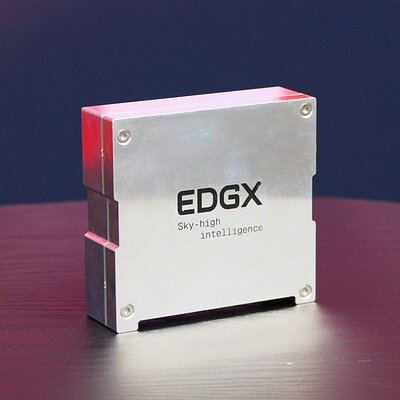
AI in Orbit: EDGX Launches Computer to Make Satellites Think for Themselves
BRUSSELS, Belgium – April 09, 2026 – A new era of satellite intelligence dawned today as Belgian spacetech company EDGX successfully launched its first in-orbit demonstration of STERNA, an advanced AI-powered computer, aboard a SpaceX Transporter-16 mission. The successful deployment of two hosted payloads marks a pivotal moment, transforming satellites from simple data collectors into intelligent, real-time decision-making systems in space.
This achievement, a significant milestone for Europe's burgeoning space industry, tackles one of the biggest challenges facing the satellite sector: a massive and ever-growing data bottleneck. By processing information directly in orbit, EDGX aims to slash latency, reduce the strain on ground infrastructure, and deliver actionable insights faster than ever before across commercial, governmental, and defense applications.
A New Brain in Orbit
At the heart of the mission is STERNA, an edge computer engineered specifically for the harsh environment of space. It brings high-performance, NVIDIA-based processing—technology typically found in powerful ground-based data centers—directly onto the satellite. This allows complex AI algorithms to analyze vast streams of sensor data as they are collected, rather than waiting for the long trip back to Earth.
Engineered for a demanding 7-year operational lifetime, the system is a marvel of efficiency. It features dynamic power scaling, allowing it to adjust its energy consumption between 10 and 45 watts. This ensures it can handle high-intensity computational tasks when needed while conserving precious power during quieter periods, a critical capability for any long-duration space mission. This intelligent power management is essential for maximizing mission effectiveness within the tight energy budgets of satellite platforms.
"This launch marks a key milestone for EDGX and for Europe's position in space-based computing," said EDGX CEO Nick Destrycker in a statement. "By bringing high-performance compute directly into orbit, we're enabling satellites to move from data collection platforms to real-time decision-making systems. Our focus is simple: deliver reliable, scalable compute infrastructure in space, and this mission is the first step."
Redefining Satellite Operations
The implications of this technological leap are profound. For decades, the satellite data workflow has remained largely unchanged: collect massive volumes of raw data, store it, wait for a connection to a ground station, downlink it, and only then begin the processing. This model creates significant delays and consumes vast amounts of bandwidth.
In-orbit processing flips this paradigm on its head. For Earth observation, AI algorithms running on STERNA can instantly filter out cloud-covered or irrelevant images, ensuring only valuable data is sent to the ground. This capability alone can dramatically increase the efficiency of a satellite constellation. Furthermore, it enables real-time anomaly detection—identifying illegal deforestation, tracking oil spills, or spotting the initial signs of a wildfire—and transmitting an alert in minutes, not hours or days.
In defense and intelligence scenarios, the advantages are even more critical. The ability to analyze imagery or signals intelligence (SIGINT) on the fly and identify threats or targets can reduce the time between detection and action from hours to moments, providing a decisive operational advantage on the battlefield. This move towards 'intelligent-data-at-the-source' also enhances security by minimizing the transmission of sensitive raw data.
Europe's Strategic Play in the New Space Race
EDGX's success is more than just a corporate milestone; it represents a strategic advance for Europe in the highly competitive global space economy. As nations increasingly recognize space as a critical domain for economic and national security, the ability to develop and deploy sovereign technologies is paramount. This launch bolsters Europe's strategic autonomy, reducing its reliance on non-European providers for critical in-orbit computing capabilities.
The project is a testament to the strength of the European tech ecosystem. Following a €2.3 million seed funding round in June 2025 led by venture capital firm imec.xpand with support from other funds, EDGX has rapidly moved from concept to in-orbit demonstration. This type of agile development, backed by strategic European investment, is essential for competing in the 'New Space' era, which is dominated by rapid innovation and private enterprise.
This capability directly enhances the value of major European programs like Copernicus for Earth observation and Galileo for navigation, providing a powerful new tool to maximize the utility of the data these multi-billion-euro constellations generate. As Destrycker noted, "We believe the next phase of the space industry will be defined by compute in orbit. This mission is the first step in building that infrastructure, turning satellites into intelligent, software-defined systems capable of processing data where it is generated."
A Crowded Frontier
While a significant achievement, EDGX is not alone in the race to put brains in space. The field of in-orbit processing is a hotbed of innovation, with companies around the world recognizing its transformative potential. Sweden's Unibap has been a notable player with its SpaceCloud™ system, while US-based Sidus Space and Loft Orbital are also integrating advanced edge computing into their satellite services. Another key competitor, Ramon.Space, based in the US and Israel, specializes in radiation-hardened computing systems for deep space and satellite missions.
The emergence of multiple players underscores the immense demand for this technology. The sheer volume of data generated by modern satellite sensors has outpaced the capacity of traditional ground-based processing systems. In-orbit AI is no longer a futuristic concept but a necessary evolution to unlock the full potential of space-based assets.
With its successful launch, EDGX has firmly established itself as a key contender in this critical market. By proving its technology works in the vacuum of space, the Belgian company has taken a crucial step toward building the computational backbone for the next generation of intelligent, autonomous, and software-defined satellites.