
- $3 million: Civil monetary penalties against Medicare plans in the first four months of 2026, exceeding the total of the previous four years combined. - 80% reduction: Claimed decrease in QA review cycles for ANOC and EOC documents using AI. - $188 billion: Projected global market size for AI in healthcare administration by 2030.
Experts agree that AI can significantly improve efficiency and accuracy in Medicare compliance, but emphasize the need for human oversight to ensure ethical implementation and accountability.
AI Enlisted to Tame Medicare's Billion-Dollar Compliance Beast
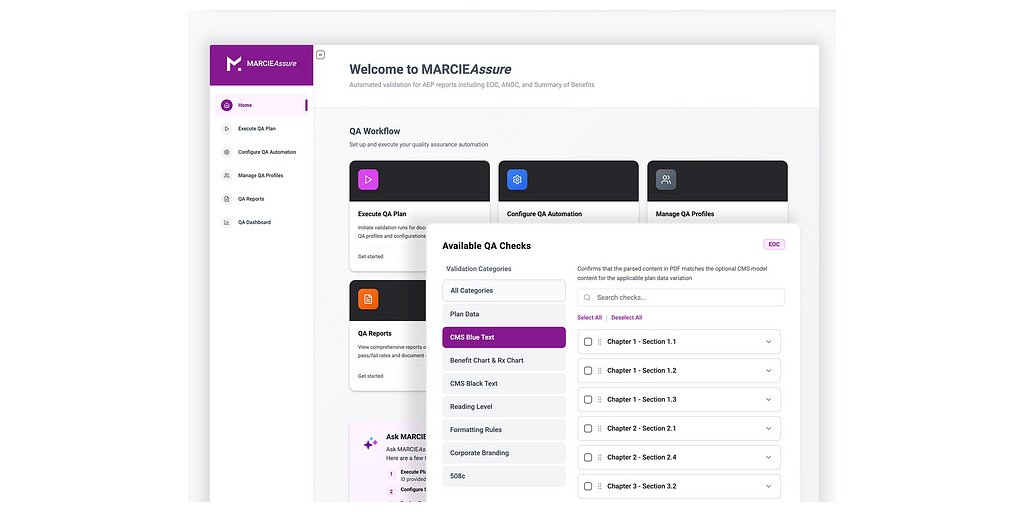
TORONTO, ON – February 18, 2026 – In a move targeting one of the healthcare industry's most complex and costly administrative burdens, customer communications provider Messagepoint has announced an AI-powered solution designed to overhaul how health plans prepare critical documents for millions of Medicare Advantage members. The new platform, MARCIEAssure™, promises to automate the painstaking quality assurance (QA) process for regulatory documents, potentially saving thousands of hours and mitigating significant financial risks for insurers.
The solution directly addresses the creation of the Annual Notice of Change (ANOC) and Evidence of Coverage (EOC) documents, dense, multi-hundred-page booklets that are mandated by the Centers for Medicare & Medicaid Services (CMS). By leveraging artificial intelligence, Messagepoint claims its system can reduce QA review cycles by up to 80%, a bold claim that, if realized, could set a new standard for efficiency and accuracy in a heavily regulated sector.
The High Stakes of Medicare Compliance
For Medicare Advantage plans, the annual process of producing ANOC and EOC documents is a high-pressure race against tight CMS deadlines. These documents are not mere formalities; they are the primary source of truth for beneficiaries, detailing every change in costs, benefits, and service rules for the upcoming year. Getting them right is paramount, yet the process is notoriously fraught with peril.
Health plans have traditionally relied on massive teams to perform manual QA reviews, a method described as slow, inconsistent, and dangerously prone to human error. Reviewers must cross-reference thousands of data points against plan benefit data and CMS model language, a monumental task that creates resource bottlenecks and drives up operational costs. For large payers, this can translate to thousands of hours spent on a single document cycle.
The consequences of failure are severe. CMS has broad authority to levy penalties for non-compliance, and recent trends show regulators are exercising that power with increasing frequency. In the first four months of this year alone, civil monetary penalties against Medicare plans reportedly surpassed $3 million, a figure greater than the previous four years combined. High-profile cases, such as Cigna's $172 million settlement over inaccurate data submissions and a $2 million fine against Centene for cost-sharing errors, underscore the immense financial and reputational risks. These errors often stem from the very details that AI-powered QA aims to secure, such as inappropriate cost-sharing for services or medications.
AI as the New Quality Gatekeeper
MARCIEAssure™ proposes a new approach by replacing manual spot-checks with comprehensive, automated validation. Built on Messagepoint’s proprietary AI engine, the solution automates thousands of checks across hundreds of pages. It validates that the content of ANOC and EOC documents aligns perfectly with CMS model documents and the health plan’s specific Plan Benefit Package (PBP) data.
“The complexity of managing Medicare Advantage member documents and communications requires a new approach,” said Sohail Malik, Vice President and Practice Leader for Healthcare Solutions at Messagepoint, in the company’s announcement. “With MARCIEAssure, Messagepoint enables health plans to harness the power of AI in the QA process—eliminating human error in review cycles, ensuring regulatory compliance, and enabling the delivery of ANOC and EOC documents faster and more cost-effectively than ever before.”
While an 80% reduction in review cycles is ambitious, it aligns with efficiency gains seen from AI adoption in other document-heavy, regulated industries. Reports from the broader tech sector show AI can slash authoring time for complex regulatory documents by half and improve compliance accuracy by over 90% in other review-intensive fields. By automating the tedious and repetitive aspects of QA, the technology allows human experts to focus on more strategic, high-value tasks.
Beyond Budgets: The Human Impact of Accuracy
While the operational and financial benefits for health plans are clear, the introduction of AI into document verification has a profound human dimension. The ultimate consumer of these documents is the Medicare beneficiary—often a senior navigating a complex healthcare landscape. An error in an ANOC or EOC is not just a compliance violation; it can lead to a member being confused about their prescription drug costs, unaware of changes to their provider network, or surprised by out-of-pocket expenses.
By ensuring a higher degree of accuracy, technology like MARCIEAssure™ serves as a tool for consumer protection. Clear, correct, and compliant communications empower members to make informed decisions about their health coverage. This reduces the risk of members incurring unexpected costs or facing disruptions in care due to misinformation, which is a critical concern for patient advocates and regulators alike. Improving document accuracy is a direct investment in member trust and transparency, ensuring vulnerable populations receive the reliable information they are entitled to.
A Crowded Field? The Rise of Healthcare RegTech
Messagepoint, which already manages communications for plans covering approximately 18% of U.S. Medicare Advantage members, is not entering a vacuum. The company's specialized launch is part of a larger trend in Regulatory Technology, or “RegTech,” where AI and other advanced technologies are being deployed to solve complex compliance challenges. Competitors like Inovaare offer broader AI-powered compliance solutions for Medicare plans, and the general Customer Communications Management (CCM) market is replete with vendors aiming to streamline document generation.
However, Messagepoint's strategy appears to be a highly focused attack on a specific, universal pain point within the Medicare Advantage ecosystem. Rather than offering a general compliance platform, MARCIEAssure™ is purpose-built for the unique intricacies of ANOC and EOC quality assurance, a niche that could give it a significant edge.
Navigating the AI Revolution in Healthcare
The adoption of AI in healthcare administration is exploding, with the global market projected to reach nearly $188 billion by 2030. From optimizing hospital workflows to streamlining clinical documentation, AI is already delivering tangible results. However, its application in a high-stakes compliance role brings both promise and peril.
Experts caution that while AI can drastically improve efficiency and accuracy, it is not a silver bullet. The effectiveness of any AI system is dependent on the quality of the data it is trained on, raising concerns about perpetuating existing biases. Furthermore, the “black box” nature of some AI models—where the reasoning behind a decision is not transparent—poses a challenge for accountability. Who is responsible when an AI makes a mistake?
For these reasons, human oversight remains critical. The consensus among industry analysts is that AI should be viewed as a powerful tool to augment human expertise, not replace it. Regulatory bodies are also racing to catch up, developing frameworks that encourage innovation while demanding safeguards, transparency, and a clear role for human judgment. As solutions like MARCIEAssure™ become available, health plans will need to balance the allure of automation with the responsibility of ensuring these powerful new tools are implemented ethically and safely, with the well-being of the member as the ultimate priority.