
- $190 billion: Projected market size for AI in financial services by 2030, with insurance as a primary driver.
- 4-person team: The size of the group that developed Parity, the winning AI-powered companion for accident claimants.
- 2026: The year the hackathon took place, highlighting the current state of AI innovation in finance.
Experts would likely conclude that Parity represents a significant shift in InsurTech by empowering consumers with AI tools to level the playing field in insurance claims, moving beyond corporate efficiency to enhance individual advocacy.
AI as Your Advocate: How Parity Levels the Insurance Claims Field
SAN FRANCISCO, CA – April 15, 2026 – A four-person team has captured the top prize at a prestigious financial technology hackathon by tackling one of the most stressful and unbalanced conversations in modern life: the first phone call between an injured person and an insurance adjuster.
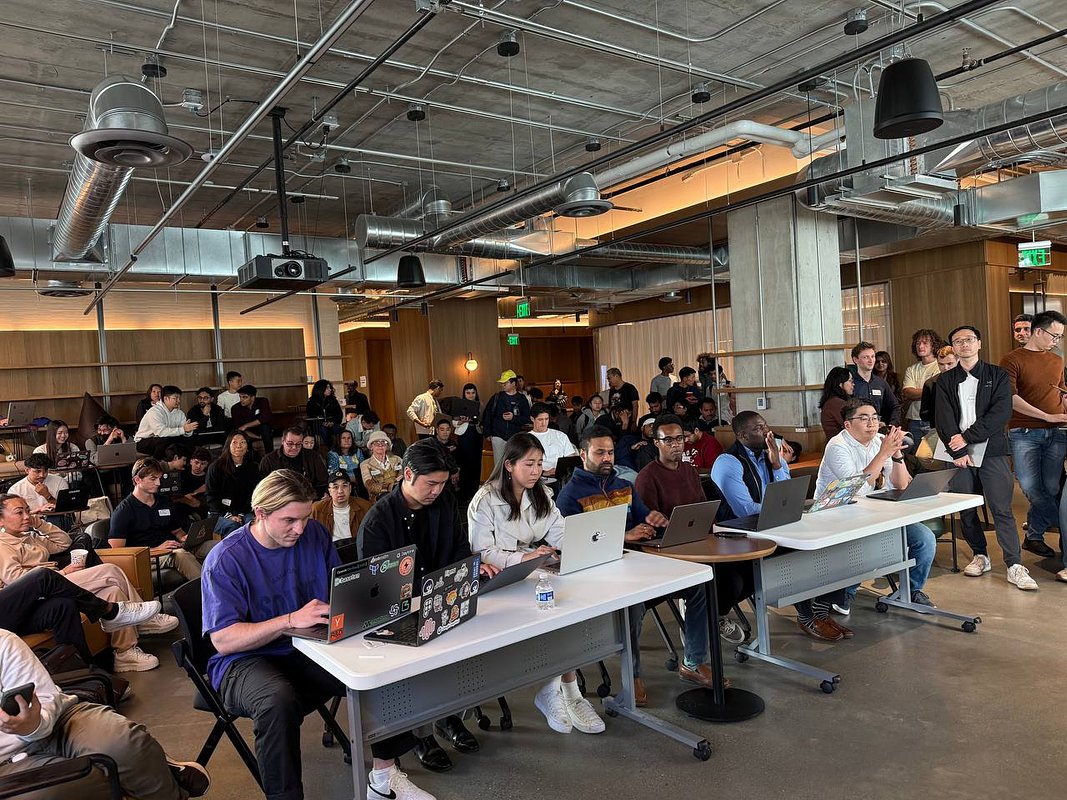
At the recent HACathon | Building AI for Finance, hosted by Hanwha AI Center and AI Valley, a project named Parity emerged as the winner. Its mission is to serve as an AI-powered companion for accident claimants, bringing transparency and support to a process often fraught with confusion and vulnerability. The win highlights a growing trend in technology: using artificial intelligence not just for corporate efficiency, but to empower individual consumers.
A Digital Ally in a Moment of Vulnerability
The moments after an accident are disorienting. Before claimants fully grasp the extent of their injuries or their legal rights, they often receive a call from the at-fault party's insurance company. What they say in that call can have significant financial and legal ramifications. It’s this precise “moment of vulnerability” that Parity was designed to address.
“We’d been on the other side of that call,” said Inseon Hwang, a member of the four-person team that also includes Jay Yen Lim, Sarah Lam, and Steven Yang. “We knew exactly how disorienting it was, which is what drove us to build something that meets people in that moment.”
Parity functions as a two-part digital coach. Before a scheduled call, a user can input basic details about their accident. The system then provides a personalized briefing, outlining what to expect, which common phrases to avoid, and how to frame responses carefully. During the live conversation, the tool offers real-time assistance, flagging potentially risky language used by either the claimant or the adjuster and surfacing prompts to guide the user toward a more protected and informed dialogue.
The product’s power was put on full display during a live demonstration in the hackathon's final round. In the demo, a simulated adjuster began with the seemingly innocuous question, “How are you feeling?”—a query that often elicits a polite “I’m fine,” which can later be used to downplay the severity of an injury. Parity immediately flagged the phrase as a risk. When the mock call progressed to a lowball settlement offer, the system identified that as well, making the tool's value proposition instantly and powerfully clear to the judges.
Beyond Hype: A Push for Practical AI in Finance
Parity’s victory was a direct reflection of the HACathon's core objective: to move beyond speculative concepts and spotlight builders creating functional AI products for real-world financial workflows. The event organizer, Hanwha AI Center (HAC), is the San Francisco-based global innovation hub for the financial arms of Hanwha Group, South Korea’s seventh-largest conglomerate. Established by Hanwha Life, Hanwha General Insurance, and Hanwha Asset Management, HAC’s mission is to accelerate AI-driven innovation across its parent company’s vast financial services portfolio.
By focusing on tangible solutions, Hanwha is positioning itself as a leader in the practical application of AI. Events like the HACathon serve as more than just a competition; they are a strategic tool for corporate innovation, talent discovery, and ecosystem building. They provide a fertile ground for rapidly prototyping ideas and identifying promising talent, effectively acting as an external R&D pipeline. The event drew support from sponsors across the tech stack, including Lovable, n8n, MiniMax, and Crossmint, underscoring the collaborative nature of today's tech development.
This focus on practical application is critical in an industry often filled with hype. While many discussions about AI center on futuristic, large-scale models, Hanwha’s initiative demonstrates a commitment to solving concrete, everyday problems for consumers and businesses alike.
Shifting Tides in the InsurTech Revolution
The emergence of a tool like Parity signals a potentially significant shift in the InsurTech landscape. The global market for AI in financial services is already massive, projected to grow from just over $38 billion in 2024 to more than $190 billion by 2030, and the insurance sector is a primary driver of that growth.
To date, the bulk of AI investment in insurance has been focused on benefiting the insurer. Companies have poured billions into AI-powered systems for automating underwriting, improving risk assessment, streamlining claims management, and detecting fraudulent activity. These tools make insurers more efficient and profitable, but they do little to address the inherent power imbalance in the claims process itself.
Parity represents a different philosophy: using AI to empower the consumer. Instead of optimizing processes for the corporation, it provides the individual with a sophisticated tool to navigate a complex system. This consumer-centric approach is a relatively new frontier in InsurTech, moving the application of AI from the back office to the front lines of customer interaction. It challenges the traditional model by providing claimants with a level of real-time expertise that was previously only available to those who could afford legal counsel from the outset.
The Dawn of AI-Coached Conversations
Looking beyond insurance, Parity’s win points toward a broader future for AI-guided human interaction. The concept of a real-time digital coach that provides prompts and warnings during sensitive conversations has applications far beyond accident claims. Such technology could one day assist in salary negotiations, legal depositions, customer service calls, or even therapeutic settings.
This new paradigm also raises important ethical questions. As AI becomes more deeply integrated into our conversations, issues of transparency, data privacy, and accountability become paramount. Ensuring these systems are fair, unbiased, and operate in the user's best interest will be a critical challenge for developers and regulators. The goal is to create tools that augment human capability and level playing fields, not to introduce new forms of manipulation or over-reliance on technology.
For now, Parity stands as a compelling proof-of-concept for how AI can serve as a powerful advocate. Its success at the HACathon is a clear indicator that the next wave of innovation may focus less on replacing human interaction and more on enhancing it, providing guidance and clarity when it is needed most.