
- 20 young musicians from the U.S., China, and other nations participated in the Carnegie Hall performance.
- 13-year-old Olivia Wu debuted an AI-assisted composition titled 'White Horse' (白马).
- The event featured mentorship from legendary figures like Joan Dornemann (Metropolitan Opera) and Peiwen Chen (Manhattan School of Music).
Experts would likely conclude that this event exemplifies how AI and cross-cultural collaboration can enrich artistic education, fostering innovation while preserving classical traditions.
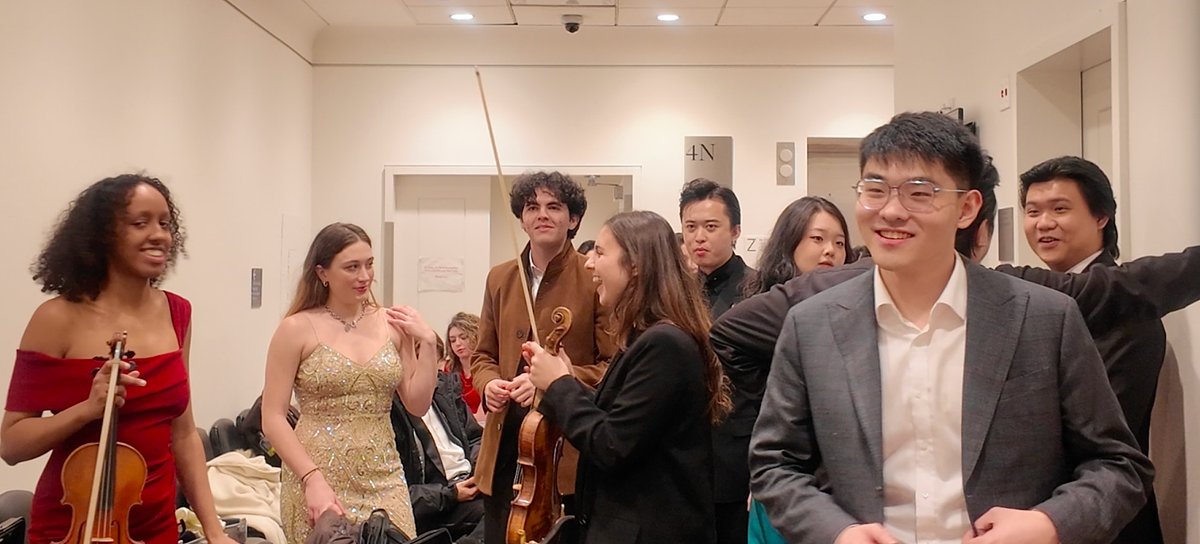
AI and Artistry: Young Musicians Bridge Divides at Carnegie Hall
NEW YORK, NY – May 01, 2026 – The storied stage of Carnegie Hall, a space consecrated by a century of classical titans, recently played host to a new kind of harmony. It was a sound born not only from strings and keys, but also from silicon and algorithms. A cohort of 20 young musicians from the United States, China, and several other nations gathered for a unique performance that blended the venerable traditions of classical music with the frontier of artificial intelligence, creating a powerful statement on collaboration in a complex world.
Presented by Lincoln Square Music Management & Consulting INC, the event was the culmination of weeks of intensive workshops and rehearsals. It brought together students from some of the world's most elite music institutions, including New York's The Juilliard School and Manhattan School of Music, alongside peers from Beijing's Central Conservatory of Music. More than just a concert, the program was an experiment in cultural and technological synthesis.
Harmony in the Algorithm
The centerpiece of the evening's innovative spirit was the debut of "White Horse" (白马), an original composition by 13-year-old Chinese-American student Olivia Wu. What set the piece apart was its genesis: Wu developed the work with the aid of an AI composition tool from a technology firm, LSQ. This collaboration between a young artist and an algorithm represents a significant step in the evolving relationship between technology and the creative arts.
While the specific AI tool is not yet a household name, its application in this context places the program at the forefront of a global trend. The use of AI in music is a burgeoning field, sparking both excitement and intense debate. Projects like the AI-driven completion of Beethoven's 10th Symphony and platforms like AIVA and Magenta Studio are already challenging traditional notions of authorship and creativity. Critics question whether an algorithm can truly replicate human emotion, while proponents see it as a powerful new instrument for expanding artistic possibilities.
For the students in this program, however, the technology was treated not as a replacement for human artistry, but as a collaborative partner. It served as a tool to explore new harmonic structures and melodic ideas, democratizing the complex process of composition and allowing young creators like Wu to realize ambitious concepts. The performance demonstrated a forward-thinking educational model where digital fluency is considered an essential part of a modern musician's toolkit, alongside scales and music theory.
Mentorship from the Masters
Guiding these young artists through this uncharted territory was a team of world-class mentors, whose involvement lent the program immense artistic credibility. Among them was Joan Dornemann, a legendary figure in the opera world. Having spent decades as an assistant conductor and vocal coach at the Metropolitan Opera, Dornemann has shaped the careers of countless stars, including Luciano Pavarotti and Plácido Domingo. Her expertise in dramatic interpretation and vocal refinement provided the students with a direct link to the highest standards of classical performance.
Joining her was Peiwen Chen, a distinguished pianist and educator with faculty ties to the Manhattan School of Music. As a collaborative pianist and chamber musician, Chen provided invaluable guidance on ensemble playing and musical interpretation. The presence of such seasoned professionals ensured that the program's technological novelty was grounded in rigorous artistic discipline.
"Music provides a natural platform for people to connect and learn from one another," noted Peiwen Chen during a rehearsal session. "In these sessions, students from different backgrounds find common ground through rhythm, melody, and shared effort." The mentorship focused on navigating different educational backgrounds and stylistic approaches, fostering a professional environment built on mutual respect and shared learning.
A Bridge of Melodies in a Time of Division
The program's focus on U.S.-China collaboration carries particular weight in the current geopolitical climate. Historically, cultural exchange has served as a vital channel for diplomacy, building bridges of understanding even when official relations are strained. From the Philadelphia Orchestra's historic 1973 tour of China to the establishment of The Tianjin Juilliard School, music has often been the universal language that cuts through political noise.
This event continues that legacy, shifting the focus to the next generation. By creating a space for young people to work towards a common artistic goal, the program fosters the person-to-person connections that are the bedrock of international cooperation. It serves as a powerful reminder that despite national differences, the pursuit of artistic excellence is a shared human value.
"Culture is enriched through the process of sharing and creation," said Tiehan Pan, President of Lincoln Square Music Management & Consulting INC, in a statement. "By working together on shared artistic goals, these young people are developing the skills necessary for global collaboration in the arts." This philosophy, enacted on one of the world's most famous stages, offered a hopeful vision of cross-cultural partnership.
As the final notes resonated through the hall, the impact of the program was clear. The young musicians left not only with the prestigious experience of a Carnegie Hall performance but also with a deeper appreciation for the interplay of tradition and innovation. They return to their respective countries as cultural ambassadors, equipped with the experience that collaboration, whether with a fellow musician across the globe or with a sophisticated algorithm, is the future of creative expression.