
- 80 works by over 40 leading Korean and international contemporary artists on display
- Exhibition runs from April 1 to August 2, 2026
- Features iconic pieces like Nam June Paik’s Kon-Tiki and TV Vertical Flower, displayed in a museum for the first time in over two decades
Experts would likely conclude that APMA's 'Chapter Five' solidifies Seoul's rising status as a global art capital by presenting a curated dialogue between Korean and international contemporary artists, while also tracing the evolution of Korean art history.
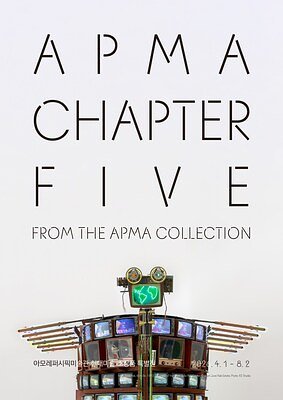
APMA's 'Chapter Five': A Global Art Dialogue in the Heart of Seoul
SEOUL, South Korea – April 06, 2026 – The Amorepacific Museum of Art (APMA) has once again affirmed its position as a cultural powerhouse with the opening of its latest major exhibition, APMA, CHAPTER FIVE – FROM THE APMA COLLECTION. Running from April 1 through August 2, this ambitious presentation draws from the museum’s formidable holdings to showcase approximately 80 works by over 40 leading Korean and international contemporary artists. The exhibition offers a sweeping overview of the diverse and often intersecting paths of contemporary art, solidifying the museum's role in a city rapidly ascending the ranks of global art capitals.
Set within the pristine, David Chipperfield-designed Amorepacific headquarters in Yongsan, the exhibition is more than a display of treasures; it is a meticulously crafted narrative. It juxtaposes globally celebrated figures such as Kiki Smith, David Hockney, and Donald Judd with foundational masters of Korean modern and contemporary art, including Nam June Paik, Lee Ufan, and Lee Bul. The result is a dynamic conversation about form, material, and meaning that transcends geographical and cultural boundaries.
A Curated Dialogue Across Continents
The curatorial strength of APMA, CHAPTER FIVE lies in its thoughtful pairings and its ability to weave a cohesive story from disparate artistic voices. The exhibition places the visceral, myth-infused sculptures of American artist Kiki Smith in the same institutional context as the monumental installations of Lee Bul, a major figure in Korean art known for her critiques of modern civilization’s utopian fantasies and inherent anxieties. Lee's seminal work, The Secret Sharer, is a highlight, revealing the complex fractures of contemporary existence.
Visitors will encounter the structural and material explorations of American sculptor Carol Bove, whose use of industrial materials pushes the boundaries of the medium. Nearby, they might find the work of British painter Rose Wylie, who reconfigures the language of painting with her large-scale, vibrant canvases drawn from everyday imagery. The exhibition also features the research-based practice of Gala Porras-Kim, whose work critically examines the life of cultural artifacts within museum systems, questioning narratives of preservation and ownership.
This international roster is placed in direct dialogue with giants of Korean art. The exhibition features a significant presentation of work by Nam June Paik, the globally recognized father of video art. His monumental installation Kon-Tiki is on display, alongside the large-scale work TV Vertical Flower, which is being shown in a museum for the first time in over two decades. The inclusion of these iconic pieces not only pays homage to Paik’s revolutionary impact but also anchors the exhibition’s exploration of technology and media in art history. Similarly, a new work by Haegue Yang, Stacked Corners – Ventilated Square of Orange and Blue, continues her conceptual practice of transforming industrial materials into poetic installations that explore migration and displacement from her bases in Berlin and Seoul.
Cementing Seoul's Place on the World Art Map
APMA, CHAPTER FIVE arrives at a pivotal moment for Seoul. The city has firmly established itself as a must-visit destination on the international art circuit, a status bolstered by the presence of world-class private museums, a thriving gallery scene, and the high-profile arrival of events like Frieze Seoul. Institutions like APMA, alongside the Leeum Museum of Art and the National Museum of Modern and Contemporary Art (MMCA), form the backbone of a robust cultural infrastructure largely supported by the nation's powerful conglomerates, or Chaebols.
This exhibition is a powerful statement of APMA's global ambition and its capacity to contribute meaningfully to international art discourse. By showcasing its collection with such confidence and curatorial rigor, the museum demonstrates that Seoul is not just a market for art but a center for its critical examination and presentation. The strategic mix of celebrated Western artists with their equally significant Korean counterparts serves a dual purpose: it attracts a global audience while simultaneously contextualizing the achievements of Korean artists on a world stage, asserting their place within the canon of contemporary art.
Tracing a Korean Art Trajectory
Beyond its international scope, the exhibition serves as a vital survey of Korean contemporary art history. The press release explicitly notes that the show traces the development from Dansaekhwa to the diversified media and themes of today. Dansaekhwa, the influential Korean monochrome painting movement of the 1970s, is represented through the work of figures like Lee Ufan, a master of minimalist abstraction whose work emphasizes the profound relationship between material, gesture, and space.
By charting this course, APMA, CHAPTER FIVE provides crucial context for understanding the unique trajectory of Korean art in the postwar era. It moves from the meditative, process-oriented works of the Dansaekhwa artists to the explosive introduction of new media by Nam June Paik, and on to the conceptually complex, multi-disciplinary practices of artists like Lee Bul and Haegue Yang. This historical arc allows visitors to appreciate the depth and evolution of the nation’s artistic identity, highlighting a journey from a focus on material and spirit to a direct engagement with globalism, technology, and social critique.
The Art of Beauty: Corporate Patronage and Cultural Legacy
The exhibition is also a testament to the long-standing cultural commitment of its parent company, Amorepacific. The museum's origins trace back to the private collection of founder Suh Sung-whan in 1979, evolving from the Pacific Museum into the globally recognized institution it is today. This history reflects a deep and sustained investment in the arts that is intrinsically linked to the corporation's brand identity, which centers on creating "A MORE beautiful world."
For a beauty conglomerate, the synergy is clear: the museum extends the concept of beauty from the commercial realm to the cultural sphere. This philosophy is embedded in the very architecture of the headquarters, which houses the museum and is conceived as a public-facing cultural hub. This model of corporate patronage, common in South Korea, allows Amorepacific to enhance its public image while making a tangible contribution to societal enrichment. By supporting artists and providing a platform for cultural exchange, the corporation fosters a legacy that transcends its commercial products.
To further this mission of public engagement, APMA is offering a series of educational programs, including With Curator guided tours and an advanced With Curator Professional program for more in-depth exploration. These initiatives underscore the museum's commitment not only to housing world-class art but also to making its complex narratives accessible to a diverse and curious public.