
- 72% reduction in production line length with Adient's previous modular concept, ModuGo
- Final assembly time reduced from minutes to seconds with ModuTec
- Potential cost savings through reduced labor, material handling, and optimized factory space
Experts view ModuTec as a transformative innovation in automotive manufacturing, offering significant efficiency gains, cost reductions, and flexibility for automakers and consumers alike.
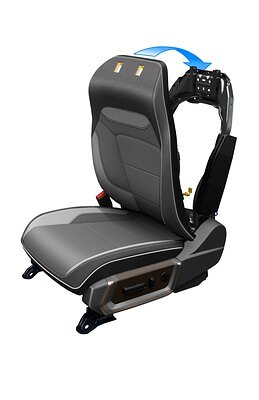
Adient's ModuTec: The Modular Seat Revolutionizing Car Manufacturing
By Sarah Hughes
PLYMOUTH, Mich. – January 22, 2026 – Automotive seating giant Adient today announced a significant manufacturing innovation, ModuTec, a modular system poised to fundamentally reshape how vehicle seats are built. The new solution promises to drastically simplify complex production lines, enable unprecedented levels of automation, and slash final assembly times from several minutes to mere seconds, sending a ripple of change through the automotive supply chain.
For decades, automotive seat manufacturing has been a complex, labor-intensive process tightly integrated into the main vehicle assembly line. Adient's ModuTec challenges this paradigm by de-coupling a significant portion of the work. The system is built on a foundation of modularity, allowing major seat components to be pre-assembled into complete modules offline, away from the high-pressure, fast-moving main line. These completed modules are then sequenced seamlessly into the final Just-In-Time (JIT) assembly point for installation into the vehicle. This strategic shift is the key to the dramatic reduction in assembly time, a claim that, if realized at scale, could offer automakers substantial gains in efficiency and throughput.
“ModuTec will fundamentally change how seats are made going forward,” said Griffin Brown, Adient’s vice president of VAVE, Innovation, Mechanisms BU, Americas, in the company's announcement. “By balancing all aspects of cost efficiency, engineering criteria and manufacturing best practices, ModuTec is a bold step in the direction the industry needs today and into tomorrow.”
The Mechanics of a Manufacturing Revolution
At its core, ModuTec is an evolution of manufacturing philosophy. This isn't Adient's first foray into modular design; the company has a history of developing standardized structures and mechanisms to reduce complexity. In 2025, it introduced a concept called "ModuGo," which demonstrated significant efficiency gains, including a reported 72% reduction in production line length. ModuTec appears to be the next-generation, production-ready culmination of this strategic focus.
By moving the intricate build process offline, manufacturers can create a more controlled, specialized environment. This allows for the integration of higher levels of automation and robotics that are difficult to implement on a traditional, linear assembly line. The benefits extend beyond speed. Adient highlights simplified production workflows, enhanced craftsmanship due to more focused assembly tasks, and improved quality control, which can lead to better warranty performance.
This approach also offers a more flexible and resilient manufacturing footprint. The space saved on the main assembly line—a premium commodity in any automotive plant—can be repurposed, potentially allowing for more vehicle variants or other processes to be integrated without costly facility expansions. The modular nature means that production of different seat types can be managed more dynamically, responding faster to shifts in market demand for specific vehicle trims or features.
Reshaping the Factory Floor and Workforce
The introduction of a system designed for high automation like ModuTec carries significant implications for the factory itself and the people who work within it. The promise of reducing floor space and simplifying workflows points toward a future of leaner, more efficient, and more adaptable manufacturing facilities. As offline modules handle the bulk of the complex assembly, the final JIT line becomes less congested and more streamlined.
This shift will inevitably impact labor requirements. While the company has not detailed specific impacts on its workforce, the trend associated with such automation is a move away from manual, repetitive assembly tasks toward a greater need for skilled technicians. These roles are critical for operating, maintaining, and programming the sophisticated robotic systems that make the offline module assembly possible. This evolution mirrors a broader industry trend toward the "smart factory," where data analytics, robotics, and skilled human oversight converge to optimize production.
For the wider automotive seating industry, ModuTec sets a new benchmark. Competitors like Lear Corporation, Magna International, and Forvia are also heavily invested in optimizing their manufacturing processes. Adient's public push with a named, branded solution like ModuTec serves as a clear signal of its intent to lead in manufacturing technology, placing pressure on rivals to showcase their own next-generation production capabilities.
The Ripple Effect: Cost, Speed, and Competition
The most compelling argument for automakers to adopt ModuTec lies in its economic and strategic advantages. In an industry defined by immense cost pressures and the need for speed, a technology that promises to improve both is highly attractive. Reducing final assembly time from minutes to seconds translates directly into higher vehicle throughput per shift, a critical metric for any plant manager. This increased capacity can help automakers meet demand more quickly and reduce order backlogs.
Cost savings are expected to be multi-faceted. Beyond the direct reduction in labor hours on the main line, efficiencies can be found in reduced material handling, lower error rates leading to less rework, and optimized use of expensive factory real estate. Adient’s announcement comes at a time of positive momentum for the company, which recently reported solid financial results and announced a strategic joint venture to expand its footprint in China. Innovations like ModuTec are crucial for sustaining this growth, strengthening its position as a key supplier to major OEMs globally and making its offerings more appealing in competitive contract negotiations.
While independent data is not yet available to verify the full extent of the cost savings, the strategic direction is clear. Adient is positioning ModuTec not just as a product, but as a collaborative platform for achieving mutual efficiency goals with its automaker clients.
From Factory to Showroom: A New Era for Vehicle Interiors
Perhaps the most exciting long-term implication of ModuTec extends beyond the factory floor and into the vehicle itself. The inherent flexibility of a modular design opens up new possibilities for vehicle interior customization, serviceability, and future-proofing.
For consumers, this could mean a greater range of choices at the point of sale. Instead of being limited to predefined trim packages, buyers could potentially select from a wider array of seat features, materials, and comfort options that can be more easily integrated into the build process. The modular architecture also simplifies repairs and upgrades throughout the vehicle's lifecycle. A damaged component could be swapped out more easily at the dealer, and it even opens the door for post-purchase upgrades—imagine adding a massage function or ventilated seats years after buying the car.
This enhanced serviceability and potential for customization directly improves the ownership experience and creates new revenue streams for both automakers and their dealer networks. As vehicles become increasingly defined by their interior technology and comfort, a manufacturing system that enables greater flexibility and personalization gives designers more freedom to innovate. ModuTec's impact, therefore, may ultimately be felt most by the driver, who will benefit from a new generation of vehicles built with a level of adaptability that starts right on the factory line.
Topics & Related
Revenue
Automotive Manufacturing
Smart Manufacturing
Related Company Pulse