
- 666 fires caused by lithium-ion batteries in NYC between 2019-2023, resulting in 28 deaths and $518.6 million in damage
- 35% reduction in at-home charging during the 2024 pilot program
- 150,000 battery swaps completed since the broader launch in March 2025
Experts agree that NYC's battery-swapping infrastructure is a critical step in mitigating e-bike fire risks while improving safety and efficiency for delivery workers.
A Safer Charge: How NYC is Tackling its Deadly E-Bike Fire Crisis
NEW YORK, NY – February 27, 2026 – By Tyler Flores
For years, a hidden danger has smoldered in the apartments and hallways of New York City. The lithium-ion batteries powering the e-bikes of the city's ubiquitous delivery riders have become a source of unprecedented peril, sparking a wave of devastating and often deadly fires. Now, a new partnership is deploying a high-tech solution across all five boroughs, aiming to extinguish the threat at its source by replacing risky home charging with a network of safe, accessible battery-swapping stations.
Electronics firm SINBON and Berlin-based Swobbee are rapidly expanding this infrastructure, a move that city officials and safety advocates hope will mark a turning point in a crisis that has reached a boiling point.
Confronting a Citywide Crisis
The scale of the problem is staggering. Between 2019 and 2023, the FDNY responded to 666 fires caused by lithium-ion batteries, resulting in 28 deaths, 412 injuries, and an estimated $518.6 million in damage and loss. In 2023 alone, the city recorded 268 such fires—an average of more than one every other day. The crisis prompted a flurry of regulatory action, including Local Law 39, which banned the sale of uncertified e-bikes and batteries, and Mayor Eric Adams's “Charge Safe, Ride Safe” action plan.
These measures targeted the root of the issue: the proliferation of cheap, uncertified batteries and the unsafe practice of charging them indoors, often in crowded residential buildings. For the city's thousands of delivery workers, many of whom are immigrants working long hours for low pay, managing multiple batteries and charging them at home was a necessary, albeit dangerous, part of the job.
The new citywide network offers a direct alternative. By centralizing the charging process in controlled, professionally managed environments, the initiative aims to remove the danger from private homes entirely.
A Safer Swap: How the New Network Operates
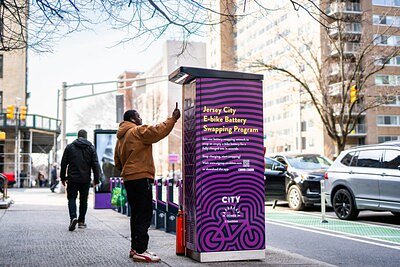
The solution being rolled out by Swobbee, with crucial technological support from SINBON, is elegantly simple. Instead of plugging in at home, riders can visit one of a growing number of outdoor swapping stations. In a process that takes less than a minute, they exchange a depleted battery for a fresh, fully charged one. All batteries in the network are UL-certified, a key safety standard mandated by recent city laws.
This model was validated in a city-supported pilot program launched in 2024. The pilot, which also included providers like Popwheels, demonstrated a significant impact on rider behavior. Participants reduced at-home charging by 35%, with nearly half stopping the practice altogether. The success and strong demand observed—users completed over 12,000 swaps during the six-month trial—gave the city confidence to approve a full-scale expansion.
"New York City was actively looking for safer, UL-certified battery solutions and invited us to participate in the pilot project in 2024," said Thomas Duscha, CEO of Swobbee. "The pilot demonstrated that battery swapping can significantly improve safety while making daily work easier for delivery riders. After its success, we received the green light to expand across all five boroughs."
Since the broader launch in March 2025, adoption has soared, with approximately 150,000 swaps completed across stations in Manhattan and Jersey City. The plan now is to install dozens of additional stations by the end of the year.
Underpinning this rapid expansion is the advanced technology provided by SINBON. The company's interconnect solutions are critical for ensuring the safe and efficient integration of batteries within the swapping cabinets. "SINBON is committed to advancing electrification infrastructure that is both safe and scalable," commented Alex Shiung, an Associate Corporate Business Development Director with SINBON. "Through our collaboration with Swobbee, we are contributing technical expertise that supports New York City's public safety goals while enabling cleaner micromobility solutions."
These systems provide reliable power connectivity and, crucially, traceability. Each battery's health and history can be monitored, ensuring that any faulty units are quickly identified and removed from circulation—a vital safety feature for a network of this scale.
Powering the Gig Economy
Beyond public safety, the battery-swapping network represents a significant quality-of-life improvement for the city's delivery workforce. For riders, time is money, and the hours spent waiting for batteries to charge represent lost income. Swapping eliminates this downtime, allowing them to complete more deliveries and increase their earning potential.
"It changes everything," said one delivery worker who participated in the pilot program. "I don't have to carry a heavy extra battery all day, and I don't have to worry about my apartment building having a problem. I feel safer, and I can work more."
This sentiment was echoed by worker advocacy groups like the Worker's Justice Project, which has lauded the city's investment in safe charging infrastructure as a crucial step in supporting a workforce that became essential during the pandemic. The 24/7 access to stations and round-the-clock customer support provide a level of reliability that informal charging setups could never match.
Building a Blueprint for Urban Mobility
The SINBON-Swobbee collaboration is more than just a response to a crisis; it is a key component of New York's vision for a greener, smarter urban future. The city is actively encouraging this shift through policy. In early 2025, the NYC Department of Transportation finalized rules that allow for the installation of battery swapping cabinets on public sidewalks, creating a legal and logistical framework for the network to grow.
By providing a scalable and sustainable infrastructure for micromobility, the city is fostering the growth of a transportation mode that reduces traffic congestion and carbon emissions. The battery-swapping model, or "Battery as a Service" (BaaS), is a growing global trend, seen as a key enabler for the widespread adoption of light electric vehicles.
As Swobbee and SINBON continue to deploy their stations across the five boroughs, they are not just installing hardware; they are building a new utility for the 21st-century city. This network provides a tangible solution to a deadly problem while simultaneously empowering a vital workforce and advancing New York's long-term sustainability goals, creating a model that other cities around the world are watching closely.