
- $65,000 in student loan repayment offered to Physical Therapists, Occupational Therapists, and Speech Language Pathologists
- $40,000 for Registered Nurses and other allied health professionals
- Three-year work commitment required post-licensure to qualify for the program
Experts would likely conclude that Penn Highlands' innovative debt relief program represents a forward-thinking solution to the healthcare workforce crisis, demonstrating how strategic financial incentives can address both student debt burdens and critical staffing shortages.
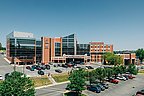
A New Prescription for Staffing: Penn Highlands' Strategic Debt Relief
NEW YORK, NY – June 02, 2026 – In the relentless war for talent, the healthcare sector has become a critical battleground. The nationwide shortage of nurses and allied health professionals isn't just a line on a government report; it's a looming crisis that threatens access to care, especially in rural America. In a bold strategic move, Penn Highlands Healthcare, a major system serving 26 counties in Pennsylvania, has announced a potent new weapon in its arsenal: a program offering up to $65,000 in student loan repayment to secure its future workforce.
This isn't just another signing bonus. By partnering with the tech-enabled Scholars Network, Penn Highlands is operationalizing a long-term talent pipeline, effectively subsidizing the education of its future employees. The Penn Highlands Healthcare Scholars Program is a calculated investment designed to tackle the workforce problem at its root: the crushing weight of student debt that deters many from entering or staying in clinical professions. It's a move that blurs the lines between corporate finance, human resources, and strategic growth, offering a compelling case study in modern workforce development.
A Strategic Prescription for a Chronic Condition
The challenge facing Penn Highlands is a microcosm of a national ailment. With nine hospitals and over 150 locations, many in rural communities, the health system is on the front lines of a demographic and economic squeeze. Attracting and retaining skilled clinicians in these areas is a perennial struggle against the gravitational pull of larger metropolitan centers.
"As healthcare leaders, we are tasked with rethinking how we support the next generation of healthcare professionals," stated Lisa Smith, System Director of Talent Acquisition and Employee Engagement for Penn Highlands Healthcare. This statement, while seemingly standard corporate fare, signals a fundamental shift in thinking. The old model of waiting for qualified candidates to appear is no longer viable. The new imperative is to actively cultivate them.
The program is a direct response to this reality. By offering substantial loan repayment—up to $65,000 for Physical Therapists, Occupational Therapists, and Speech Language Pathologists—the health system is making a powerful financial argument for choosing a career within its network. It’s a strategic play to de-risk the career choice for students, transforming a potential financial burden into a clear and supported career path.
Heather Franci, the Chief Nursing Officer, frames it as a necessity. "Healthcare workforce challenges require us to think differently about how we attract and support talent," she noted. This initiative allows the system to "connect with future clinicians earlier, reduce financial barriers, and build a more stable, committed workforce." In essence, Penn Highlands is forward-funding its own stability, betting that a three-year commitment from a debt-relieved graduate is a more sustainable asset than a revolving door of temporary staff and traveling nurses.
Deconstructing the Deal: How the Scholars Program Works
Beyond the headline-grabbing figures, the program's architecture, facilitated by Scholars Network, reveals a sophisticated operational design. This is not a simple scholarship; it's a structured pathway from education to employment.
Students in accredited nursing and allied health programs can apply up to two years before graduation. The requirements are straightforward: good academic standing, a short essay, and a video statement. The process is designed for simplicity, a stark contrast to the often-Byzantine world of financial aid.
Upon acceptance, a student is paired with their future employer. The deal is clear: in exchange for a three-year, full-time work commitment post-licensure, Penn Highlands will make monthly payments directly to the student's loan servicer. The amounts are tiered by profession and demand:
- Up to $65,000: Physical Therapists, Occupational Therapists, Speech Language Pathologists
- Up to $40,000: Registered Nurses, Respiratory Therapists, CT Technologists
- Up to $30,000: Radiologic Technologists
Crucially, the program includes several student-friendly provisions. If a participant's life plans change and they cannot fulfill the work commitment, they simply forfeit future payments; there is no punitive clawback of funds already disbursed. Furthermore, participation doesn't impact a student's eligibility for other forms of financial aid, and their eventual salary and benefits will be competitive and on par with their peers. This ensures the program is perceived as a pure benefit, not a trade-off against future earnings.
The Human (and Financial) ROI
For the students, the impact is immediate and profound. "This program has given me a way to be able to pay off my educational debt," said Mackenzie Shaffer, a Penn Highlands Healthcare Scholar. "I'm excited to begin the next chapter of my life knowing that...I will be able to have my student loans paid off and set myself up for a better future."
This sentiment is echoed by fellow scholar Olivia Ferdarko, who shared that the program has given her "the freedom to feel genuinely excited about my future in nursing without the constant worry of educational expenses." These testimonials highlight the program's dual return on investment. For the health system, the ROI is a secured, committed employee. For the student, the ROI is the mental and financial freedom to focus on their clinical training and patient care.
Dr. Sam Maron, founder of Scholars Network, pinpoints the strategic logic: "Healthcare workforce challenges don't start at the point of hire; they start when students are deciding whether they can afford to pursue and stay in a clinical career." By intervening at this critical decision point, Penn Highlands is not just recruiting; it's shaping the very supply of talent available to it. The program transforms the daunting prospect of student loans from a career obstacle into a contractual bridge to employment.
A New Blueprint for Workforce Development?
The partnership between Penn Highlands, a traditional healthcare provider, and Scholars Network, a platform operated by ed-tech company Noodle, represents a compelling model for the future of talent acquisition. This is not merely outsourcing recruitment; it's an integrated strategy that aligns education, finance, and employment into a single, seamless pipeline.
Scholars Network provides the technological and administrative backbone that makes such a program scalable and manageable. Their platform handles the application process, manages the partnerships with universities, and facilitates the financial transactions. This allows the health system to focus on its core competency—providing care—while leveraging specialized expertise to solve its most pressing operational challenge.
The implications extend far beyond healthcare. As skilled labor shortages plague industries from manufacturing to technology, the concept of employer-sponsored educational financing is gaining traction. The Penn Highlands model demonstrates a shift from reactive recruitment (posting jobs and hoping for the best) to proactive talent creation. By investing directly in the education of its future workforce, the organization is building a sustainable, community-rooted talent ecosystem.
This initiative is more than a press release; it's a strategic declaration that in the 21st-century economy, the most valuable asset is a skilled and committed workforce, and forward-thinking organizations are now willing to pay for it long before an employee’s first day on the job.