
- $12.2M in total funding secured by Zymtrace to optimize AI infrastructure.
- 35-40% GPU utilization typical in enterprises, leading to wasted energy and higher costs.
- 2.5x improvement in inference latency and 90% increase in throughput reported by customer Anam.
Experts agree that Zymtrace’s autonomous optimization platform addresses a critical inefficiency in AI infrastructure, offering a competitive advantage by maximizing GPU utilization and reducing operational costs.
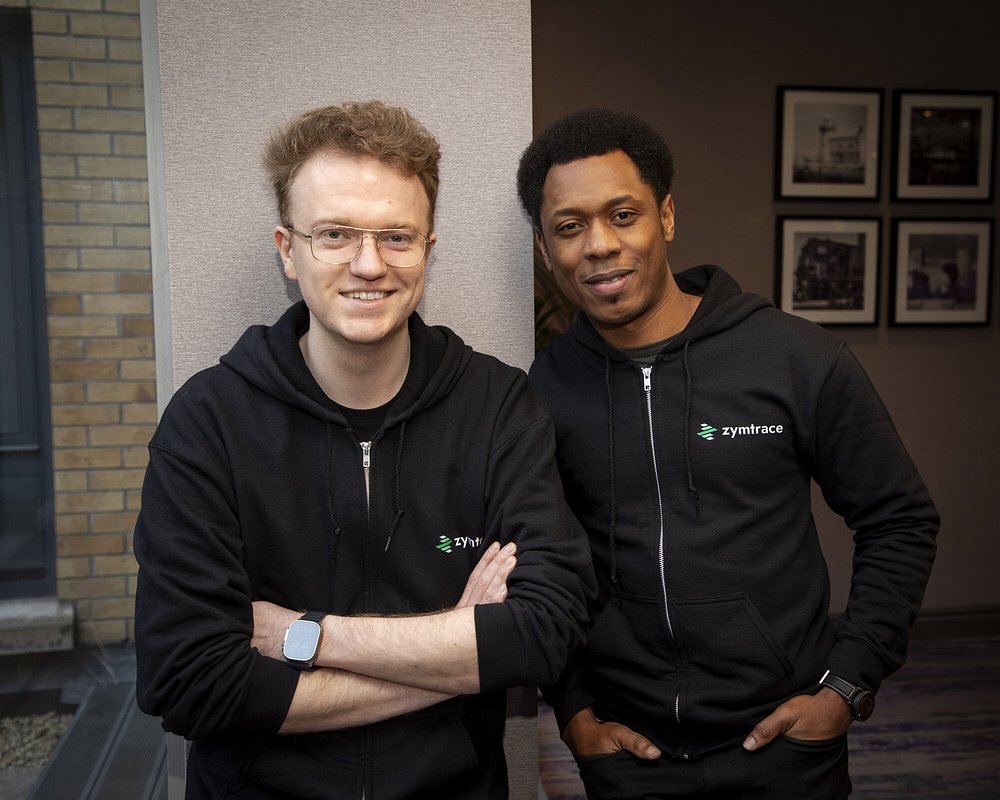
Zymtrace Secures $12.2M to Unlock Wasted GPU Power in AI
WILMINGTON, Del. – March 11, 2026 – Zymtrace, a startup building an autonomous optimization platform for AI infrastructure, announced today it has secured $12.2 million in total funding to address the multi-billion-dollar problem of underutilized GPU computing power. The financing includes a new $8.5 million seed round led by Venture Guides, with significant participation from existing investors Mango Capital and Fly Ventures, as well as 6 Degrees Capital.
The funding round also attracted a roster of strategic angel investors with deep industry expertise, including Hugging Face co-founder Thomas Wolf and Netlify founder Christian Bach, signaling strong confidence in Zymtrace’s mission to make AI workloads more efficient. This new capital follows a previously unannounced $3.7 million pre-seed round and will be used to accelerate product development, expand enterprise deployments, and build out the company’s U.S. go-to-market team.
The High Cost of Idle AI Power
As enterprises race to deploy generative AI, the demand for specialized hardware has skyrocketed, with the global GPU market projected to become a multi-hundred-billion-dollar industry within the next decade. Yet, beneath the surface of this AI gold rush lies a profound inefficiency: most GPU clusters operate at a mere 35-40% utilization. This gap between capacity and actual use represents a massive economic and environmental drain, translating to wasted energy, longer model training times, and higher inference costs.
For many organizations, the default response to performance bottlenecks has been a costly stopgap: buying more GPUs. This approach, however, fails to address the root cause. The issue is rarely a lack of hardware but rather a lack of visibility into how software interacts with it. Identifying why an expensive GPU is sitting idle or stalling requires highly specialized engineering talent and weeks of manual, painstaking investigation across a fragmented landscape of monitoring tools.
"The cheapest GPU you can buy is the one you already own," said Israel Ogbole, co-founder and CEO of Zymtrace, in a statement. "The bottleneck is rarely the hardware. It's the code that runs on it. Every idle GPU cycle is money and energy lost." Zymtrace aims to solve this by providing the deep, actionable insights needed to reclaim that lost value.
From Blind Spots to Code-Level Clarity
Traditional monitoring solutions have struggled to keep pace with the complexity of modern AI infrastructure. Many tools provide high-level metrics like overall GPU utilization percentages but fail to explain why performance is lagging. They are often blind to the critical, high-frequency interactions between the CPU and the GPU, leaving engineering teams flying blind. Furthermore, deep-dive profiling tools like NVIDIA's Nsight are invaluable for development but are typically too intrusive and generate too much overhead for continuous use in live production environments.
Zymtrace differentiates itself by offering a fundamentally different approach rooted in eBPF (extended Berkeley Packet Filter) technology. The company's founders, CEO Israel Ogbole and CTO Joel Höner, previously pioneered and open-sourced the eBPF CPU profiling agent for the OpenTelemetry project while at Elastic—a technology now in production at major tech firms like Datadog and IBM. They are now applying that same low-level engineering excellence to the unique challenges of GPU-bound workloads.
The platform's eBPF-based agent continuously profiles both GPU and CPU workloads across entire distributed systems with minimal performance impact and without requiring any changes to application code. This allows engineers to trace performance issues from a cluster-wide view down to the specific line of code or CUDA kernel responsible for a bottleneck. Whether it's a GPU kernel stall, a memory transfer issue, or a CPU scheduling inefficiency, Zymtrace correlates the activity to pinpoint the root cause in Python, Rust, or C++ code.
The Autonomous Optimization Loop
Beyond just identifying problems, Zymtrace is focused on automating the solution. The company is advancing its "Profile-Guided AI Optimization" approach, which aims to create a fully autonomous agentic loop. This system can detect a GPU bottleneck, analyze the performance profile, and automatically generate a pull request with the recommended code fix, complete with estimates of the potential cost and performance gains.
This capability promises to transform a workflow that once took weeks of manual investigation into a process that takes mere minutes. For customers, the impact is direct and substantial. Ben Carr, co-founder and CTO of Anam, noted the platform's effect on their operations. "Before Zymtrace, we spent so much time hunting down why our GPUs were being used inefficiently," said Carr. "Zymtrace pinpointed where our workloads were stalling and showed us how to resolve the issues. We improved inference latency by 2.5x and increased throughput by 90% for our Cara3 model.”
By providing actionable recommendations for everything from kernel execution and batch sizing to distributed communication, the platform helps enterprises improve the fundamental unit economics of their AI infrastructure. This leads to higher throughput per GPU, lower cost per inference, and reduced energy consumption per output.
Investor Conviction and the New Frontier of AI Efficiency
The significant backing from investors like Venture Guides, Mango Capital, and Fly Ventures underscores a growing market realization: as AI compute becomes a dominant cost center, efficiency is no longer a luxury but a competitive necessity. The investors see Zymtrace as providing a critical layer for the next generation of AI infrastructure.
“Zymtrace is creating core technology that will underpin the next generation of AI infrastructure," stated Sage Nye, Partner and Founding Team Member at Venture Guides. "As infrastructure increasingly becomes the limiting factor to growth, performance gains and efficiency aren’t optional, they’re essential.”
This sentiment is echoed by other backers who have supported the company since its pre-seed stage. “The future of AI won’t only be defined by who can acquire the most GPUs, but by who gets the most out of them," said Fredrik Bergenlid, Partner at Fly Ventures. Robin Vasan, Founder and Managing Partner at Mango Capital, added, "The teams that can squeeze the most FLOPs from their GPU will have a decisive competitive advantage. That's exactly why we backed Zymtrace from day one."
As the industry moves toward more sophisticated and autonomous AI systems, Zymtrace's mission aligns with the emerging trends of sustainable AI and AI-native cost governance. By enabling organizations to do more with the hardware they already possess, the platform not only improves the bottom line but also helps pave the way for a more scalable and environmentally responsible AI future.